Poland Awards PLN 244.99 Million Waste Incineration Plant Contract in Koszalin
16 Sep 2026
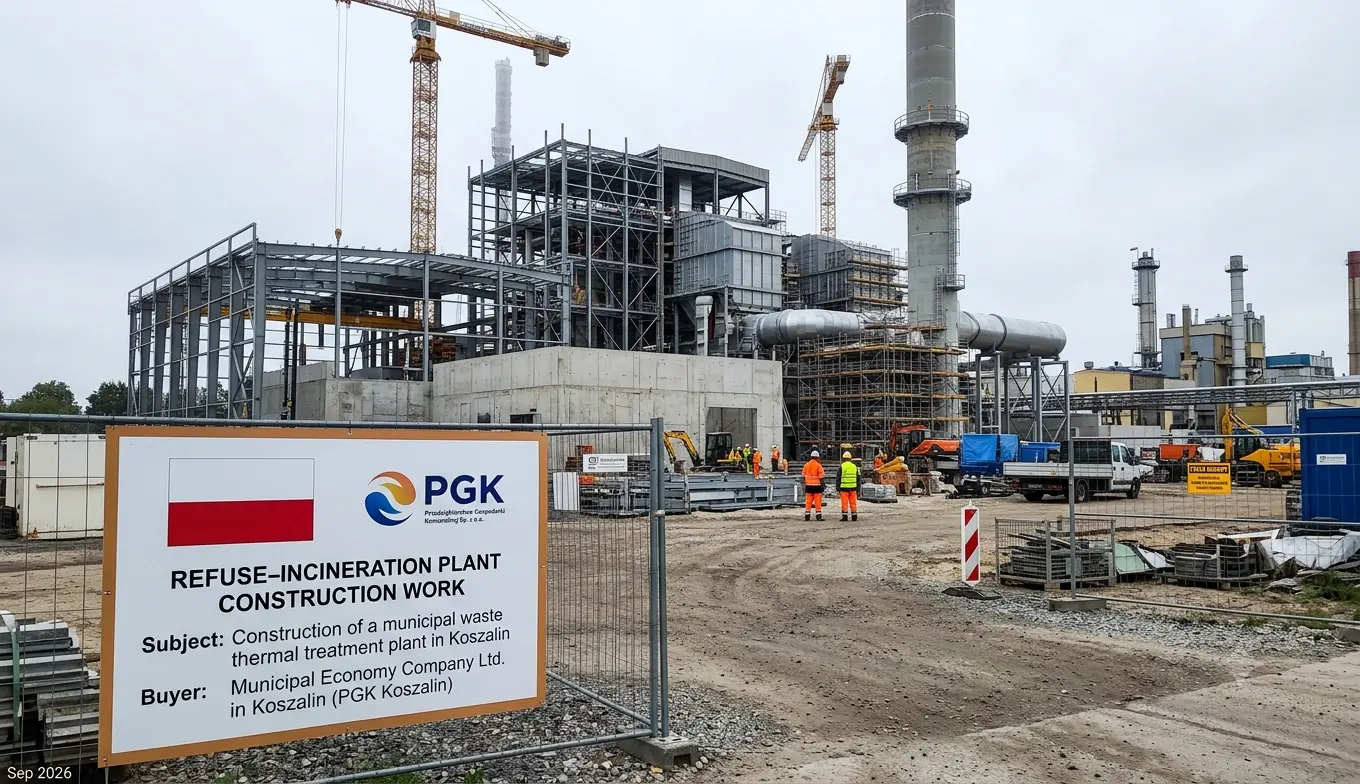
Standfirst: Poland has awarded a PLN 244.99 million contract for the design and construction of a municipal waste thermal treatment plant in Koszalin. The contract was awarded to AB Industry S.A. with Oschatz Power GmbH identified as a subcontractor. The project combines engineering design, equipment supply, installation and construction works and is intended to support the combined production of electricity and heat from municipal waste. The contract was concluded on 4 September 2026 and the required completion date is 30 June 2029. Introduction A major waste management infrastructure project has moved into its delivery phase in Koszalin, Poland, following the award of a PLN 244.99 million contract for the construction of a municipal waste thermal treatment installation. The contracting authority, Przedsiębiorstwo Gospodarki Komunalnej Spółka z o.o. w Koszalinie, selected AB Industry S.A. for the single lot covering the complete investment. The procurement combines works, services and supplies and includes design, administrative approvals, construction, equipment delivery, installation, commissioning and related activities. The contract was awarded through an open procedure under Polish public procurement legislation and Directive 2014/24/EU. The project is located at H. Cegielskiego Street in Koszalin, within the Koszalin economic area of the West Pomeranian Voivodeship. According to the notice, the facility is intended for the thermal treatment of specified municipal waste streams with the objective of combined electricity and heat production. The investment is financed through the Polish National Fund for Environmental Protection and Water Management under its priority programme for rational waste management. Why This Contract Matters The Koszalin project is a significant procurement in Poland's waste treatment and energy infrastructure market, with a contract value of PLN 244.99 million. Its scope extends well beyond conventional construction because the successful contractor must integrate waste treatment technology, energy generation equipment, engineering systems, buildings and supporting infrastructure. The project also incorporates environmental objectives, including the transition towards a circular economy and pollution prevention and control. The award is particularly relevant for suppliers involved in waste incineration technology, industrial plant engineering, boilers, turbines, environmental systems and specialist construction. The tender also demonstrates the importance of lifecycle considerations in major infrastructure procurement because operating costs represented a separate award criterion alongside price and technology warranty. Contract Timeline The winning contractor was selected on 6 July 2026. The contract was formally concluded on 4 September 2026 under contract number UMOWA NR 251 866383/66/AP/2025. The TED award notice was dispatched on 14 September 2026 and published in OJ S 179/2026 on 16 September 2026. The project is required to be completed by 30 June 2029. Contract Overview The procurement covers the design and construction of a municipal waste thermal treatment plant in Koszalin. The contract includes engineering design services, obtaining necessary administrative decisions, construction works, equipment and installation delivery, commissioning, training and preparation of the facility for operation. The facility is planned for a site covering approximately 2.1771 hectares at H. Cegielskiego Street. The main CPV classification is 45252300 for refuse incineration plant construction work. The notice contains an extensive set of additional CPV classifications covering waste incinerators, engineering design, site preparation, roads, boilers, steam turbines, architectural services, electrical installation, plumbing, insulation and mechanical installations. Key Contract Details Contract DetailInformation CountryPoland LocationKoszalin, Koszaliński, PL426 ProjectBudowa instalacji termicznego przekształcania odpadów komunalnych w Koszalinie Contracting AuthorityPrzedsiębiorstwo Gospodarki Komunalnej Spółka z o.o. w Koszalinie Contract NatureWorks, services and supplies ProcedureOpen procedure LotLOT 0001 Main CPV45252300 Refuse incineration plant construction work Awarded ValuePLN 244,990,000 Winning CompanyAB Industry S.A. SubcontractorOschatz Power GmbH Tender IdentifierOferta nr 4 Contract IdentifierUMOWA NR 251 866383/66/AP/2025 Winner Selected6 July 2026 Contract Conclusion4 September 2026 Required Completion30 June 2029 Tenders Received5 Lowest Admissible TenderPLN 244,990,000 Highest Admissible TenderPLN 335,047,000 Price Weight90% Technology Warranty Weight3% Operating Costs Weight7% EU FundingNo EU funds Environmental FinancingNational Fund for Environmental Protection and Water Management GPA CoveredYes Framework AgreementNo Dynamic Purchasing SystemNo Project Scope The project is structured as a design and build investment covering the municipal waste thermal treatment plant and its associated infrastructure. The contractor is responsible for preparing the required design documentation, obtaining necessary administrative decisions, executing preparatory and construction works, delivering and installing equipment and carrying out commissioning activities. The technical scope includes the plant technology and energy systems as well as buildings, tanks, shelters, canopies, viaducts, roads, pavements, yards and installations. The contractor must also provide project documentation covering the basic design, construction design, network relocations and protection, earthworks and excavation drainage, detailed execution designs, acoustic protection, fire safety and interdisciplinary coordination. The facility is intended to meet Best Available Techniques requirements applicable to waste incineration. The project documentation refers to the European Commission's BAT conclusions for waste incineration and the environmental decision applicable to the investment. The contractor must also complete commissioning, training and activities required to obtain permissions for operation. About the Contracting Authority Przedsiębiorstwo Gospodarki Komunalnej Spółka z o.o. w Koszalinie is the contracting authority and organisation responsible for signing the contract. The organisation is based at ul. Komunalna 5 in Koszalin and is also responsible for providing additional information concerning the procurement procedure. The notice identifies the organisation as a body governed by public law and states that its activity falls under general public services. The procurement reference used by the authority is 66/AP/2025. About the Organisations Involved Przedsiębiorstwo Gospodarki Komunalnej Spółka z o.o. w Koszalinie acted as the buyer, provided procurement information and signed the contract with the successful contractor. The organisation is responsible for the investment concerning the municipal waste thermal treatment installation in Koszalin. AB Industry S.A. was selected as the winning tenderer for LOT 0001. The notice identifies the company as a medium sized economic operator. Its tender, identified as “Oferta nr 4”, was ranked first with a value of PLN 244.99 million. The company is based in Ożarów Mazowiecki in Poland. Oschatz Power GmbH is identified as a subcontractor supporting the winning contractor. The company is based in Essen, Germany and is classified in the notice as a micro, small or medium sized economic operator. The subcontracting scope includes parts of the design work, technological project, construction and assembly works associated with the power plant, combustion and energy recovery unit, electricity and heat generation and flue gas cleaning systems. Krajowa Izba Odwoławcza is identified as the review organisation for the procurement. The notice provides detailed information concerning appeal procedures under the Polish Public Procurement Law. Urząd Prokuratorii Generalnej Rzeczypospolitej Polskiej, through its General Counsel of the Republic of Poland arbitration court, is identified as the mediation organisation. The notice states that parties may use mediation or another amicable dispute resolution mechanism in eligible disputes. Publications Office of the European Union is identified in the notice as the TED eSender responsible for transmission of the procurement notice for publication. Procurement Analysis The procurement was conducted through an open procedure and did not permit submission of partial tenders. A total of five tenders were received, all recorded as electronic submissions. The lowest admissible tender was PLN 244.99 million while the highest admissible tender was PLN 335.047 million. The notice also records one tender as verified and inadmissible. Price represented the dominant award criterion at 90% of the total score. The remaining 10% was divided between an extension of the quality guarantee and warranty for the technology at 3% and operating costs at 7%. This structure placed strong emphasis on the total gross tender price while still giving measurable importance to long term technology performance and operating economics. Additional Procurement Facts The notice states that the project was not financed with EU funds. However, the lot description identifies financing from the Polish National Fund for Environmental Protection and Water Management under its priority programme on rational waste management, specifically the component concerning the use of alternative fuels for energy purposes. These are domestic environmental financing arrangements rather than EU funding. The contracting authority also conducted preliminary market consultations before launching the procurement. No framework agreement or dynamic purchasing system was used and the authority did not provide an option mechanism for expanding the contract under the Polish Public Procurement Law. Market & Industry Perspective The Koszalin award demonstrates the multidisciplinary nature of modern waste to energy procurement. The project requires the integration of waste incineration technology with steam generation, turbines, energy recovery, flue gas cleaning, electrical systems, mechanical systems and civil infrastructure. This creates opportunities across several industrial supply chains rather than limiting participation to conventional construction contractors. The extensive CPV structure is particularly relevant for procurement intelligence. Businesses involved in waste incinerators, steam boilers, turbines, engineering design, site development, electrical installations, mechanical installations and pollution control systems can all identify relevant elements of the project through the classifications used in the notice. Economic Significance The PLN 244.99 million award represents a substantial infrastructure investment in Koszalin's waste management and energy systems. The project is designed to enable the combined production of electricity and heat from municipal waste, linking waste treatment infrastructure with energy recovery. The investment can also generate downstream demand for specialist engineering services, equipment, construction materials, installation services, commissioning support and maintenance activities. The planned involvement of subcontractors further expands the potential supplier ecosystem around the project. Future Procurement Opportunities The project may provide a reference point for future waste treatment and energy recovery investments in Poland. Municipal and regional authorities facing waste management requirements may continue to seek integrated solutions combining waste treatment with energy recovery and environmental controls. Suppliers should therefore monitor procurement notices covering refuse incineration plants, waste treatment facilities, energy recovery systems and associated environmental technology. Future opportunities may also arise from supporting infrastructure and specialist services. Engineering design, plant equipment, steam generation, turbines, flue gas treatment, electrical systems, mechanical installations and commissioning services can form important procurement categories around major waste infrastructure projects. Opportunities for Suppliers Suppliers can use this award to identify the broad range of capabilities required for major waste thermal treatment projects. Technology providers may participate directly or through specialist subcontracting arrangements, while engineering and construction companies can position themselves for integrated project delivery or supporting packages. The award also demonstrates the value of understanding operating economics. Because operating costs accounted for 7% of the evaluation, suppliers needed to consider projected consumption of fuel, water and reagents alongside the initial tender price. What Businesses Should Watch Businesses targeting Polish waste infrastructure tenders should monitor both the primary CPV classification and the extensive supporting classifications used in this procurement. A narrow search limited only to refuse incineration plants could miss related opportunities involving boilers, turbines, engineering, construction, electrical systems and mechanical installations. Suppliers should also pay close attention to tender evaluation methodology. In this procurement, the authority required bidders to provide specific operating consumption information and to identify technology warranty periods. This means suppliers need to prepare technical and commercial information that can withstand detailed evaluation rather than relying only on a headline project price. The use of subcontracting is another important signal. The winning contractor retained responsibility for the overall project while assigning specified specialist activities to Oschatz Power GmbH. Specialist suppliers can therefore monitor successful prime contractors after award to identify potential project delivery opportunities. PolandTenders.com Procurement Intelligence From a procurement intelligence perspective, the Koszalin award provides a strong example of how large infrastructure opportunities can be identified through the combination of contract value, CPV data, supplier information and technical scope. The procurement is not simply a construction contract. It integrates design, equipment supply, plant technology, installation and commissioning into one major investment, creating multiple commercial touchpoints for businesses across the industrial supply chain. The competitive data also provides useful market intelligence. Five tenders were received and the admissible tender range extended from PLN 244.99 million to PLN 335.047 million. The difference between these figures shows that suppliers approached the commercial requirements differently. One submitted tender was verified and recorded as inadmissible, highlighting the importance of strict compliance with procurement documentation in technically complex tenders. The evaluation structure provides another strategic signal. With 90% allocated to price, suppliers needed strong cost control to remain competitive. However, the additional 10% covering technology warranty and operating costs means that technical performance and lifecycle economics were also relevant. This creates a procurement model where suppliers need to balance capital cost with technology reliability and future operating requirements. The subcontracting structure is equally important. AB Industry S.A. is the prime winner while Oschatz Power GmbH is identified for specialist subcontracting activities. For suppliers, this demonstrates why procurement intelligence should continue after the award date. The winning contractor can become a new source of commercial opportunities for specialist businesses seeking participation in the delivery phase. Looking ahead, future waste infrastructure procurement may increasingly connect waste management, energy recovery and environmental performance. Businesses that track these projects early can use CPV combinations, contracting authority activity and previous award information to identify relevant projects before the market becomes highly competitive. For procurement intelligence users, this makes award notices valuable not only as records of completed competitions but also as signals for future supplier relationships and adjacent market opportunities. Supplier Takeaways The contract was awarded for PLN 244.99 million. AB Industry S.A. was selected as the winning contractor. Oschatz Power GmbH is identified as a subcontractor. The project covers the design and construction of a municipal waste thermal treatment plant. The facility is intended to support combined electricity and heat production. The required completion date is 30 June 2029. Five tenders were received through the procurement procedure. The lowest admissible tender was PLN 244.99 million. The highest admissible tender was PLN 335.047 million. Price represented 90% of the award evaluation. Technology warranty represented 3% of the evaluation. Operating costs represented 7% of the evaluation. The project is not financed with EU funds. The project description identifies financing from the Polish National Fund for Environmental Protection and Water Management. The procurement is covered by the Government Procurement Agreement. Key Takeaways Country: Poland Location: Koszalin, West Pomeranian Voivodeship Buyer: Przedsiębiorstwo Gospodarki Komunalnej Spółka z o.o. w Koszalinie Project: Construction of a municipal waste thermal treatment installation in Koszalin Contract value: PLN 244.99 million Winner: AB Industry S.A. Subcontractor: Oschatz Power GmbH Main CPV: 45252300 Refuse incineration plant construction work Procedure: Open procedure Tenders received: 5 Winner selected: 6 July 2026 Contract concluded: 4 September 2026 Completion deadline: 30 June 2029 Environmental objective: Circular economy transition plus pollution prevention and control EU funding: No EU funds Framework agreement: No DPS: No Conclusion Poland has awarded a PLN 244.99 million contract to AB Industry S.A. for the design and construction of a municipal waste thermal treatment plant in Koszalin, with Oschatz Power GmbH supporting the project as a subcontractor. The integrated scope combines waste treatment technology, energy recovery, engineering, construction and environmental systems and is scheduled for completion by 30 June 2029. The award provides an important procurement signal for companies active in waste management, waste to energy technology, industrial construction, engineering, plant equipment and environmental systems. Its evaluation model also highlights the growing relevance of price, technology warranty and operating cost considerations in complex public infrastructure procurement. Source: TED Contract or Concession Award Notice 638424 2026, “Poland – Refuse incineration plant construction work – Budowa instalacji termicznego przekształcania odpadów komunalnych w Koszalinie”, OJ S 179/2026, published 16 September 2026.
View Details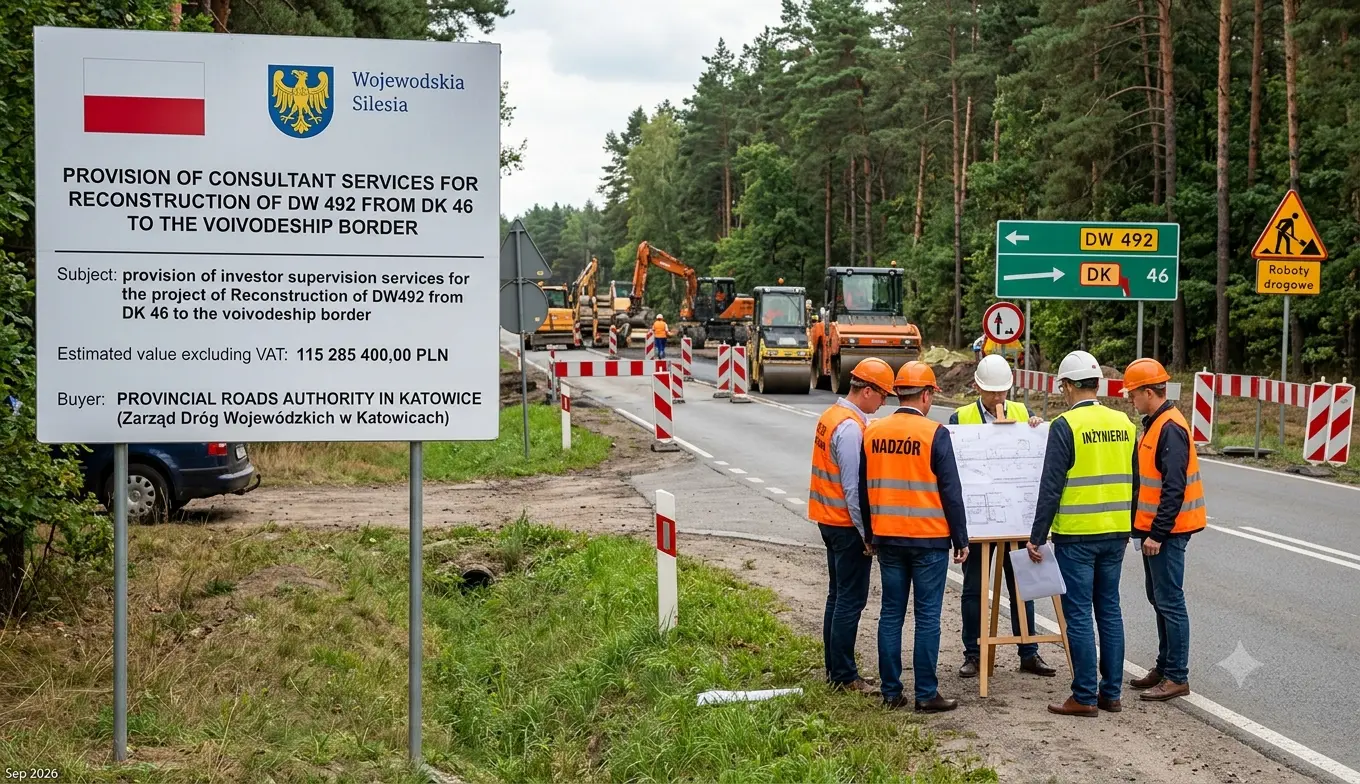
GRAMAR Secures 114 Million PLN Investor Supervision Contract for Katowice Road Reconstruction
15 Sep 2026
Standfirst GRAMAR Sp. z o.o. has been awarded a 114.2 million PLN contract to provide investor supervision services for the reconstruction of provincial road DW492 in the Silesian Voivodeship. The procurement, managed by the Provincial Road Management Board in Katowice, was executed under a negotiated procedure without prior call for competition due to the repetition of similar services. This tender result underscores the strategic reliance on established consulting partnerships to ensure continuity and efficiency in large scale public infrastructure projects. Introduction The modernization of regional road networks is a critical priority for local governments aiming to enhance transportation efficiency and safety. In Poland, the Provincial Road Management Board in Katowice has initiated a targeted procurement strategy to secure specialized engineering and inspection services for the reconstruction of provincial road DW492. This recent contract award ensures that the ongoing infrastructure project receives consistent, high quality oversight aligned with established project parameters. By utilizing a negotiated procedure without prior call for competition, the contracting authority leverages existing contractual frameworks to maintain project momentum. This approach is legally justified under public procurement regulations when services constitute a repetition of existing works ordered under strict conditions. The selection of a proven consultant minimizes administrative delays and guarantees that the supervisory team is already familiar with the project documentation and site specific challenges. Why This Contract Matters This procurement is vital for ensuring that the reconstruction of provincial road DW492 adheres to strict technical and safety standards. The continuity of investor supervision directly supports the broader regional strategy to improve road connectivity between key transportation arteries. For the domestic engineering sector, securing this high value public procurement validates the technical capabilities and reliability of the awarded firm. It also demonstrates how public funds are actively deployed to maintain project continuity and mitigate risks associated with changing supervisory teams mid project. Consistent oversight is essential for managing complex interactions between contractors, designers and regulatory bodies, ultimately protecting taxpayer investments from costly delays or rework. Contract Timeline The procurement process concluded with the formal selection of the winning bidder on September 9, 2026. Following standard administrative procedures, the formal contract was signed on the same day, September 9, 2026. The official contract awards notice was published in the Official Journal of the European Union on September 15, 2026. The services are scheduled to continue until August 4, 2028, ensuring long term oversight for the complex reconstruction works. Contract Overview The agreement covers the provision of investor supervision services for the reconstruction of provincial road DW492, specifically section IV from kilometer 34 plus 840 to national road DK 46. The total awarded value is 114.2 million PLN, reflecting a substantial investment in professional engineering oversight. The supplier is responsible for managing the construction process, representing the contracting authority and ensuring full compliance with the project design documentation and legal obligations. Key Contract Details Contract Title Repetition of similar services for investor supervision of DW492 reconstruction Contracting Authority ZARZĄD DRÓG WOJEWÓDZKICH W KATOWICACH Contract Value 114,200,000.00 PLN Procedure Type Negotiated without prior call for competition Number of Bids Received 1 Winner GRAMAR Sp. z o.o. Contract Conclusion Date September 9, 2026 Main CPV Code 71000000 (Architectural, construction, engineering and inspection services) Project Scope The core scope involves the continuous provision of investor supervision and construction management services for the designated road section. The consultant must represent the contracting authority in all matters arising from the construction contract, design documentation and applicable legal frameworks. This extensive responsibility requires the winning bidder to possess deep familiarity with the existing project history and the ability to manage complex interactions between various construction stakeholders. About the Contracting Authority The Provincial Road Management Board in Katowice is the primary buyer for this procurement. It is a regional public authority responsible for managing, maintaining and developing the provincial road network within the Silesian Voivodeship. About the Organisations Involved ZARZĄD DRÓG WOJEWÓDZKICH W KATOWICACH is the contracting authority and buyer. It manages the provincial road network in the Silesian region and drives the procurement of specialized engineering services for infrastructure projects. GRAMAR Sp. z o.o. is the successful bidder and a small enterprise. Based in Lubliniec, the company specializes in construction and engineering consulting, bringing proven experience from the initial phases of this specific road reconstruction project. KRAJOWA IZBA ODWOŁAWCZA is the review organisation. This body handles any legal appeals or disputes related to public procurement procedures in Poland, ensuring fair competition and strict regulatory compliance. Publications Office of the European Union acts as the TED eSender. It is responsible for the official publication of procurement notices to ensure transparency and equal market access across the European continent. Procurement Analysis The negotiated procedure without prior call for competition attracted a single bid, which is typical for contracts justified by the repetition of similar services. The evaluation criteria focused entirely on price, carrying a weight of 100 percent, as the technical competence of the supplier was already established during the initial procurement phase. This binary evaluation method indicates that the primary goal was to secure the continuation of services under predefined, favorable financial terms without reopening the technical qualification process. Additional Procurement Facts The procurement is not covered by the Government Procurement Agreement, reflecting its status as a domestic regional contract governed primarily by Polish national legislation. The project is not financed with European Union funds, relying entirely on the regional budget allocated for road infrastructure maintenance and development. Market & Industry Perspective The Polish civil engineering consulting market remains highly competitive, with specialized firms leveraging their existing project knowledge to secure follow on contracts. The reliance on a negotiated procedure for repetition of services highlights a broader industry trend where continuity of supervision is valued over the potential cost savings of introducing a new, untested consultant. Suppliers must continuously update their certifications and maintain strong relationships with regional road authorities to remain eligible for such targeted procurement opportunities. The dominance of established local firms in this space suggests that future RFPs and RFQs will continue to favor contractors with proven track records on specific regional infrastructure corridors. Understanding the specific GPNs and BOQs associated with regional road projects is essential for any firm hoping to compete effectively in this niche segment of the construction market. Economic Significance An investment of over 114 million PLN represents a substantial injection of capital into the domestic engineering and consulting sector. This supports high skilled jobs in project management, civil engineering and technical supervision within the Silesian Voivodeship. By retaining these specialized services within the regional economy, the public sector ensures that critical expertise remains available to defend against project delays and cost overruns. Future Procurement Opportunities Suppliers who were not successful should monitor the official Tenders Portal for upcoming road reconstruction and maintenance projects in the Silesian Voivodeship. As regional infrastructure ages, public institutions will continuously generate new tenders opportunities for engineering design, supervision and maintenance services. Stakeholders should also track the Latest Active Tenders Procurement notices to anticipate upcoming infrastructure projects in the broader Polish transport sector. The dynamic nature of public procurement means that new Live Notices for Tenders will emerge as regional authorities update their long term road development plans. Opportunities for Suppliers While the primary supervision contract has been awarded, specialized testing laboratories, geodetic survey firms and environmental monitoring agencies can find valuable subcontracting opportunities. Companies offering advanced project management software or specialized traffic organization consulting may also position themselves to support the primary consultant in fulfilling their contractual obligations. What Businesses Should Watch Industry observers should closely monitor the progress of the DW492 reconstruction to gauge the actual complexity and duration of the supervisory services required. The performance of the winning consultant in managing construction timelines and budget adherence will set a benchmark for future live tender announcements requiring similar engineering oversight. Stakeholders should also review Live Notices for Tenders to anticipate upcoming road modernization projects funded by regional or national programs. Additionally, businesses should watch for any legal challenges filed with the review organisation, although none are indicated in the current notice. PolandTenders.com Procurement Intelligence This contract represents a clear and accelerating trend in European public procurement toward the strategic use of negotiated procedures for the repetition of similar services. By invoking specific legal provisions that allow for the continuation of existing contracts, the contracting authority prioritizes project stability and administrative efficiency over the traditional open competitive bidding process. This approach is highly effective for complex, long term infrastructure projects where changing the supervisory consultant midstream could introduce significant risks, delays and knowledge gaps. Strategically, this award is important because it demonstrates how regional authorities can leverage established supplier relationships to ensure consistent project delivery. Suppliers can learn that delivering exceptional performance during the initial phases of a public infrastructure project is the most effective way to secure follow on work. To position themselves for future contracts, relevant suppliers should focus on building deep institutional knowledge of specific regional projects and maintaining flawless compliance records. Future contracts in this market are likely to evolve by incorporating stricter digital reporting and environmental compliance mandates alongside traditional engineering oversight. As public institutions face increasing pressure to deliver infrastructure projects on time and within budget, companies that proactively develop advanced project tracking capabilities and transparent communication protocols will hold a distinct advantage. Suppliers must also prepare for increased scrutiny on subcontracting arrangements, making robust governance and compliance tracking essential for future public procurement success. Supplier Takeaways Negotiated procedures for repetition of services offer a viable pathway to secure long term consulting contracts. Delivering exceptional performance during initial project phases is critical for winning follow on public procurement work. Specialized testing and surveying firms can find valuable subcontracting opportunities with primary engineering consultants. Maintaining deep institutional knowledge of specific regional infrastructure projects provides a distinct competitive advantage. Key Takeaways GRAMAR Sp. z o.o. won the 114.2 million PLN investor supervision contract for road DW492. The procurement was executed via a negotiated procedure without prior call for competition. Only one bid was received, reflecting the restricted nature of repetition of services contracts. The contract duration extends until August 2028, ensuring continuous project oversight. The project is funded entirely by regional budgets, not European Union funds. Conclusion This contract secures vital engineering oversight for a critical road reconstruction project in the Silesian Voivodeship. The transparent negotiated process ensures optimal value for public money while supporting the domestic engineering consulting industry and safeguarding the quality of regional infrastructure development. Source: Tenders Electronic Daily (TED), Contract Award Notice 635426-2026, Official Journal of the European Union, published on 15/09/2026.
View Details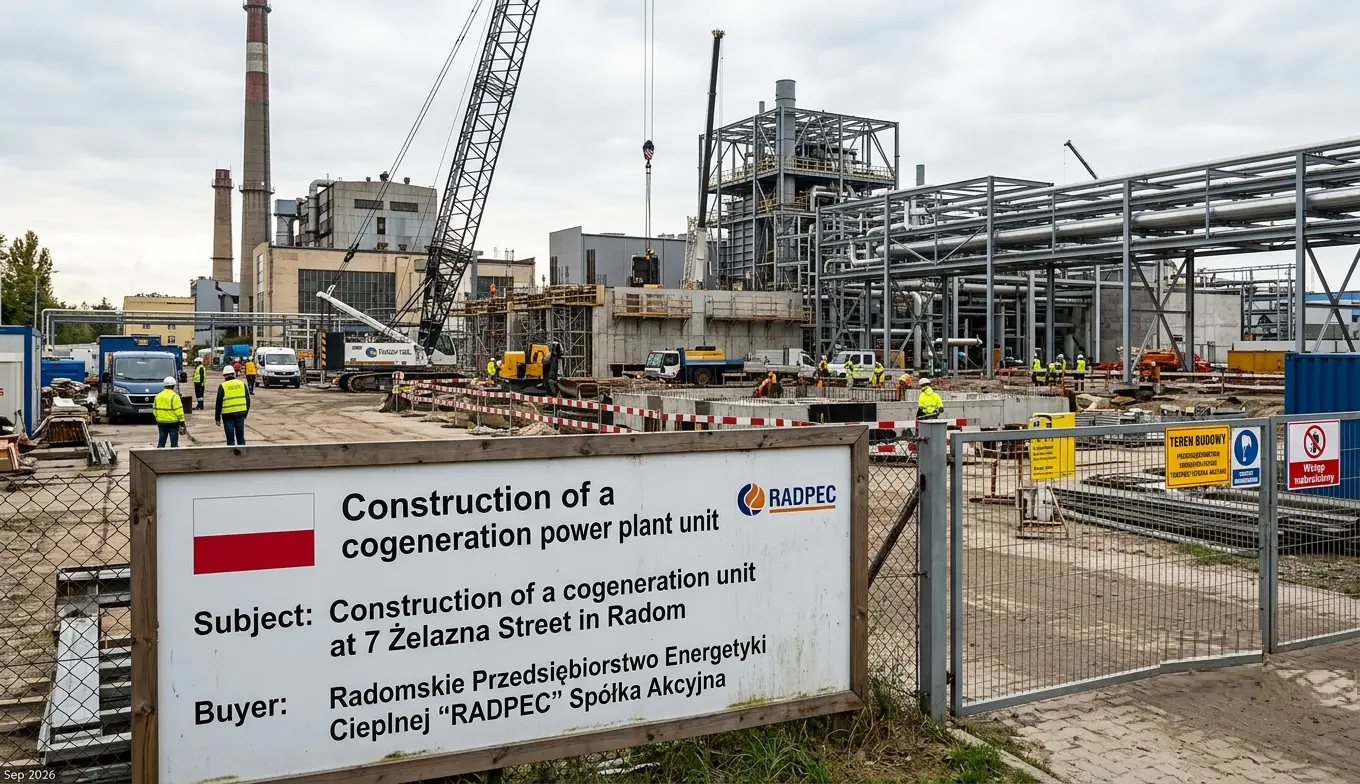
UNIBEP S.A. Secures 379 Million PLN Turnkey Cogeneration Plant Contract in Radom
14 Sep 2026
Standfirst UNIBEP S.A. has been awarded a major turnkey construction contract worth 379.4 million Polish zloty to build a new cogeneration block in Radom. The project, commissioned by Radomskie Przedsiębiorstwo Energetyki Cieplnej RADPEC Spółka Akcyjna, involves constructing a waste fueled boiler facility with a capacity of 60 000 Mg per year. This tender result highlights the ongoing investment in sustainable urban energy infrastructure across Poland using national environmental funds. Introduction The modernization of urban energy infrastructure remains a critical priority for municipal authorities across Europe. In Poland, the city of Radom is advancing its strategy to enhance sustainable heating and power generation through the acquisition of advanced cogeneration technology. The recent contract award for a new waste fueled boiler facility represents a significant step toward improving energy efficiency and reducing the environmental footprint of the local district heating network. By executing this procurement through a competitive dialogue procedure, the contracting authority ensures compliance with national public procurement regulations while addressing complex technical requirements. The selected contractor will be responsible for delivering the entire project, from foundational work to the final grid integration. This holistic approach guarantees that the new development meets all modern safety and environmental standards. Why This Contract Matters This procurement is vital for maintaining the operational reliability and accessibility of the Radom urban heating network. The introduction of a new cogeneration block will eliminate historical capacity constraints and improve living conditions for local residents by providing stable and efficient district heating. It directly addresses the growing demand for sustainable thermal energy in a rapidly developing urban center. For the domestic construction sector, this contract award validates the capability of Polish companies to meet stringent municipal technical requirements. It also demonstrates how public funds are actively deployed to upgrade urban infrastructure and promote sustainable community development. The project serves as a tangible example of how local governments can transition away from traditional fossil fuels toward alternative energy sources. Additionally, the project sets a new standard for waste to energy developments in the region. By mandating strict adherence to design documentation and requiring the contractor to secure all final usage permits, the authority mitigates project delivery risks. This ensures that taxpayers receive a fully functional and legally compliant asset upon project completion, without hidden liabilities or delays. Contract Timeline The procurement process concluded with the selection of the winning bidder following a rigorous competitive dialogue phase. Following standard administrative procedures, the formal contract was signed on August 26, 2026. The official contract awards notice was published in the Official Journal of the European Union on September 14, 2026. This timeline reflects a standard but rigorous procurement cycle for complex energy construction contracts in the Polish public sector. Contract Overview The agreement covers the turnkey construction of a complete cogeneration block based on an alternative fuel RDF or pre RDF boiler. The contract value is fixed at 379 461 868.83 Polish zloty, reflecting a substantial investment in municipal energy assets. The supplier is strictly required to deliver the project in full accordance with the provided technical documentation and secure all necessary usage permits. This turnkey approach places the onus of technical optimization and delivery risk squarely on the shoulders of the awarded firm. Key Contract Details Contract Title Budowa bloku kogeneracyjnego przy ul. Żelaznej 7 w Radomiu Contracting Authority Radomskie Przedsiębiorstwo Energetyki Cieplnej RADPEC Spółka Akcyjna Contract Value 379 461 868.83 PLN Procedure Type Competitive dialogue Number of Bids Received 3 Winner UNIBEP S.A. Contract Conclusion Date August 26, 2026 Main CPV Code 45251000 (Construction works for power plants and heating plants) Project Scope The core scope involves the construction of a complete cogeneration block with a capacity of 60 000 Mg per year and a power output of approximately 4.5 MWe and 17.5 MWt. The project includes the development of associated technological infrastructure, internal roads, and the connection of the block to the city heating and power grids. Additionally, the contractor is responsible for obtaining all necessary conditions, decisions, and approvals, culminating in the final usage permit for the entire complex. This extensive responsibility requires the winning bidder to possess strong project management capabilities and deep familiarity with local Polish building regulations. About the Contracting Authority Radomskie Przedsiębiorstwo Energetyki Cieplnej RADPEC Spółka Akcyjna is the primary buyer for this procurement. It is a municipal company responsible for organizing and managing the production, transport, and distribution of heat within the city of Radom. About the Organisations Involved Radomskie Przedsiębiorstwo Energetyki Cieplnej RADPEC Spółka Akcyjna is the contracting authority and buyer. It manages the public heating network in Radom and drives the procurement of new energy developments to expand sustainable infrastructure options for city residents. UNIBEP S.A. is the successful bidder and a large economic operator. It is a major Polish construction company specializing in the execution of complex residential, commercial, and industrial building projects across the country, bringing significant financial and operational capacity to this award. Krajowa Izba Odwoławcza is the review organisation. This body handles any legal appeals or disputes related to public procurement procedures in Poland, ensuring fair competition and strict regulatory compliance throughout the tendering process. Publications Office of the European Union acts as the TED eSender. It is responsible for the official publication of procurement notices to ensure transparency and equal market access across the European continent. Procurement Analysis The competitive dialogue procedure attracted three bids, demonstrating focused competition in the Polish energy construction market. The evaluation focused on a balance of price and technical criteria, which is common for well defined construction projects where technical specifications are strict and require iterative refinement. This evaluation method indicates that the technical baseline was considered a strict pass or fail requirement, but the dialogue phase allowed for optimization of the proposed solutions. Consequently, the competition focused on delivering optimal value without compromising the quality of the human resources and technical designs provided. Additional Procurement Facts The procurement is covered by the Government Procurement Agreement, allowing international competition, though all received bids were from domestic Polish entities. The project is not financed with European Union funds, relying instead on the municipal budget and internal resources of the local government. It is supplemented by the National Fund for Environmental Protection and Water Management, gathered on the account of the Modernisation Fund. This highlights a strategic national push toward alternative fuel utilization for energy purposes. Market & Industry Perspective The Polish urban energy construction market remains highly competitive, with domestic operators leveraging their proximity to secure major municipal contracts. The requirement for waste fueled cogeneration reflects a broader industry trend toward optimizing urban space and improving residential amenities through sustainable energy practices. This shift is driven by both national energy policies and European environmental directives. Suppliers must continuously innovate to meet evolving accessibility standards and integrate advanced technical infrastructure. The dominance of large economic operators in this space suggests that future RFPs and RFQs will continue to favor established contractors with proven supply chains. Smaller firms often lack the financial capacity to undertake such large scale turnkey projects independently. International competition remains present but limited, as evidenced by the lack of foreign bids in this specific tender. This dynamic suggests that foreign firms may find it challenging to compete without establishing strong local partnerships to navigate domestic regulatory and logistical landscapes. Local knowledge of Polish building codes and environmental permitting is a distinct competitive advantage. Economic Significance An investment of over 379 million Polish zloty represents a substantial injection of capital into the domestic urban energy sector. This supports skilled jobs in engineering, production, and technical training within Poland. The project will sustain employment for hundreds of workers throughout the 38 month execution period. Simultaneously, it upgrades public infrastructure for long term economic benefit by improving urban reliability and reducing environmental impact through better district heating efficiency. The transition to alternative fuels reduces the carbon footprint of the city while stabilizing energy costs for end consumers. The multiplier effect of this spending extends beyond the primary contractor, benefiting downstream material suppliers and logistics providers. Local businesses supplying concrete, steel, and specialized mechanical components will see increased demand, stimulating the broader regional economy and reinforcing the domestic supply chain. Future Procurement Opportunities Suppliers who were not successful should monitor the official Tenders Portal for upcoming energy renewals in other Polish cities. As urban networks expand, public institutions will continuously generate new tenders opportunities for infrastructure acquisitions and maintenance services. The success of this Radom project will likely inspire similar initiatives in neighboring municipalities. Stakeholders should also track the Latest Active Tenders Procurement notices to anticipate upcoming infrastructure projects in the broader Central European energy sector. The dynamic nature of public procurement means that new Live Notices for Tenders will emerge as regional authorities update their energy requirements to meet national climate goals. Additionally, the National Fund for Environmental Protection and Water Management continues to allocate significant resources for modernization projects. Companies that align their service offerings with the specific criteria of these funding programs will be well positioned to capture future contract awards in the alternative energy segments. Opportunities for Suppliers While the primary contract has been awarded to a consolidated firm, significant opportunities exist for specialized subcontractors. Firms with expertise in hardware supply, advanced telemetry installation, and the construction of boiler systems can position themselves as tier two suppliers to the winning contractor. These niche roles are critical for the successful execution of complex energy projects. Additionally, manufacturers of energy equipment and smart grid components may find opportunities to supply materials through the established procurement channels, provided they meet the stringent technical certifications required by the Polish energy authority. Early engagement with the primary contractor can secure favorable subcontracting agreements. Consulting firms specializing in environmental impact assessments and regulatory compliance may also find demand for their services. As the project progresses, the contractor will require expert guidance to navigate the complex web of local and national permitting requirements, creating a steady stream of professional service opportunities. What Businesses Should Watch Industry observers should monitor the delivery schedule of these operational services to gauge the manufacturing capacity and supply chain resilience of the winning bidder. The integration of advanced control systems will set a benchmark for future live tender announcements in the region. Any delays could signal broader supply chain issues affecting the domestic construction sector. Stakeholders should also review Live Notices for Tenders to anticipate upcoming transport modernization projects funded by municipal programs. The convergence of energy and transport infrastructure projects often creates synergistic opportunities for multidisciplinary contractors. In addition, businesses should watch for any legal challenges filed with the review organisation, although none are indicated in the current notice. The enforcement of strict building directives will be a key metric for future tender evaluations in similar energy categories, setting precedents for how technical compliance is assessed. PolandTenders.com Procurement Intelligence This contract represents a clear trend in European public procurement toward the acquisition of specialized, high capacity urban energy services to enhance living standards. By explicitly requiring full compliance with design documentation and mandating the acquisition of final operational permits, the contracting authority prioritized operational reliability and risk mitigation over experimental development. This approach ensures that public funds are invested in proven serial operation methods that can be immediately integrated into the existing urban network. Strategically, this award is important because it demonstrates the continued strength of domestic energy firms in securing major municipal infrastructure contracts. Suppliers can learn that strict adherence to technical baselines, such as system specifications and seasonal flexibility, is the primary gateway for winning these bids. To position themselves for future contracts, relevant suppliers must invest in modular system designs that can be easily adapted to specific municipal requirements outlined in GPNs and BOQs. Supplier Takeaways Strict technical compliance and proven construction methods are mandatory for winning municipal energy contracts. Domestic manufacturers hold a distinct advantage in understanding local operational conditions and municipal requirements. Subcontracting opportunities exist for specialized technology providers supplying energy or monitoring systems. Municipal funding continues to drive significant public procurement activity in the sustainable urban energy sector. Key Takeaways UNIBEP S.A. won the 379.4 million PLN cogeneration plant construction contract. The procurement covers a complete turnkey waste fueled boiler facility with a capacity of 60 000 Mg per year. Three bids were received, indicating focused competition among large economic operators. The contract duration is 38 months, with strict adherence to design and permitting requirements. The project is supplemented by the National Fund for Environmental Protection and Water Management. Conclusion This contract secures a modern and flexible energy system for the city of Radom, enhancing public infrastructure accessibility and operational efficiency. The transparent procurement process ensures optimal value for public money while supporting the domestic urban energy industry. Source: Tenders Electronic Daily (TED), Contract Award Notice 630188-2026, Official Journal of the European Union, published on 14/09/2026.
View Details