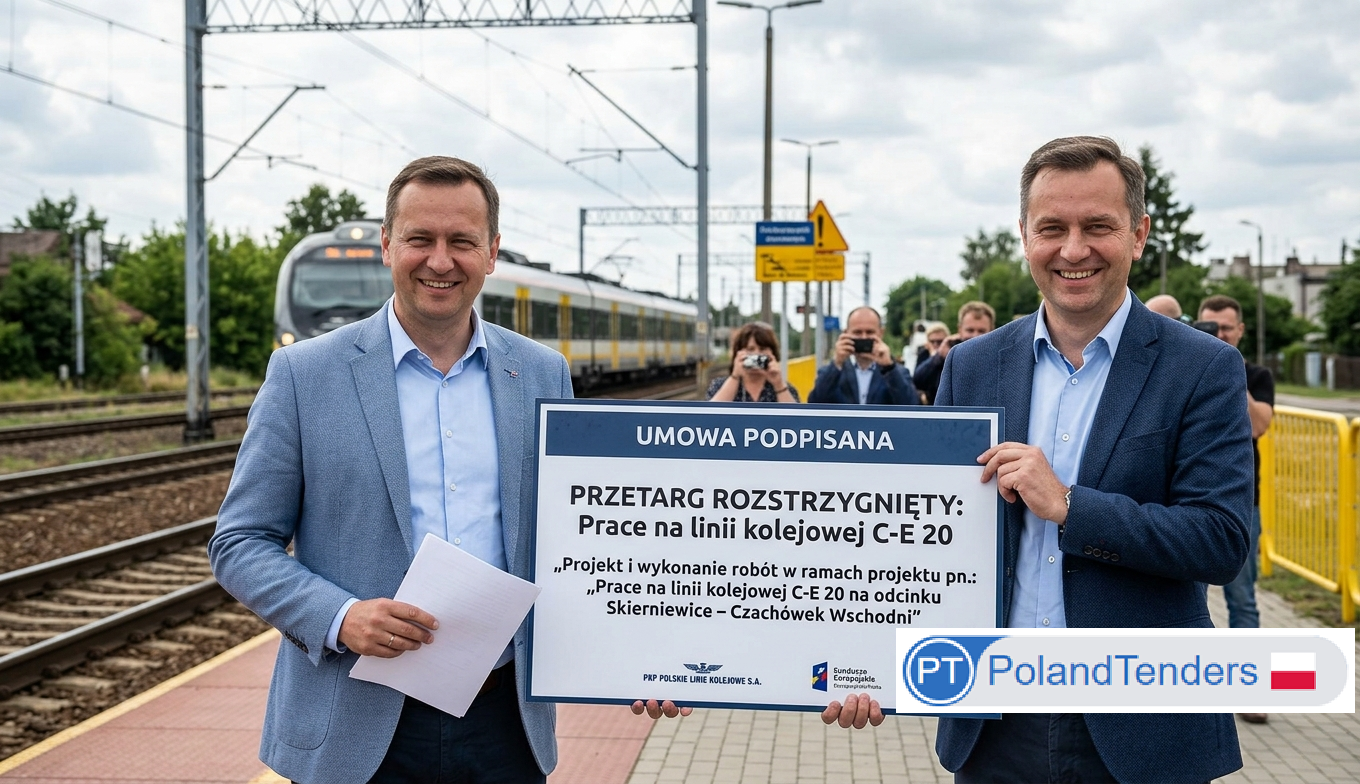
Poland Advances Strategic East West Rail Corridor Upgrade with PLN 1.2 Billion Contract Award
29 Jul 2026
Standfirst Modernising one of Poland's important freight and passenger railway corridors has moved into the implementation phase after PKP Polskie Linie Kolejowe S.A. awarded a contract worth PLN 1.199 billion for the design and construction of works on the C E 20 railway line between Skierniewice and Czachówek Wschodni. The project combines engineering design and major construction activities and is seeking financial support from the European Union Connecting Europe Facility. Introduction Reliable rail infrastructure has become increasingly important as European countries seek to strengthen freight corridors and improve passenger mobility while supporting more sustainable transport networks. Upgrading existing railway lines rather than building entirely new corridors has become a key strategy for increasing capacity and improving operational efficiency. Against this backdrop PKP Polskie Linie Kolejowe S.A. has completed the procurement process for a major railway modernisation project covering the C E 20 railway line between Skierniewice and Czachówek Wschodni. The awarded contract combines detailed engineering design with construction activities across railway infrastructure and associated systems including signalling telecommunications traction power civil engineering structures stations and environmental protection works. The contract has a total awarded value of PLN 1,199,941,074.95 and represents one of the significant rail infrastructure awards published through Tenders Electronic Daily during this procurement cycle. Why This Contract Matters The project extends well beyond routine railway maintenance. It is intended to modernise a substantial section of railway infrastructure serving central Poland through a design and build approach that allows engineering solutions and construction activities to be delivered under a single contract. The scope includes track renewal signalling systems telecommunications traction power infrastructure engineering structures passenger platforms and environmental protection facilities. The contractor will also be responsible for obtaining required administrative approvals carrying out conformity assessment of railway subsystems and delivering certification required before infrastructure can enter operation. The procurement also includes optional sections covering additional railway segments and interface works with future projects. This gives the contracting authority flexibility to expand the programme without launching an entirely new procurement if funding and operational priorities permit. The notice also states that the project is seeking European Union funding through the Connecting Europe Facility which underlines its wider strategic importance within the European transport network. Contract Timeline Procurement Stage Date Previous TED notice 446481 2025 Winner selected 06 February 2026 Contract signed 22 July 2026 TED publication 29 July 2026 Estimated contract duration 56 months Contract Overview The procurement was conducted by PKP Polskie Linie Kolejowe S.A. using an open procedure under Directive 2014 25 EU which governs procurement by entities operating in the utilities sector. The contract covers both works and engineering services under a design and build model. The awarded scope primarily covers the railway section from kilometre 0.407 to kilometre 27.950 together with options extending the project to kilometre 63.150 and additional interface works where coordination with other railway contracts becomes necessary. The contracting authority has stated that these options are independent and may be exercised separately. The procurement is not structured as a framework agreement and does not use a dynamic purchasing system. The contract is covered by the Government Procurement Agreement ensuring international procurement obligations apply. Key Contract Details Item Details Country Poland Contracting Authority PKP Polskie Linie Kolejowe S.A. Project Design and construction works for the C E 20 railway line between Skierniewice and Czachówek Wschodni Contract Type Works and Services Procedure Open Main CPV 45000000 Construction work Award Value PLN 1,199,941,074.95 Contract Duration 56 months Number of Tenders Received 9 EU Funding Project is seeking Connecting Europe Facility support Project Scope The contract covers preparation of engineering documentation followed by construction across multiple railway disciplines. These include track infrastructure railway signalling systems telecommunications traction power systems electrical infrastructure engineering structures passenger platforms station related buildings level crossings and environmental protection facilities. Beyond physical construction the contractor must complete conformity assessment activities for railway subsystems and provide the required European verification declarations and certificates before the upgraded infrastructure enters service. Optional works may extend the upgraded railway corridor and provide technical integration with other railway investment projects where required by the contracting authority. About the Contracting Authority PKP Polskie Linie Kolejowe S.A. is Poland's national railway infrastructure manager and is responsible for developing maintaining and operating the country's railway network. The organisation acts as the contracting entity for this procurement and is responsible for managing the tender process signing the contract and overseeing project delivery. According to the TED notice the organisation also serves as the provider of procurement information and review related information for the procedure. About the Organisations Involved PKP Polskie Linie Kolejowe S.A. is the contracting authority responsible for procuring, managing and implementing Poland's railway infrastructure projects. Operating as the national railway infrastructure manager, the organisation launched the open procurement procedure, evaluated bids, selected the successful tender and signed the final contract. It will also oversee contract execution throughout the estimated 56 month implementation period. Trakcja S.A. serves as the leader of the successful tendering party. The company will coordinate delivery of one of Poland's largest railway modernisation contracts, covering engineering design, construction, railway systems integration and commissioning. According to the TED notice, Trakcja S.A. is classified as a large economic operator and led the winning consortium. Sarinż Sp. z o.o. participated as a member of the successful tendering party. The company is identified in the notice as a medium sized economic operator and forms part of the contractor responsible for delivering the awarded works. The notice identifies the company as a winning tenderer but does not specify the division of responsibilities within the consortium. Krajowa Izba Odwoławcza serves as the review authority for the procurement. The institution is responsible for handling procurement related appeals and ensuring compliance with Poland's public procurement legislation throughout the tender process. Procurement Analysis The procurement attracted nine competitive bids, demonstrating substantial market interest despite the technical complexity and significant financial value of the project. All tenders were submitted electronically, reflecting the maturity of Poland's digital public procurement environment. No tenders were received from SMEs or from companies registered outside Poland, indicating that projects of this scale continue to favour established domestic railway infrastructure contractors with extensive technical capabilities. The contract was awarded using an open procurement procedure under Directive 2014/25/EU, providing unrestricted competition among qualified economic operators. The contracting authority selected the winner using a 100 percent price based evaluation criterion, where the total evaluated price included both the core contract scope and all optional works. This approach encouraged bidders to provide comprehensive commercial pricing for the complete potential project rather than only the mandatory works. An important feature of this procurement is the inclusion of three independent contractual options. Two options allow extension of railway modernisation works across additional sections of the corridor, while a separate interface option enables integration with future railway projects requiring compatibility with signalling and train control systems delivered under this contract. Because these options are independent, PKP Polskie Linie Kolejowe S.A. retains flexibility to expand the programme according to available funding, project sequencing and operational priorities without undertaking a completely new procurement process. The project follows a design and build procurement model, placing responsibility for engineering design, construction, regulatory approvals, certification and commissioning under a single contractor. This integrated delivery model can improve coordination between design and construction while reducing interface risks that commonly arise when separate engineering and construction contracts are used. The procurement is also subject to the Foreign Subsidies Regulation. The TED notice confirms that a notification was submitted and the preliminary review was administratively closed before contract award. This illustrates the increasing influence of European Union regulatory oversight on major infrastructure procurements involving large international contractors or complex financing arrangements. Another notable feature is the project's planned application for funding under the Connecting Europe Facility. Although the notice states that the project is seeking EU financial support rather than confirming funding approval, the programme's inclusion highlights the corridor's strategic importance within the wider European transport network. From a procurement perspective, the combination of significant contract value, integrated design and construction responsibilities, multiple optional work packages and European regulatory requirements makes this award representative of the increasingly sophisticated procurement strategies being adopted for major railway infrastructure investments across Europe. Additional Procurement Facts Reference Number 9090/IREZA4/10715/04079/26/P TED Notice 2026/S 144-525473 Previous TED Notice 446481-2025 Procedure Type Open Procedure Legal Basis Directive 2014/25/EU (Utilities Procurement) Main Award Criterion Price (100%) Total Tenders Received 9 Framework Agreement No Dynamic Purchasing System Not Used Electronic Submission Mandatory Government Procurement Agreement Yes Foreign Subsidies Regulation Notification submitted and preliminary review completed before award Contract Duration 56 Months Market & Industry Perspective The award demonstrates Poland's continued commitment to upgrading its national railway infrastructure through large-scale integrated contracts that combine engineering, construction and railway systems under a single delivery model. Rather than separating design from execution, the contracting authority has chosen an approach intended to streamline project delivery and improve coordination across multiple technical disciplines. Projects of this scale continue to create demand across the railway supply chain. Although the principal contract has already been awarded, implementation will require a wide range of specialist products and services including signalling equipment, telecommunications systems, traction power components, civil engineering materials, environmental protection solutions, testing, inspection and certification activities. Companies with proven railway expertise may therefore find opportunities through subcontracting arrangements during the project's execution phase. The inclusion of optional work packages also provides flexibility for future expansion. Should additional funding become available, the contracting authority may activate further sections of the contract without initiating an entirely new procurement procedure. This procurement strategy enables infrastructure programmes to adapt more efficiently to changing investment priorities while maintaining continuity of project delivery. The project's planned application for financial support through the Connecting Europe Facility further reflects the importance of aligning national railway investments with wider European transport objectives. Corridors that strengthen cross-regional connectivity continue to receive significant attention as European governments prioritise sustainable freight transport and improved passenger mobility. Economic Significance With an awarded value of nearly PLN 1.2 billion, this contract represents a major public infrastructure investment that is expected to generate economic activity across multiple sectors over the next 56 months. Beyond railway construction, expenditure will support engineering consultancies, specialist equipment manufacturers, construction material suppliers, technology providers, testing laboratories and numerous subcontractors involved throughout the delivery lifecycle. Long-duration railway contracts also provide greater certainty for contractors and suppliers, enabling investment in skilled personnel, specialised equipment and long-term project planning. Such investments contribute to strengthening Poland's railway construction sector while supporting broader transport modernisation objectives. Future Procurement Opportunities Businesses active in railway infrastructure should closely monitor procurement activity from PKP Polskie Linie Kolejowe S.A., which continues to implement extensive network modernisation programmes across Poland. Similar projects frequently involve upgrades to railway tracks, signalling, electrification systems, telecommunications infrastructure, bridges, stations and passenger facilities. The optional components included within this contract may also create additional work if exercised during implementation. Furthermore, complementary infrastructure projects associated with adjacent railway corridors may generate separate procurement opportunities for engineering firms, construction contractors, equipment suppliers and technical service providers in the coming years. These observations are based on the procurement structure described in the TED notice; the notice itself does not announce future tenders. PolandTenders.com Procurement Intelligence From a procurement intelligence perspective, this award illustrates several trends that are increasingly shaping European railway procurement. First, contracting authorities are favouring large integrated design-and-build contracts that transfer responsibility for engineering, construction, regulatory approvals and commissioning to a single contractor or consortium. This approach can reduce interface risks while simplifying overall programme management. Second, the inclusion of independent optional work packages provides greater flexibility in long-term infrastructure planning. Authorities can extend project scope in response to available funding without restarting complex procurement procedures, improving both administrative efficiency and delivery continuity. Third, the procurement demonstrates how European regulatory requirements are becoming an integral component of major public contracts. Compliance with interoperability certification, conformity assessment procedures and Foreign Subsidies Regulation requirements is now an essential consideration for bidders competing for strategic infrastructure projects. Finally, the strong level of competition, nine submitted tenders for a contract valued at approximately PLN 1.2 billion, highlights the continued attractiveness of Poland's railway investment programme for experienced infrastructure contractors capable of delivering technically complex projects under demanding regulatory frameworks.Opportunities for Suppliers Although the principal contract has been awarded, projects of this magnitude typically create substantial opportunities for specialist subcontractors and supply chain partners throughout the implementation period. Companies involved in railway infrastructure, signalling, electrification, telecommunications, civil engineering, environmental protection, testing, inspection and certification services may benefit from participation through the successful contractor and its delivery partners. Engineering consultancies, equipment manufacturers, construction material suppliers and railway technology providers should also monitor related procurement activity associated with Poland's continuing railway modernisation programme. These observations are based on the contract scope described in the TED notice and do not indicate additional procurements announced within the notice itself. What Businesses Should Watch Implementation progress of the 56-month railway modernisation programme. Potential activation of the three optional work packages included in the contract. Subcontracting opportunities arising during engineering design and construction. Progress of the project's application for Connecting Europe Facility (CEF) financial support. Future railway infrastructure procurements issued by PKP Polskie Linie Kolejowe S.A. as part of its wider investment programme. Key Takeaways PKP Polskie Linie Kolejowe S.A. has awarded a contract valued at PLN 1,199,941,074.95 for the design and construction of the C–E 20 railway line between Skierniewice and Czachówek Wschodni. The successful contractor is a consortium led by Trakcja S.A. together with Sarinż Sp. z o.o.. The procurement attracted nine competitive tenders and was awarded using an open procedure with price as the sole evaluation criterion. The contract follows an integrated design-and-build model covering engineering, construction, railway systems, environmental protection and regulatory certification. The procurement includes three optional work packages, providing flexibility for future expansion subject to the contracting authority's requirements. The project is seeking financial support through the European Union's Connecting Europe Facility programme. Conclusion The award of this PLN 1.2 billion contract marks another significant milestone in Poland's long-term railway infrastructure modernisation programme. By combining engineering design, construction, systems integration and regulatory compliance within a single contract, PKP Polskie Linie Kolejowe S.A. aims to deliver a comprehensive upgrade of an important section of the national railway network while maintaining flexibility through optional project components. Beyond its immediate construction value, the procurement reflects broader trends across European infrastructure investment, including integrated delivery models, increased regulatory oversight and continued emphasis on improving transport connectivity. As implementation progresses over the next 56 months, the project is expected to generate business opportunities across the railway supply chain while supporting Poland's wider transport development objectives. The conclusions regarding market implications are editorial analysis based on the procurement information contained in the TED notice. Source: TED Contract Award Notice no 525473-2026 - 2026/S 144-525473, "Design and Construction Works on Railway Line C-E 20 between Skierniewice and Czachówek Wschodni", published on 29 July 2026. Information has been adapted from the official European Union procurement notice.
View Details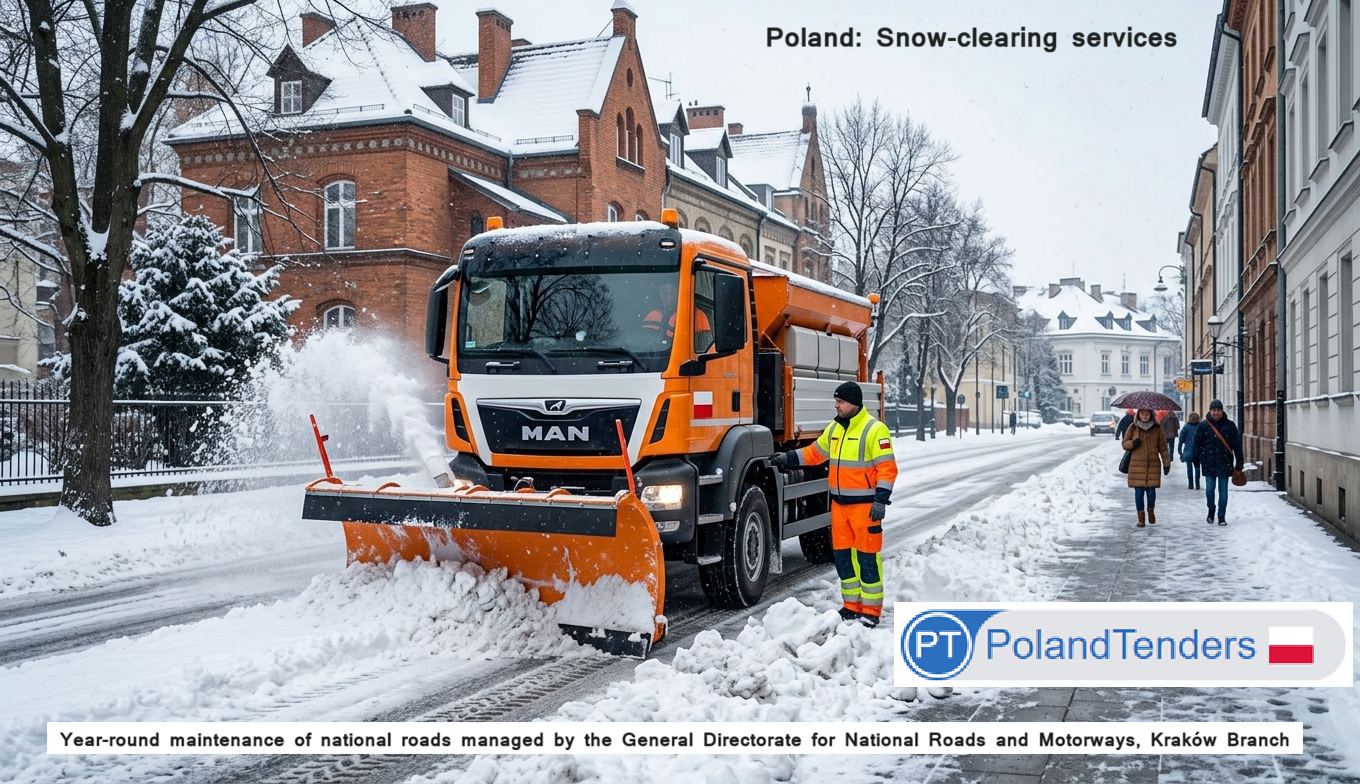
EUROVIA Polska Wins PLN 118 Million Year-Round Road Maintenance Contract for Małopolska's Wadowice District
28 Jul 2026
Introduction: Poland's General Directorate for National Roads and Motorways (Generalna Dyrekcja Dróg Krajowych i Autostrad, GDDKiA), Kraków Branch, has awarded a four year, year round road maintenance contract worth PLN 118,360,161.75 (approximately €27 million at current rates) to EUROVIA Polska S.A. The contract covers the year-round maintenance, both routine and winter, of eight national road sections administered by the Wadowice District (Rejon Wadowice) in Małopolska Province, running from 1 May 2026 to 30 April 2030. The award forms part of a five-lot procurement programme covering year-round maintenance of all national roads managed by GDDKiA's Kraków Branch across Małopolska, with a combined estimated programme value exceeding PLN 1.1 billion. This notice covers the result for Lot 5 only. Why This Contract Matters This contract is significant on several levels. In pure scale, the five lot programme it belongs to, year round maintenance of the entire national road network administered by GDDKiA's Kraków Branch, is one of the largest recurring public service contracts in Małopolska Province and represents a core component of Poland's national road infrastructure management cycle. Winter road maintenance on routes connecting the Kraków metropolitan area with the Tatra and Beskidy mountain regions, including the popular Wadowice and Oświęcim belt served by this contract, carries genuine public safety importance: uncleared roads and poorly maintained surfaces in this section of Małopolska affect both everyday commuters and the significant tourist and freight traffic using routes such as DK44 and DK52. For the road maintenance and construction industry in Poland, this award also illustrates two important procurement dynamics: the continued dominance of large, nationally operating contractors in GDDKiA tenders of this scale and the extent to which even a winning contractor on a major national roads contract will rely on subcontractors for the bulk of operational delivery, retaining direct control only over the contract management functions that Polish procurement law explicitly requires to be personally performed. Contract Timeline MilestoneDate Previous contract notice published2025 (Notice 784790-2025) Contract signed (concluded)1 July 2026 Notice dispatched to TED27 July 2026 Published in OJ S28 July 2026 (OJ S 143/2026) Contract start date1 May 2026 Contract end date30 April 2030 Contract duration48 months Option period (if exercised)Up to 18 additional months within the 48-month cap Contract Overview Lot 5 of the GDDKiA Kraków Branch procurement (internal reference OKR.D-3.2421.28.2025, Część 5) covers the year-round maintenance of national roads administered by the Wadowice District: road numbers DK28, DK28d, DK44, DK44b, DK44c, DK44d, DK52 and DK52a. The geographic area of performance falls within the Oświęcimski NUTS subregion (PL21A) in Małopolska Province. The scope of maintenance work is structured across twelve defined work groups, covering every functional element of the road infrastructure rather than a single trade category. This twelve-group structure is a standard GDDKiA framework for year-round national road maintenance contracts and encompasses routine pavement maintenance, shoulders and central reservation maintenance, road body and drainage works, signage, road safety devices, aesthetics and green area maintenance, engineering structure cleaning, as well as the critically important winter road maintenance and contract management functions. An option clause allows GDDKiA to extend the scope by up to 30 percent of the base contract value for a period not exceeding 18 months within the overall 48-month cap, giving the authority contractual flexibility to respond to unforeseen maintenance needs without launching a new procurement, though the contractor has no right to claim damages if the option is not exercised. Key Contract Details FieldDetail Notice Number522466-2026 OJ S Issue143/2026, published 28 July 2026 Internal Reference (Lot 5)OKR.D-3.2421.28.2025, Część 5 (Rejon Wadowice) Contract IdentifierI/242/ZZ/Z-1/2026 Contracting AuthorityGeneralna Dyrekcja Dróg Krajowych i Autostrad, Kraków Branch Authority TypeCentral government authority Contract TypeServices Main CPV Code90620000, Snow-clearing services Additional CPV Codes45233220 (road surface works), 45233221 (road-surface painting), 45233222 (paving and asphalting), 45233280 (road barriers), 77211400 (tree-cutting), 77310000 (green area maintenance), 90470000 (sewer cleaning), 90910000 (cleaning services), 50232100 (street-lighting maintenance), 65320000 (operation of electrical installations) Procedure TypeOpen procedure (reversed procedure under Article 139 of the Polish Public Procurement Act) Award CriterionPrice only, 100% Lot 5 Estimated Value (incl. options)PLN 194,537,728.62 excl. VAT Awarded Contract ValuePLN 118,360,161.75 GPA CoverageYes, covered by WTO Government Procurement Agreement EU FundingNo, not financed with EU funds Place of PerformanceOświęcimski subregion (NUTS PL21A), Małopolska Province Project Scope The full scope of year-round road maintenance services covered under this contract spans twelve functional work groups, reflecting the comprehensive, multi-discipline nature of national road maintenance responsibilities: Group 1, Pavement: Routine surface repairs, patching, crack sealing and carriageway maintenance to preserve the structural and safety integrity of the road surface. Group 2, Shoulders and central reservations: Maintenance of hard and soft shoulders, central reservation strips and separation zones. Group 3, Road body: Earthwork maintenance, embankment stabilisation and road bed integrity works. Group 4, Drainage: Maintenance of roadside ditches, culverts and drainage infrastructure to prevent surface water accumulation. Group 5, Footpaths and cycle paths: Maintenance of pedestrian and cycling infrastructure associated with the national road network. Group 6, Road signage: Maintenance, repair and replacement of vertical and horizontal road signs in line with current road safety standards. Group 7, Road safety devices (BRD): Maintenance of crash barriers, guardrails, noise barriers and other road safety equipment. Group 8, Aesthetics: Environmental maintenance, litter removal and visual upkeep of the road corridor. Group 9, Auxiliary devices: Maintenance of cameras, traffic management equipment and other electronic road infrastructure. Group 10, Winter road maintenance (ZUD): The snow-clearing, gritting, de-icing and anti-skid treatment operations that constitute the most time-critical and weather-dependent component of the contract and for which readiness payments (Gotowość do ZUD) form a defined cost category. Group 11, Contract management (key reserved tasks): The Road Maintenance Manager and Deputy Road Maintenance Manager roles must be personally performed by the contractor and cannot be delegated to subcontractors or resource-sharing entities under Article 121 of the Polish Public Procurement Act. Group 12, Cleaning of engineering structures (BUM): Routine cleaning and maintenance of bridges, viaducts, underpasses and other engineering structures on the administered road sections. About the Contracting Authority The General Directorate for National Roads and Motorways (Generalna Dyrekcja Dróg Krajowych i Autostrad, GDDKiA) is Poland's central government agency responsible for the planning, construction, management and maintenance of national roads and motorways. The Kraków Branch (Oddział w Krakowie), headquartered at ul. Mogilska 25, Kraków, manages the national road network across Małopolska Province, one of Poland's most topographically complex road management responsibilities, encompassing the Kraków urban agglomeration, the Tatra mountain approaches and the southern tourist corridor toward Zakopane and the Slovakian border. GDDKiA is subject to Polish public procurement law (the Public Procurement Act, Ustawa Prawo Zamówień Publicznych) and for above-threshold contracts is additionally subject to EU Directive 2014/24/EU on public procurement. Procurement for the Kraków Branch is conducted through the eProcurement platform at https://gddkia.eb2b.com.pl. Procurement enquiries are directed to sekretariat_krakow@gddkia.gov.pl. About the Organisations Involved EUROVIA Polska S.A. (NIP: 6350000127, registered at ul. Irysowa 1, Bielany Wrocławskie, 55-040, NUTS PL518 Wrocławski) is a large Polish road construction and maintenance company and the Polish subsidiary of EUROVIA, the road-building and materials division of the VINCI Group, one of Europe's largest concessions and construction companies. EUROVIA Polska is among the most consistently active contractors in GDDKiA public tenders across Poland, with operational capabilities spanning motorway and expressway construction, national road maintenance, surface treatment, asphalt production and winter road maintenance. The Kraków regional office contact for this contract is oddzial.krakow@eurovia.pl. In its winning bid for Lot 5, EUROVIA Polska declared that it will subcontract all scope except bituminous works and the key reserved contract management tasks specified in section 6.5 of the specification. This subcontracting approach, retaining the technically specialised asphalt and surface works in-house while delegating the broader range of maintenance tasks to subcontractors, is consistent with the contractor's core competency in road surface and pavement operations. The review body for this procurement is the Krajowa Izba Odwoławcza (KIO), Poland's National Appeals Chamber, based at ul. Postępu 17a, Warszawa (02-676). KIO is the statutory first-instance review body for Polish public procurement disputes and its decisions can be appealed to the Warsaw District Court (functioning as the specialised public procurement court) and ultimately to the Supreme Court. One review request of type "other" was recorded in the statistical information for Lot 5. Procurement Analysis Several features of this procurement are worth analysing for contractors and procurement observers tracking Poland's national road maintenance market. The 100% price criterion is striking in the context of a complex, multi-year public service contract covering twelve functional work groups including critical winter safety operations. Polish public procurement law generally encourages contracting authorities to use quality criteria alongside price to drive better outcomes in service contracts and GDDKiA national road maintenance contracts have used multi-criteria evaluation in past procurement cycles. A pure price competition on a contract of this type places the entire competitive burden on price, which, combined with the option clause and the contractor's declared subcontracting of most non-bituminous scope, will be worth monitoring from a service delivery outcome perspective over the contract's four-year term. The reversed procedure (Article 139 of the Polish Public Procurement Act), used for this procurement, is a notable procedural feature: under this approach, the contracting authority first evaluates bids and then verifies the eligibility documentation only of the most economically advantageous tenderer, rather than verifying all bidders upfront. This speeds up the overall award timeline in competitive multi-bidder tenders, particularly on large infrastructure contracts where full eligibility checks of every bidder would be administratively intensive. The bidder restriction, limiting each contractor to submitting offers on a maximum of two out of the five lots, reflects GDDKiA's deliberate effort to prevent the entire Kraków Branch network from being concentrated in the hands of a single operator, ensuring operational resilience across the region's road maintenance programme. This restriction shaped the competitive dynamics of each lot individually, since contractors had to prioritise which two lots to pursue rather than bidding on all five. The winning bid of PLN 118.36 million against an estimate of PLN 194.54 million represents a significant discount of approximately 39 percent below the authority's estimated value, a gap that typically signals either highly competitive pricing pressure in the market, an efficiency advantage held by the winning bidder or an estimated value that was set conservatively or reflects option scope the authority does not expect to exercise in full. Additional Procurement Facts Legal basis: EU Directive 2014/24/EU on public procurement; Polish Public Procurement Act (Prawo Zamówień Publicznych) GPA coverage: Yes, covered by the WTO Government Procurement Agreement EU funding: No, not financed with EU funds Total bids received (Lot 5): 6 Electronic submissions: 6 of 6 (100%) SME bids received: 2 of 6 Bids from other EEA countries: 0 Bids from outside EEA: 0 Tenders verified but inadmissible: 1 Review requests filed: 1 (type: other) Lowest admissible bid: PLN 118,360,161.75 (EUROVIA Polska, the winner) Highest admissible bid: PLN 137,071,172.52 Option value: Up to 30% of base contract value, exercisable over up to 18 months Advance payment: 5% of contractor remuneration available for Winter Road Maintenance readiness and Contract Management scope, subject to a security deposit Key reserved tasks: Road Maintenance Manager and Deputy roles, must be personally performed by the contractor, cannot be delegated under Article 121 of the Public Procurement Act Russia sanctions exclusion: Article 5k of Council Regulation (EU) No. 833/2014 applied as grounds for exclusion Whistleblowing compliance: GDDKiA has an internal reporting procedure under Poland's Whistleblowers Protection Act of June 2024 Market and Industry Perspective Poland's national road maintenance market is dominated by a small number of large contractors with national operational footprints, EUROVIA Polska, Strabag, Budimex, Mota-Engil and a handful of others regularly feature as winners in GDDKiA's year-round maintenance tenders across the country's sixteen voivodeship-level branches. The Kraków Branch is one of the more competitive and technically demanding of these, given Małopolska's terrain: the mountain approaches from Wadowice toward the Beskidy hills (DK28, DK52), the Kraków–Oświęcim corridor (DK44) and the associated secondary national road sections require year-round operational readiness that smaller regional contractors rarely sustain at the scale and reliability that GDDKiA's technical specifications demand. The absence of any bids from outside Poland, not even from other EEA countries, is consistent with the pattern seen in GDDKiA road maintenance tenders generally. While the contract is GPA-covered and open in principle to international competition, the language requirements, JEDZ documentation, local operational infrastructure needed for winter road maintenance readiness and the personal performance requirement for contract management effectively limit competitive participation to contractors with an established Polish presence. Economic Significance Lot 5 alone, at PLN 118.36 million over four years, represents a substantial and sustained injection of public expenditure into the road maintenance services sector of the Oświęcimski and wider Małopolska sub-regional economy. The national roads covered by this contract, particularly DK44 (Kraków–Oświęcim) and DK52 (Kraków–Głogoczów corridor), are among the more heavily trafficked secondary national routes in the province, connecting the Kraków agglomeration with western Małopolska's industrial and tourism zones. Reliable year-round maintenance of these routes, including winter safety operations, has direct economic implications for commuter travel times, freight logistics and the region's accessibility for the tourism sector. Set within the full five-lot programme context, the PLN 1.1 billion estimated total programme value for all five GDDKiA Kraków Branch year-round maintenance lots represents one of the most significant multi-year service procurement commitments in Małopolska's public sector budget cycle, with Lot 5 accounting for roughly 17 percent of the programme's estimated total value. Future Procurement Opportunities Contractors tracking GDDKiA Kraków Branch procurement should monitor: Contract award notices for Lots 1 through 4 of the same programme (Rejony Kraków, Nowy Sącz, Nowy Targ and Tarnów), which are not covered by this notice and would appear under separate TED notice numbers referencing the same procedure identifier (784790-2025 prior notice). GDDKiA Kraków Branch future procurement notices for the post-2030 cycle, which would represent the next major year-round maintenance competition for this road network following the expiry of the contracts now being awarded. Broader GDDKiA procurement, both the 15 other branch offices nationwide and GDDKiA Headquarters, which issue year-round maintenance, capital works and consultancy tenders on a rolling basis throughout the year, all published on the TED portal and GDDKiA's eProcurement platform. Opportunities for Suppliers This award illustrates the practical market realities for suppliers and subcontractors targeting GDDKiA road maintenance contracts in Poland: EUROVIA Polska's declared intention to subcontract substantially all non-bituminous scope creates an active and immediate supply chain opportunity for specialist service providers, drainage contractors, signage installers, green area maintenance firms, street-lighting and electrical operators and cleaning service providers, in the Wadowice District and wider Oświęcimski subregion. The 48-month contract duration provides supply chain participants with a genuine basis for medium-term planning, subject to the volume uncertainty inherent in year-round maintenance task-order structures. Smaller contractors who are GPA-registered and would like to compete directly for future GDDKiA maintenance lots, rather than as subcontractors, should note that the bidder restriction (maximum two lots per contractor) creates structured entry points even in highly competitive tender rounds. Winter road maintenance readiness services, salt supply, gritting equipment maintenance, operational standby logistics, represent a recurring, time-sensitive supply chain requirement specific to this geographic location and climate profile. What Businesses Should Watch Award notices for Lots 1–4 of the GDDKiA Kraków Branch year-round maintenance programme, which will identify the winning contractors responsible for the Kraków, Nowy Sącz, Nowy Targ and Tarnów regions through April 2030. Any corrigenda or contract modification notices relating to contract I/242/ZZ/Z-1/2026, which may reflect changes to the declared subcontracting arrangement or scope adjustments during the contract's initial mobilisation phase. The outcome of the review request (KIO appeal, type: other) recorded in Lot 5's statistical data, which could in principle affect the contract's legal finality, though the contract was signed on 1 July 2026, indicating the process progressed without an automatic suspension. PolandTenders.com Procurement Intelligence polandTenders.com tracks contract award notices, procurement plans and tender opportunities from GDDKiA and all Polish national road and transport authorities, as well as European-level procurement published through the TED portal. This notice confirms a four-year year-round road maintenance contract for Małopolska's Wadowice District, with EUROVIA Polska's PLN 118.36 million winning bid securing the management of eight national road sections through April 2030, a contract that will shape the condition and safety of a significant stretch of the Kraków region's secondary national road network for the remainder of this decade. Supplier Takeaways EUROVIA Polska S.A. wins Lot 5 (Rejon Wadowice) of GDDKiA Kraków's year-round national road maintenance programme with a bid of PLN 118.36 million, approximately 39 percent below the authority's estimated value of PLN 194.54 million. The contract covers eight national road sections (DK28, DK44, DK52 and variants) in Małopolska's Oświęcimski subregion from May 2026 to April 2030. EUROVIA will subcontract all scope except bituminous works and the reserved contract management roles, creating supply chain opportunities for specialist service providers in the region. The award criterion was 100% price, a pure lowest-price competition unusual in its simplicity for a contract of this scope and duration. This notice covers Lot 5 only. The four remaining lots covering the Kraków, Nowy Sącz, Nowy Targ and Tarnów regions are expected under separate award notices. Key Takeaways GDDKiA Kraków Branch has awarded a PLN 118.36 million, 48-month year-round road maintenance contract for the Wadowice District to EUROVIA Polska S.A., with the contract signed on 1 July 2026. The full five-lot year-round maintenance programme for GDDKiA's Kraków Branch carries a combined estimated value exceeding PLN 1.1 billion; Lot 5 represents approximately 17% of that total estimated value. Six bids were received for Lot 5, all electronic, with two from SMEs; no bids were submitted from outside Poland despite GPA coverage. The contract is governed by Polish public procurement law and EU Directive 2014/24/EU, with the Krajowa Izba Odwoławcza serving as review body. One review request (type: other) was recorded for Lot 5, though the contract was concluded on 1 July 2026. Conclusion GDDKiA Kraków Branch's award of the Lot 5 Wadowice District year-round road maintenance contract to EUROVIA Polska S.A. marks a significant milestone in the roll-out of Małopolska's multi-year national road infrastructure management cycle. The four-year contract, covering routine, winter and engineering structure maintenance across eight national road sections in the Oświęcim and Wadowice belt, will sustain the safety and connectivity of one of southern Poland's more heavily trafficked secondary national road corridors through the end of April 2030. For the road maintenance sector in Poland, the winning bid's substantial discount below the estimated value and the contractor's broad subcontracting approach both signal the competitive and supply-chain dynamics shaping this segment of GDDKiA procurement in 2026. Source: EU Official Journal, Contract Award Notice 522466-2026, OJ S 143/2026, published 28 July 2026. Contracting authority: Generalna Dyrekcja Dróg Krajowych i Autostrad, Kraków Branch.
View Details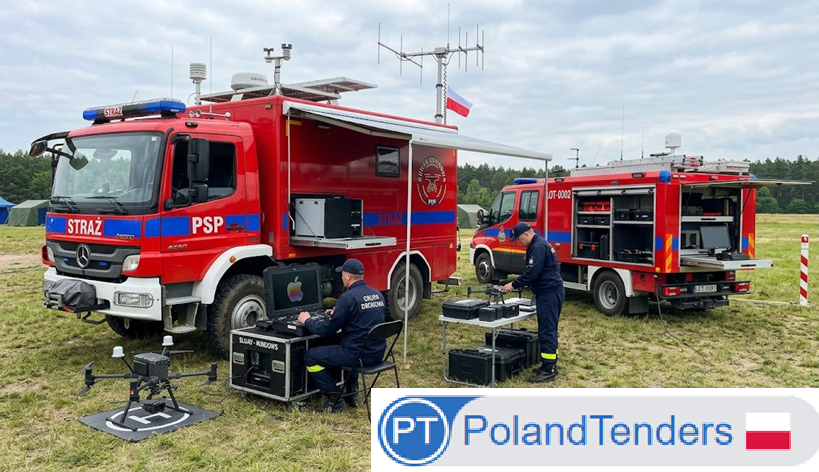
Poland Is Building a Nationwide Fleet of Drone-Response Fire Trucks And Split the Order by Operating System, Not Geography
27 Jul 2026
Standfirst Twenty three separate Polish fire authorities, from national headquarters down to district commands and training academies, have jointly secured 21 specialised vehicles for their drone response units. The entire order went to a single Polish manufacturer, Bocar, but the more interesting decision is how the tender itself was split: not by region, but by whether each vehicle's onboard drone control workstation runs Windows or macOS.IntroductionWhen a wildfire breaks out in a remote forest or a building collapses and rescue teams need to map the site before sending anyone inside, Poland's State Fire Service increasingly turns to drones. Behind every one of those flights sits unglamorous but essential infrastructure: a specially fitted vehicle carrying the drone, its charging and maintenance equipment and an onboard operator workstation running the software that plans, controls and monitors the flight. Poland's fire service has just placed a nationwide order for 21 of these vehicles, procured jointly by 23 separate fire authorities spanning the entire country.Led by Komenda Główna Państwowej Straży Pożarnej, the State Fire Service's national headquarters, acting as the authorised agent for all 23 participating buyers, the tender was split into two parts based on a detail with nothing to do with geography: which computer operating system each vehicle's drone control station needs to run. Fourteen vehicles will be built with Windows based operator stations; seven with macOS based stations. Both parts were won by the same company, Przedsiębiorstwo Specjalistyczne "Bocar", a Polish vehicle manufacturer based near Częstochowa with more than three decades of experience building fire and rescue vehicles.Why This Contract MattersDrone units have become a genuinely important part of modern firefighting and disaster response, mapping wildfire perimeters from the air, assessing structural damage before rescue teams enter a building, searching for missing persons across terrain too large or dangerous to cover on foot. None of that capability works reliably without a dedicated, properly equipped vehicle to transport, charge and operate the drones from, which is exactly what this contract delivers to fire authorities across Poland, from major cities to rural districts.The tender's operating system based split is also worth understanding on its own terms, because it says something important about how specialised equipment procurement actually works in practice. The notice is explicit that the Windows/macOS division exists purely to preserve compatibility with software, hardware, operating procedures, configuration files, administrative tools and training systems the fire service's drone groups already use, not to favour one computer manufacturer over another. It is a reminder that technical continuity with an existing, trained, operational system can matter just as much as the vehicle itself.Contract Timeline Date Milestone --- Open procedure launched (internal identifier BL V.2370.4.2026) 1 July 2026 Winner selected for Lot 1 (Windows based vehicles) 9 July 2026 Winner selected for Lot 2 (macOS based vehicles) 16 July 2026 Contract concluded for Lot 1 23 July 2026 Contract concluded for Lot 2 24 July 2026 Award notice dispatched to the EU Publications Office 27 July 2026 Notice published in OJ S 142/2026 By 15 December 2026 Required completion deadline for both lots (within 5 months of contract conclusion) Contract OverviewKomenda Główna Państwowej Straży Pożarnej ran an open procedure under Article 132 of Poland's Public Procurement Law, acting as the authorised representative for 23 separate fire service buyers across the country, to secure 21 specialist vehicles equipped for the State Fire Service's Specialised Drone Groups (Specjalistyczne Grupy Dronowe, referred to in the notice as SLUAV units). The tender was split into two lots based on the operating system used in each vehicle's onboard operator workstation: Lot 1 covered 14 vehicles with Windows based stations; Lot 2 covered 7 vehicles with macOS based stations. Both lots were evaluated purely on price and both were won by Przedsiębiorstwo Specjalistyczne "Bocar" Spółka z ograniczoną odpowiedzialnością.Lot 1 drew eight electronic tenders, five of them from micro, small or medium sized enterprises; Lot 2 drew nine electronic tenders, six from SMEs, a genuinely well contested field for both parts of the competition, with no bids received from tenderers registered outside Poland in either lot.Key Contract Details Field Detail Lead contracting authority (authorised agent) Komenda Główna Państwowej Straży Pożarnej (State Fire Service National Headquarters) Joint buyers 23 separate fire service authorities across Poland, including voivodeship, city and district commands and national fire training academies Winning contractor Przedsiębiorstwo Specjalistyczne "Bocar" Sp. z o.o. Title Dostawa 21 sztuk samochodów specjalnych dla grup dronowych z wyposażeniem CPV codes 34114000 – Specialist vehicles; 34144210 – Firefighting vehicles Procedure type Open Legal basis Directive 2014/24/EU; Polish Public Procurement Law, Article 132 Value of all contracts awarded in this notice PLN 26,536,020.00 (approximately €6.2 million) Award criteria (both lots) Price only, weighted 100% Contract deadline Within 5 months of contract conclusion and no later than 15 December 2026 Framework agreement None EU funding None, not financed with EU funds GPA coverage Yes Review body Krajowa Izba Odwoławcza (National Appeals Chamber) Place of performance Anywhere in Poland; technical and quality inspections to take place at the contractor's premises Lot by lot results Lot Contents Estimated Value (PLN) Winner Winning Tender (PLN) Tenders Received 1 14 vehicles, Windows based operator stations 17,085,691.00 Przedsiębiorstwo Specjalistyczne "Bocar" Sp. z o.o. 17,633,280.00 8 (5 from SMEs) 2 7 vehicles, macOS based operator stations 8,542,845.00 Przedsiębiorstwo Specjalistyczne "Bocar" Sp. z o.o. 8,902,740.00 9 (6 from SMEs) Project ScopeThe contract covers supply and full equipping of 21 specialist vehicles for Poland's Specialised Drone Groups, including the vehicle bodywork and an onboard operator workstation with computers configured for either the Windows or macOS operating system, depending on the lot. Each workstation must be fully compatible with the software used to plan, control and monitor unmanned aircraft flights and must integrate with the communications and data transmission systems the State Fire Service's drone groups already rely on operationally.The notice explicitly states the reasoning behind the Windows/macOS split: the requirement exists to preserve compatibility with existing software, hardware, operational procedures, configuration files, administrative tools and training solutions used by the fire service's specialist drone units and is structured to ensure interoperability, safety, continuity of operations and immediate readiness for use, not to favour any specific manufacturer. All 21 vehicles must be delivered and ready no later than 15 December 2026.About the Contracting AuthorityKomenda Główna Państwowej Straży Pożarnej, the State Fire Service's national headquarters based in Warsaw, acted as the authorised representative preparing and running this procurement on behalf of 23 separate fire service buyers across Poland. Those buyers span the full institutional structure of Poland's fire service: national and voivodeship level commands in cities including Wrocław, Toruń, Łódź, Kraków, Warsaw, Katowice, Olsztyn, Szczecin, Białystok and Gdańsk; district level commands in smaller localities such as Świdnik, Słubice, Krapkowice, Czarnków, Przeworsk and Jędrzejów; and national fire service training institutions including the Fire Academy (Akademia Pożarnicza) and specialist NCO and officer training schools in Poznań, Częstochowa, Bydgoszcz and Kraków. Running this procurement centrally, rather than requiring each of the 23 authorities to tender separately, reflects a deliberate administrative efficiency choice consistent with how Poland's fire service has structured other national scale equipment procurement.About the Organisations InvolvedPrzedsiębiorstwo Specjalistyczne "Bocar" Sp. z o.o., Winning TendererBocar, based in Korwinów near Częstochowa and classified as a medium sized enterprise, has manufactured specialist vehicles and vehicle bodywork for Poland's fire and rescue services since 1992. The company reports building close to 100 specialist vehicles annually, spanning firefighting and rescue vehicles, technical, chemical and water rescue vehicles, specialist trailers and custom bodywork for particular operational needs, built on chassis from established international manufacturers. Bocar's more than three decades of continuous experience supplying Poland's fire service, including prior contracts with regional fire commands such as Wrocław's, positions it as an established, trusted incumbent for exactly this category of specialised public safety vehicle procurement.Krajowa Izba Odwoławcza, Review OrganisationPoland's National Appeals Chamber, based in Warsaw, is the designated review body for this procurement, providing the formal legal channel through which any of the unsuccessful bidders across either lot could challenge the award, consistent with standard Polish public procurement review procedures.Procurement AnalysisRunning this tender as a single, centrally coordinated procedure on behalf of 23 separate fire authorities, rather than requiring each to procure independently, reflects a now well established pattern in Polish public safety equipment purchasing: consolidating demand across many smaller buyers into a single national competition to secure better terms and reduce administrative duplication. The specific split between Lot 1 and Lot 2, based entirely on operating system compatibility rather than geography or vehicle specification, is a genuinely instructive procurement design choice: rather than forcing every participating fire authority onto a single, uniform IT platform, the tender preserved two parallel operator environments, reflecting the reality that different drone groups within the same national fire service have already standardised on different systems for their existing software, training and operational procedures.Competitive intensity was healthy across both lots, eight tenders for the larger, 14 vehicle Windows lot and nine for the smaller, 7 vehicle macOS lot, with a majority of bidders in each case coming from Polish SMEs. That the same company, Bocar, won both lots outright suggests either particularly strong pricing and technical competitiveness across both specifications or a genuine scarcity of alternative Polish manufacturers capable of meeting the fire service's technical requirements for this specific, specialised vehicle category at competitive cost.The contract's procurement documentation also includes an unusual clause worth noting: Komenda Główna Państwowej Straży Pożarnej reserves the right to cancel the procurement if public funds intended to finance it are not ultimately granted, a standard safeguard clause under Polish procurement law for contracts dependent on budget allocations not yet fully secured at the time of tender.Additional Procurement FactsNo tenders were received from bidders registered outside Poland for either lot, reflecting either a genuinely domestic focused market for this specific vehicle category or a natural preference among bidders for established local manufacturing and after sales support relationships with Poland's fire service. Bocar's winning tenders for both lots disclosed no subcontracting. The procurement carries no EU funding and is confirmed as covered by the WTO Government Procurement Agreement.Market & Industry PerspectivePoland's market for specialist fire and rescue vehicles is served by a mix of domestic manufacturers and international chassis suppliers, with companies like Bocar building custom bodywork and equipment fit outs onto chassis from established global truck and van manufacturers. Bocar's more than three decade track record and reported annual production of close to 100 specialist vehicles positions it as one of the more established Polish manufacturers in this specific market segment, competing for both routine firefighting vehicle contracts and more specialised categories like this drone support vehicle order.The healthy field of eight and nine bidders across the two lots, with a majority from Polish SMEs, suggests this remains a genuinely competitive domestic market for specialist vehicle bodywork and equipping, even though the final award in this particular case consolidated around a single winner across both lots.Economic SignificanceAt a combined value of PLN 26,536,020 (approximately €6.2 million) for 21 vehicles, this is a substantial national investment in Poland's fire service drone response capability, reflecting the growing role unmanned aerial systems play in modern firefighting, search and rescue and disaster assessment operations. For Bocar, winning both lots outright represents a significant contract, extending its established relationship with Poland's fire service into this newer, technologically specialised vehicle category.Future Procurement OpportunitiesGiven the tight completion deadline of 15 December 2026, this specific order represents a near term, time bound delivery commitment rather than a multi year framework, meaning any further expansion of Poland's fire service drone vehicle fleet would likely require a separate future tender. Suppliers of drone technology, onboard IT systems and vehicle equipment compatible with either the Windows or macOS operator environments described in this notice should watch for related future procurement as Poland's fire service drone capability continues to expand.Opportunities for SuppliersManufacturers and technology providers specialising in vehicle mounted operator workstations, drone control software and communications integration systems should note the fire service's explicit preservation of two parallel IT environments (Windows and macOS) across its drone unit fleet, a detail suggesting genuine, ongoing demand for equipment and software compatible with both platforms as this vehicle category continues to expand across Poland's fire service. Smaller Polish vehicle bodywork and equipment manufacturers should also note the strong SME participation in both lots of this tender, indicating a genuinely accessible competitive field even though a single established incumbent ultimately won both parts.What Businesses Should WatchTwo things are worth tracking following this award. First, whether Poland's fire service issues further tenders expanding its drone unit vehicle fleet beyond this initial 21 vehicle order, as unmanned aerial systems become a more established part of its operational toolkit nationwide. Second, whether the Windows/macOS operator environment split seen in this tender becomes a recurring structural feature of future Polish public safety vehicle procurement, as other emergency services agencies potentially adopt similar dual platform compatibility requirements.PolandTenders.com Procurement IntelligenceThis notice is a clear, well documented example of how large scale public safety procurement increasingly has to account for pre existing, deeply embedded technology ecosystems, not just the vehicles or hardware being purchased. Splitting a 21 vehicle order by operating system rather than by region or vehicle specification reflects Poland's fire service explicitly protecting its existing investment in software, training and operational procedures already built around two distinct computing environments, a genuinely instructive approach for any large, multi unit public safety organisation managing a technology transition or expansion across many semi autonomous local units simultaneously.The nationwide, 23 buyer coordination structure behind this tender is also worth recognising as a broader model: rather than each of Poland's district, city and national fire authorities running separate, smaller competitions for a genuinely specialised and relatively low volume vehicle category, consolidating demand into a single national tender run by the State Fire Service's own headquarters likely secured considerably more competitive pricing and technical assurance than 23 separate procurements could have achieved independently.For suppliers and market observers tracking European public safety and emergency response procurement, this notice is a useful reminder that drone support infrastructure, the vehicles, charging systems and operator workstations behind a fire service's unmanned aerial capability, represents a genuinely growing category of investment, worth watching as more European emergency services expand their own drone response capabilities in the coming years.Supplier Takeaways Large, multi buyer public safety procurement increasingly reflects existing technology ecosystems (as with the Windows/macOS split here) rather than treating every unit as a blank slate, understanding a buyer's established IT environment matters as much as the core equipment specification. Consolidating demand from many smaller public buyers into a single, centrally run national tender, as Poland's fire service did across 23 separate authorities here, is an increasingly common and effective model for specialised, lower volume equipment categories. Strong SME participation across both lots of this tender (a majority of bidders in each case) indicates a genuinely accessible competitive field for smaller Polish vehicle manufacturers, even where an established incumbent ultimately wins. Drone support vehicle infrastructure is a growing procurement category across European emergency services; suppliers of compatible onboard IT systems and drone control software should watch for further related tenders. Tight completion deadlines (five months from contract conclusion here) are a standard feature of urgent public safety equipment procurement and should be priced and planned for accordingly by competing suppliers. Key Takeaways Poland's State Fire Service, coordinated nationally by its headquarters on behalf of 23 separate fire authorities, awarded a combined PLN 26,536,020 (approximately €6.2 million) contract for 21 specialist drone unit vehicles to Przedsiębiorstwo Specjalistyczne "Bocar" Sp. z o.o. The tender was split into two lots based on operating system (Windows for 14 vehicles, macOS for 7), purely to preserve compatibility with existing drone group software, training and procedures. Both lots were won by the same company and drew a genuinely competitive field, 8 and 9 tenders respectively, with a majority from Polish SMEs. All 21 vehicles must be delivered by 15 December 2026, within five months of contract conclusion. The contract carries no EU funding and is covered by the WTO Government Procurement Agreement. ConclusionTwenty three fire authorities, one national tender and a decision to split the order by computer operating system rather than by region, this contract is a small but genuinely instructive example of how public safety procurement has to bend around the practical realities of equipment already deployed in the field. Poland's fire service now has a firm December deadline and a single, established manufacturer building the vehicles that will carry its growing drone response capability into stations across the country. Source: EU Official Journal, Contract Award Notice 518725-2026, OJ S 142/2026, published 27/07/2026. Contracting authority: Komenda Główna Państwowej Straży Pożarnej, on behalf of 23 Polish fire service authorities.
View Details