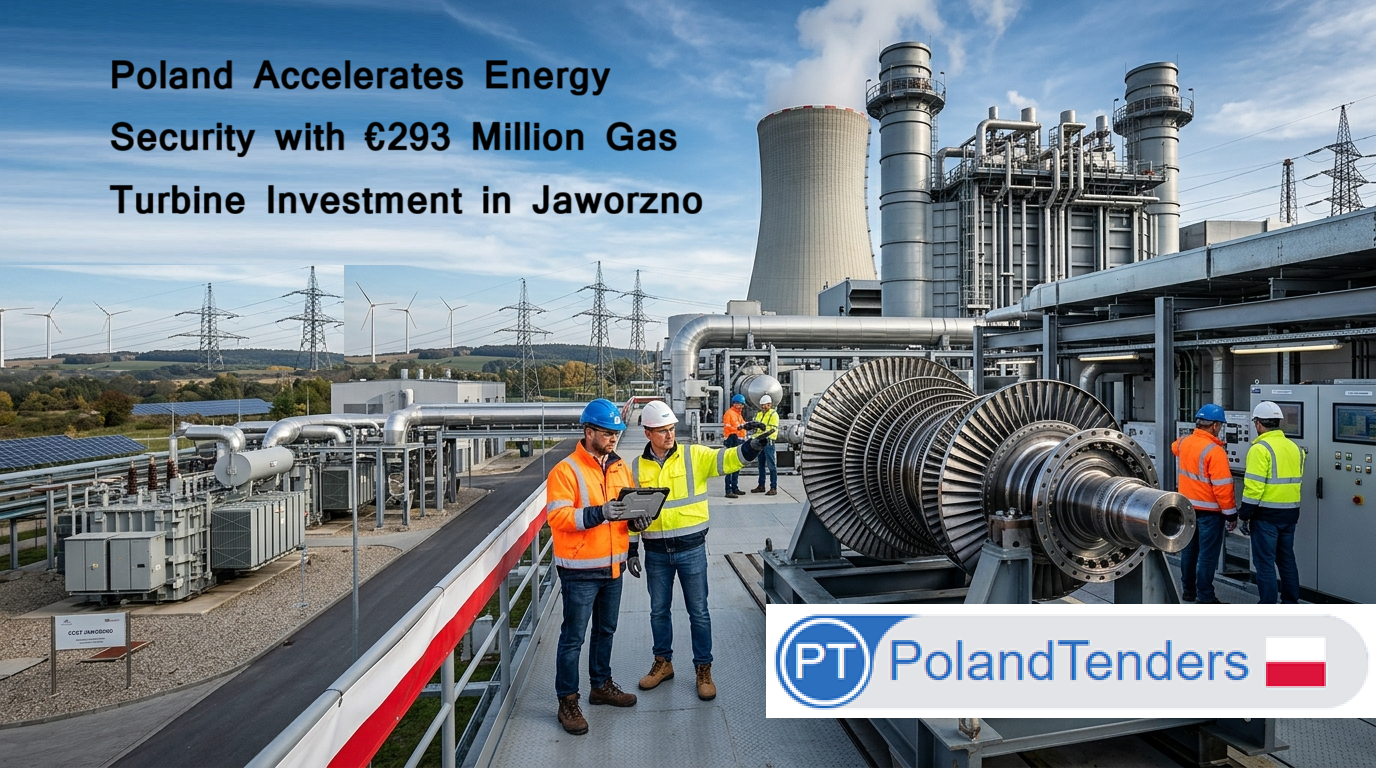
Poland Accelerates Energy Security with €293 Million Gas Turbine Investment in Jaworzno
16 Jul 2026
Poland is strengthening the resilience of its electricity system with a major investment in fast response gas fired generation, awarding a €293 million contract for advanced gas turbine technology at Jaworzno. The project reflects the country's broader strategy to maintain grid stability while expanding renewable energy capacity and reducing dependence on ageing coal fired assets. The contract combines the supply of a modern gas turbine island with an 18 year long term service agreement, ensuring both reliable operation and lifecycle maintenance. Awarded by TAURON Wytwarzanie S.A. to Italy's Ansaldo Energia S.p.A., the project demonstrates how European utilities are prioritising flexible generation assets capable of supporting an increasingly renewable electricity market. Introduction Across Europe, electricity systems are undergoing profound change. Renewable energy is expanding rapidly, but solar and wind generation require reliable backup capacity capable of responding within minutes when weather conditions change. Gas fired peaking plants have therefore become an important component of many national energy strategies. Against this backdrop, Poland has commissioned a new gas turbine installation in Jaworzno, one of the country's major power generation centres. Rather than simply replacing existing infrastructure, the investment aims to improve operational flexibility and strengthen long term energy security. The contract covers the delivery of the main technological equipment for a simple cycle gas fired generating unit together with an extensive long term maintenance programme. According to the TED Contract Award Notice, the total contract value amounts to €293 million. Why This Contract Matters Electricity demand continues to fluctuate throughout the day while renewable generation varies according to weather conditions. Power systems therefore require generation assets that can start quickly and provide electricity whenever renewable output declines. The new gas turbine installation at Jaworzno is designed to fulfil precisely that role. Unlike conventional baseload power plants, peaking gas units can be brought online rapidly, helping grid operators maintain frequency stability and prevent supply shortages during periods of high demand. For Poland, the investment also supports its gradual transition away from coal while maintaining security of supply. Although renewable generation continues to expand, dispatchable thermal generation remains essential for ensuring uninterrupted electricity delivery. Beyond the immediate project, the contract illustrates how European utilities are investing not only in new equipment but also in long term operational partnerships that reduce maintenance risks and improve asset availability over decades. Contract Timeline Previous Competitive Procurement: TAURON Wytwarzanie initially launched an open procurement procedure. However, no bids were received, leading to cancellation of the original competition. Negotiated Procedure: Following the unsuccessful tender, the contracting entity initiated a negotiated procedure without prior publication, as permitted under Polish procurement legislation implementing Directive 2014/25/EU. Contract Signing: The Supply Agreement and Long Term Service Agreement were signed on 2 July 2026. Regulatory Review: Entry into force depended upon completion of the European Commission's review under the Foreign Subsidies Regulation (FSR). Final Effectiveness: On 14 July 2026, the European Commission confirmed that it would not initiate an in depth investigation, allowing both agreements to become effective. Contract Overview The procurement covers two closely integrated contracts. The first concerns the supply of the complete gas turbine island for a new peaking power generating unit in Jaworzno. The second establishes a long term service arrangement covering maintenance of key turbine equipment over an 18 year period. By combining equipment delivery with long term technical support, TAURON aims to improve operational reliability, reduce lifecycle costs and ensure specialist manufacturer support throughout the operational life of the facility. The project has an estimated procurement value of €300 million excluding VAT, while the final awarded contract value totals €293 million. Key Contract Details Project Supply of Main Technological Equipment for the Jaworzno Gas Turbine Island Country Poland Location Jaworzno Contracting Entity TAURON Wytwarzanie S.A. Winning Supplier Ansaldo Energia S.p.A. Contract Value €293 Million Estimated Procurement Value €300 Million Contract Duration 18 Years Main CPV 42112300 – Gas Turbines Additional CPV Generators; Repair and Maintenance Services Procurement Procedure Negotiated Procedure Without Prior Call for Competition EU Directive Directive 2014/25/EU (Utilities Procurement) EU Funding Not financed by EU funds Government Procurement Agreement Covered under the WTO GPA Award Criterion Price (100%) Project Scope The contract includes the supply of the principal technological equipment required for a gas fired peaking generating unit operating in simple cycle configuration. The procurement also incorporates a comprehensive long term maintenance agreement covering selected turbine equipment throughout the operational period. Such integrated procurement models have become increasingly common across Europe's energy sector because they combine equipment procurement with manufacturer supported maintenance, helping utilities improve asset performance while reducing long term operational uncertainty. About the Contracting Authority TAURON Wytwarzanie S.A. TAURON Wytwarzanie S.A. is one of Poland's leading electricity generation companies and forms part of the wider TAURON Group. The company operates conventional and renewable generating assets and plays an important role in maintaining the country's electricity supply. As the contracting entity, TAURON is responsible for procuring generation technologies that support both security of supply and Poland's evolving energy transition objectives. The Jaworzno investment represents one of its significant commitments to flexible gas fired generation. About the Organisations Involved TAURON Wytwarzanie S.A., Contracting Entity TAURON Wytwarzanie acted as both the contracting authority and the organisation responsible for managing the procurement process. It developed the procurement requirements, conducted supplier qualification and negotiated the final agreements after the earlier competitive procedure failed to attract bids. Ansaldo Energia S.p.A., Successful Bidder Ansaldo Energia S.p.A., headquartered in Genoa, Italy, was selected to deliver the gas turbine island and provide long term maintenance services. The company specialises in gas turbines, power generation technologies and lifecycle service solutions for utilities worldwide. The supplier also maintains a registered branch in Poland, supporting local project execution and long term service delivery. Krajowa Izba Odwoławcza (National Appeals Chamber), Review Authority The National Appeals Chamber serves as Poland's independent procurement review body. It provides legal remedies for suppliers participating in public procurement procedures and oversees challenges relating to procurement decisions. Its inclusion in the notice reflects the standard legal oversight applicable to major public procurement procedures rather than direct involvement in project delivery. Procurement Analysis The contract was awarded through a negotiated procedure without prior call for competition, a procurement route permitted under Directive 2014/25/EU and Polish public procurement legislation in specific circumstances. This approach was adopted only after TAURON Wytwarzanie's earlier open procurement procedure failed to attract any bids. According to the contract award notice, the contracting entity originally launched a competitive tender for the project but received no offers. Since the procurement requirements remained substantially unchanged and the previous competition had produced no valid tenders, the buyer was legally permitted to negotiate directly with a qualified supplier. Rather than immediately selecting a contractor, TAURON carried out a qualification process to verify suppliers' technical capability, delivery capacity and compliance with the original procurement requirements. Ansaldo Energia S.p.A. successfully demonstrated its ability to meet these conditions before negotiations began. This approach illustrates how European utility companies balance competition with project continuity. Large energy infrastructure projects often require highly specialised manufacturers with proven engineering expertise, limiting the number of companies capable of delivering complete turbine island solutions. The procurement was conducted under Directive 2014/25/EU, which governs procurement by entities operating in the utilities sector, including electricity generation and distribution. Additional Procurement Facts Procurement Procedure Negotiated without prior call for competition Reason for Procedure No suitable tenders were received during the previous competitive procurement. Competition Level One qualified tender received. Award Method Single supplier award. Award Criterion Price (100%). Framework Agreement No. Dynamic Purchasing System Not used. Government Procurement Agreement (GPA) Yes. EU Funding No EU funding. Foreign Subsidies Regulation Review European Commission completed preliminary review without opening an in depth investigation. Contract Structure Supply Agreement and Long Term Service Agreement. Subcontracting Permitted, although subcontracting details were not disclosed. Contract Duration 18 years. Market & Industry Perspective Europe's electricity market is entering a period where flexibility is becoming just as valuable as generation capacity. Countries are expanding renewable energy rapidly, yet they still require dispatchable power plants capable of responding immediately when wind and solar production falls. Gas turbines have therefore become an important transition technology. Modern simple cycle units can start within minutes, allowing grid operators to balance electricity supply without relying exclusively on coal fired generation. For turbine manufacturers, this creates sustained demand for high efficiency equipment together with long term maintenance contracts. Equipment sales increasingly generate decades of recurring service revenue, making lifecycle support an important competitive advantage. The procurement also demonstrates that utilities increasingly prefer integrated contracts covering equipment delivery, commissioning support and long term maintenance under a single supplier. Such arrangements simplify asset management while improving operational reliability. Although renewable energy continues to dominate investment headlines, flexible thermal generation remains an essential part of Europe's evolving electricity mix. Projects such as Jaworzno are therefore likely to remain important components of national energy strategies over the coming decade. Economic Significance The €293 million investment represents one of the larger utility procurement contracts published in the European energy sector during 2026. Beyond equipment procurement, the project will support engineering services, installation activities, specialist maintenance and local supply chain participation throughout its operational life. Long term service agreements also create stable economic activity by ensuring continued technical support, spare parts supply and engineering expertise over many years. Such contracts often generate additional business opportunities well beyond the initial equipment purchase. Reliable electricity infrastructure also supports broader economic development. Industrial facilities, commercial enterprises and public services all depend upon stable electricity supplies, making investments in generation flexibility economically significant beyond the power sector itself. Future Procurement Opportunities The Jaworzno project is unlikely to be an isolated investment. Poland continues to modernise its electricity infrastructure while balancing energy security, decarbonisation objectives and increasing electricity demand. Future procurement opportunities may emerge across several areas, including additional gas fired generation projects, electrical balance of plant systems, digital control platforms, emissions monitoring equipment, grid integration technologies and long term operational services. Utilities investing in flexible generation frequently require complementary procurements covering transformers, substations, electrical systems, instrumentation, automation, cybersecurity, cooling systems, civil engineering and specialist maintenance. Suppliers capable of supporting complete lifecycle solutions rather than individual equipment packages are likely to remain well positioned as similar projects progress across Central and Eastern Europe. Opportunities for Suppliers Although the primary turbine supply contract has been awarded, significant opportunities often remain available throughout the implementation phase. Mechanical installation services. Electrical installation and commissioning. Instrumentation and control systems. Industrial automation and digital monitoring. Predictive maintenance technologies. Spare parts manufacturing. Inspection and testing services. Environmental monitoring systems. Cybersecurity solutions for industrial control systems. Engineering consultancy and specialist technical support. The TED notice confirms that subcontracting will form part of the project, although the contracting authority has not disclosed the scope or value of subcontracted activities. What Businesses Should Watch Energy infrastructure procurement across Europe is becoming increasingly strategic. Buyers are seeking long term partnerships rather than one off equipment purchases, placing greater emphasis on lifecycle performance, operational reliability and maintenance capability. Suppliers should also monitor the growing influence of regulatory requirements such as the European Union's Foreign Subsidies Regulation. Large international contracts may increasingly involve additional regulatory reviews before becoming fully effective. Companies active in gas turbines, grid infrastructure, industrial digitalisation and long term service solutions should closely follow procurement programmes announced by major European utilities. Similar investments are expected as electricity networks adapt to higher shares of renewable generation while maintaining security of supply. PolandTenders.com Procurement Intelligence The Jaworzno contract reflects a wider transformation taking place across Europe's electricity sector. Utilities are no longer investing solely in additional generation capacity; they are investing in flexibility. As renewable energy expands, electricity systems require assets capable of responding rapidly to fluctuations in wind and solar generation. This procurement demonstrates how utilities are increasingly combining equipment procurement with long term operational support. Instead of purchasing machinery alone, buyers are seeking strategic partnerships that guarantee performance, technical expertise and lifecycle reliability over decades. Another notable feature is the procurement route. The contract followed an unsuccessful competitive tender that attracted no bids before moving to a negotiated procedure. This highlights an emerging challenge across Europe's energy sector: highly specialised infrastructure projects often have a limited pool of qualified suppliers. Contracting authorities may therefore need to adopt more flexible procurement strategies while maintaining transparency and regulatory compliance. The project also illustrates the growing influence of European regulatory oversight. Before the agreements became effective, the European Commission completed its review under the Foreign Subsidies Regulation (FSR), confirming that no further investigation was required. Large strategic procurements involving international suppliers are likely to face similar regulatory scrutiny in future. For suppliers, the message is clear. Success in future utility procurements will depend not only on competitive pricing but also on demonstrating long term service capability, proven operational performance, digital maintenance expertise and the ability to support critical infrastructure throughout its operational lifecycle. Looking ahead, Poland's continuing investment in electricity generation, transmission infrastructure and grid flexibility suggests that additional opportunities are likely to emerge in gas fired generation, renewable integration, grid modernisation, energy storage and digital asset management. Supplier Takeaways Large utility buyers increasingly prefer integrated supply and long term maintenance contracts. Demonstrating lifecycle support capability is becoming as important as equipment manufacturing expertise. Gas turbine projects create secondary opportunities for engineering firms, subcontractors and specialist technology providers. Companies offering digital monitoring, predictive maintenance and industrial automation solutions are well positioned for future procurements. Understanding European procurement legislation and regulatory requirements such as the Foreign Subsidies Regulation will become increasingly important for international suppliers. Partnerships with local engineering companies can strengthen market access for international manufacturers. Key Takeaways TAURON Wytwarzanie S.A. awarded a €293 million contract for a new gas turbine installation at Jaworzno. The contract includes both equipment supply and an 18 year long term service agreement. Ansaldo Energia S.p.A. was selected following a negotiated procedure conducted after an earlier competitive procurement received no bids. The procurement falls under Directive 2014/25/EU governing utility sector procurement. The project is not financed by European Union funds but is covered by the WTO Government Procurement Agreement. The European Commission completed its Foreign Subsidies Regulation review before the agreements became effective. The investment supports Poland's strategy of improving electricity system flexibility while facilitating the integration of renewable energy. The project is expected to generate additional opportunities across engineering, maintenance, automation and industrial services. Conclusion The Jaworzno gas turbine project represents more than the purchase of major power generation equipment. It reflects Poland's broader effort to strengthen energy security while preparing its electricity system for a future with significantly higher levels of renewable generation. By combining advanced gas turbine technology with a long term maintenance partnership, TAURON Wytwarzanie has adopted a procurement strategy focused on operational reliability rather than short term equipment acquisition. The project also illustrates how European utilities are increasingly balancing competition, regulatory compliance and long term asset performance when delivering critical infrastructure. For suppliers, the contract signals continued demand for integrated engineering solutions, lifecycle services and specialised energy technologies. As electricity systems continue to evolve across Europe, procurements of this nature are likely to become an increasingly important feature of the continent's energy transition. Frequently Asked Questions What is the purpose of this contract? The contract covers the supply of the main gas turbine equipment and long term maintenance services for a new gas fired peaking power generation unit at Jaworzno in Poland. Who awarded the contract? The contract was awarded by TAURON Wytwarzanie S.A., one of Poland's leading electricity generation companies. Which company won the contract? Ansaldo Energia S.p.A. of Italy was awarded the contract. What is the value of the contract? The combined Supply Agreement and Long Term Service Agreement have a total value of approximately €293 million. Why was a negotiated procedure used? The contracting authority used a negotiated procedure after a previous open procurement received no bids, allowing the project to proceed in accordance with applicable procurement legislation. How long will the contract run? The long term contractual arrangement extends over 18 years, including maintenance services. Is the project funded by the European Union? No. The TED Contract Award Notice states that the procurement is not financed by EU funds. Will additional procurement opportunities arise? Large power generation projects typically generate follow on opportunities in engineering, installation, commissioning, maintenance, digital monitoring, spare parts, automation and specialist technical services throughout the project lifecycle. Why is this project important for Poland? The investment strengthens grid reliability, supports the integration of renewable energy and contributes to Poland's long term strategy of modernising its electricity infrastructure while maintaining energy security. Source: Official TED (Tenders Electronic Daily) Contract Award Notice 492132-2026 published in the Supplement to the Official Journal of the European Union (OJ S 135/2026), 16 July 2026. This article is based on information published in the official TED (Tenders Electronic Daily) Contract Award Notice. Editorial analysis, market insights and procurement intelligence have been added by PolandTenders.com to help businesses better understand the strategic significance of the procurement and identify future opportunities.
View Details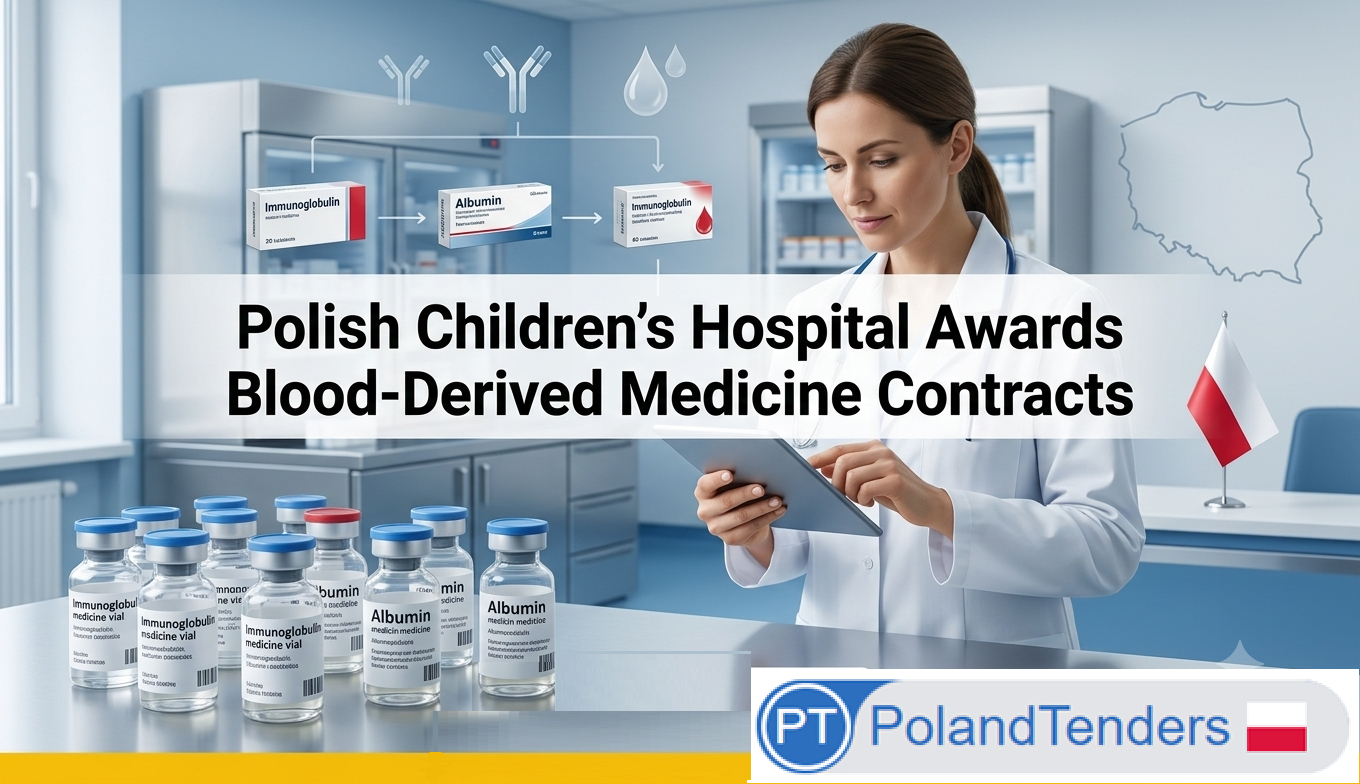
Polish Children's Hospital Splits Blood-Derived Medicine Contracts Among Four Pharmaceutical Suppliers
15 Jul 2026
Standfirst: A public children's hospital in Bydgoszcz has awarded four contracts for the year long supply of immunoglobulins and albumin to Takeda Pharma, URTICA, NOBIPHARM and CSL Behring. The procurement highlights how hospitals divide critical blood derived medicines into separate lots to protect supply continuity while allowing specialist pharmaceutical suppliers to compete for individual product categories. For children living with immune disorders, neurological diseases and other serious medical conditions, access to blood derived medicines is not simply a matter of hospital inventory. Treatment can depend on a reliable supply of specialised products that are difficult to manufacture, tightly regulated and vulnerable to changes in global plasma availability. That makes a new procurement decision in Bydgoszcz more significant than its four supply contracts might initially suggest. The Wojewódzki Szpital Dziecięcy im. J. Brudzińskiego, a specialist children's hospital in northern Poland, has selected four pharmaceutical suppliers to provide different categories of immunoglobulins and albumin over a 12 month period. Rather than relying on a single company, the hospital divided the procurement into four lots and awarded each product category separately. Takeda Pharma secured the largest value lot, while URTICA, NOBIPHARM and CSL Behring won contracts covering other concentrations of immunoglobulins and albumin. Why This Contract Matters Immunoglobulins are medicines produced from donated human plasma. They contain antibodies that help the immune system fight infection and are used to treat a range of immune deficiencies, autoimmune disorders and neurological conditions. For some patients, regular treatment is essential to prevent serious illness or control disease progression. Albumin is another plasma derived product. It is used in clinical situations where patients need support in maintaining blood volume and fluid balance, including some cases involving major surgery, severe illness or critical care. Unlike many conventional medicines, plasma derived therapies depend on a complex international supply chain that begins with human plasma collection and continues through lengthy manufacturing, purification, safety testing and regulatory processes. Hospitals therefore need procurement arrangements that provide both competitive pricing and dependable access to treatment. For the Bydgoszcz children's hospital, dividing the requirement into four lots allowed suppliers to compete for the specific product categories they were equipped to deliver. The result is a diversified supplier base rather than dependence on one company for the entire requirement. Contract Timeline Previous Contract Notice: TED Notice 282110-2026 Contract Signed for Lot 1: 19 June 2026 Contract Signed for Lot 2: 23 June 2026 Contracts Signed for Lots 3 and 4: 19 June 2026 Supply Period: 1 July 2026 to 30 June 2027 Contract Award Notice Published: 15 July 2026 Contract Overview The procurement covers successive deliveries of blood derived medicinal products to the Wojewódzki Szpital Dziecięcy im. J. Brudzińskiego in Bydgoszcz. Supplies will be delivered according to the hospital's requirements during the contract period rather than necessarily being provided in a single shipment. The requirement was divided into four lots: 10% immunoglobulins, two separate categories of 5% immunoglobulins and 20% albumin. All four lots resulted in contract awards. The hospital also retained an option to increase the quantity supplied under each contract by up to 10% of the value of the corresponding base order. This gives the buyer flexibility to respond to actual treatment demand without launching a new procurement procedure. Key Contract Details Contracting Authority Wojewódzki Szpital Dziecięcy im. J. Brudzińskiego w Bydgoszczy Country Poland Location Bydgoszcz, Kujawsko Pomorskie Contract Type Supplies Procurement Procedure Open procedure Number of Lots 4 Successful Suppliers Takeda Pharma Sp. z o.o.; URTICA Sp. z o.o.; NOBIPHARM Sp. z o.o.; CSL BEHRING Sp. z o.o. Contract Period 1 July 2026 to 30 June 2027 Award Criterion Price – 100% Main CPV Code 33651520 – Immunoglobulins Additional CPV Code 33621400 – Blood substitutes and perfusion solutions EU Procurement Directive Directive 2014/24/EU TED Notice ID 488806-2026 Lot by Lot Award Results Lot Product Category Winning Supplier Reported Tender Value Tenders Received Lot 1 10% Immunoglobulins Takeda Pharma Sp. z o.o. PLN 24,744,500 2 Lot 2 5% Immunoglobulins I URTICA Sp. z o.o. PLN 944,058.50 2 Lot 3 5% Immunoglobulins II NOBIPHARM Sp. z o.o. PLN 88,000 1 Lot 4 20% Albumin CSL BEHRING Sp. z o.o. PLN 16,280 5 Note: The values above are reproduced as reported in the TED award notice. Some reported tender values appear inconsistent with the separate admissible tender ranges stated in the notice and should therefore be interpreted with caution. Project Scope The contracts provide for successive deliveries of four categories of plasma derived medicines during the 12 month supply period. Lot 1: Supply of 10% immunoglobulin products. Lot 2: Supply of the first category of 5% immunoglobulin products. Lot 3: Supply of the second category of 5% immunoglobulin products. Lot 4: Supply of 20% albumin products. The 10% immunoglobulin products procured under Lot 1 may be used within Poland's National Health Fund reimbursement programme for the treatment of neurological diseases with immunoglobulins. This connects the procurement directly to the continuity of publicly funded specialist treatment. The contracts also include a purchasing option of up to 10% above the value of each base order. The hospital may use this option in full or in part according to actual demand, without requiring a separate contract amendment. About the Contracting Authority Wojewódzki Szpital Dziecięcy im. J. Brudzińskiego w Bydgoszczy is a public children's hospital serving Bydgoszcz and the wider Kujawsko Pomorskie region. As a specialist paediatric healthcare institution, it provides medical services to children requiring hospital treatment, diagnostics and specialist care. The hospital conducted the procurement as a body governed by public law under Poland's public procurement framework. By arranging scheduled deliveries across a full year, the hospital aims to maintain access to essential blood derived medicines while managing pharmaceutical inventory according to clinical demand. About the Organisations Involved Takeda Pharma Sp. z o.o. – Winner of Lot 1 Takeda Pharma Sp. z o.o. won the contract for 10% immunoglobulins, the largest product category in the procurement by reported award value. The company is the Polish operation of Takeda, an international biopharmaceutical group with activities across specialised medicines, including plasma derived therapies. Two tenders were received for the lot. Takeda's offer was ranked first under the procurement's price only evaluation model. The contract was concluded on 19 June 2026 and does not involve subcontracting. URTICA Sp. z o.o. – Winner of Lot 2 URTICA Sp. z o.o. secured the first lot covering 5% immunoglobulins. The Wrocław based company operates in pharmaceutical distribution and supplies medicines to healthcare institutions across Poland. The lot attracted two tenders, including one from a small or medium sized enterprise. URTICA's offer ranked first and the contract was concluded on 23 June 2026. No subcontracting was declared. NOBIPHARM Sp. z o.o. – Winner of Lot 3 NOBIPHARM Sp. z o.o. won the second category of 5% immunoglobulins. The Warsaw based pharmaceutical supplier was identified in the notice as a small enterprise. Only one tender was received for this lot, making NOBIPHARM the sole bidder. The contract was concluded on 19 June 2026, with no subcontracting planned. CSL BEHRING Sp. z o.o. – Winner of Lot 4 CSL BEHRING Sp. z o.o. secured the contract for 20% albumin. CSL Behring specialises in plasma derived and other therapies used in the treatment of rare and serious diseases. Lot 4 attracted five tenders, the highest level of competition among the four product categories. CSL Behring's offer was ranked first and the contract was concluded on 19 June 2026. The supplier did not declare any subcontracting. Krajowa Izba Odwoławcza – Procurement Review Body Krajowa Izba Odwoławcza, Poland's National Appeals Chamber, is the review authority for the procurement. It provides the formal mechanism through which suppliers may challenge procurement decisions where they believe public procurement rules have been breached. Procurement Analysis The hospital used an open procedure, allowing qualified suppliers to submit bids for one or more of the four lots. The procurement was not accelerated and all tenders were submitted electronically. Price carried a weighting of 100% across all four lots. This means the hospital selected the lowest priced admissible offer after confirming that the bidder met the required legal, technical and procurement conditions. The procurement also used Poland's so called reverse procedure. Under this approach, the contracting authority first evaluates and ranks the offers and then conducts detailed eligibility checks on the highest ranked supplier. The method can reduce administrative work because full qualification checks do not have to be completed for every bidder at the initial evaluation stage. Competition varied considerably by product category. The 20% albumin lot attracted five tenders, while the second 5% immunoglobulin lot received only one. This difference suggests that supplier availability and competitive intensity are not uniform across the plasma derived medicines market. Additional Procurement Facts Legal Basis: Directive 2014/24/EU Nature of Contract: Supplies Procedure: Open procedure Accelerated Procedure: No Award Criterion: Price – 100% Framework Agreement: No Dynamic Purchasing System: No Government Procurement Agreement: Covered EU Funding: No EU funding involved Contract Option: Up to 10% additional supply value for each lot Subcontracting: Not declared by any of the four successful suppliers Review Authority: Krajowa Izba Odwoławcza Market & Industry Perspective The market for plasma derived medicines operates under conditions that differ from those of conventional pharmaceutical manufacturing. Production depends on the availability of donated human plasma, while manufacturing and safety controls can take several months. This limits how quickly supply can respond when demand rises. The varying number of bids across the four lots offers a useful view of competition within individual product categories. Albumin attracted five offers, suggesting a broader competitive field, while one immunoglobulin lot received only a single bid. For public healthcare buyers, limited competition in specific formulations may increase the importance of early procurement planning and supplier engagement. Future procurement opportunities are likely to emerge as hospitals renew annual medicine supply contracts, adjust quantities to changing treatment demand and use optional purchasing provisions where consumption exceeds initial forecasts. Economic Significance The largest reported award went to Takeda Pharma for the supply of 10% immunoglobulins. This reflects the importance of concentrated immunoglobulin therapies within specialist treatment and Poland's publicly funded neurological treatment programmes. The economic significance of the procurement extends beyond the individual award values. Reliable access to these medicines can help hospitals maintain treatment schedules, reduce the operational risk associated with supply interruptions and provide greater predictability in pharmaceutical expenditure. The 10% option attached to every lot also creates controlled financial flexibility. Rather than committing immediately to maximum quantities, the hospital can increase purchases if clinical demand requires additional supply. Future Procurement Opportunities The contracts are scheduled to end on 30 June 2027, creating a potential future procurement cycle before the current supply period expires. Suppliers active in immunoglobulins, albumin and plasma derived therapies should monitor procurement activity from the Bydgoszcz children's hospital and other Polish healthcare institutions during the first half of 2027. Additional opportunities may arise earlier if treatment demand exceeds the hospital's original forecasts. However, the existing contracts allow the hospital to increase purchases by up to 10%, meaning some additional demand may be met through the current suppliers rather than through a new tender. Future competitions may also reflect changes in medicine availability, reimbursement programmes, clinical demand and pricing across the European plasma products market. Opportunities for Suppliers Manufacturers and authorised pharmaceutical distributors can use similar hospital procurements to build a pipeline of recurring public sector opportunities. The lot based structure allows suppliers to compete for individual product categories without needing to provide the hospital's entire portfolio of blood derived medicines. Companies seeking future opportunities should maintain the regulatory approvals, distribution capacity and product availability needed to support uninterrupted hospital supply. Monitoring annual contract expiry dates may also help suppliers identify upcoming tenders before formal notices are published. The participation of both large pharmaceutical companies and a small enterprise among the successful bidders shows that specialised suppliers can compete effectively when contracts are divided into focused product lots. What Businesses Should Watch Renewal procurement before the current contracts expire on 30 June 2027. Future immunoglobulin and albumin tenders from Polish hospitals and regional healthcare authorities. Changes in demand under Poland's publicly funded immunoglobulin treatment programmes. Whether hospitals increase contract quantities through purchasing options. Competition levels for specialised immunoglobulin concentrations where few suppliers submit bids. Changes in European plasma availability and their effect on medicine pricing and procurement strategy. PolandTenders.com Procurement Intelligence This award reflects a broader procurement strategy in which healthcare buyers divide specialised pharmaceutical requirements into product specific lots rather than placing the entire supply obligation with one company. The approach can widen participation, improve price competition and reduce dependence on a single supplier. The tender results also show that the blood derived medicines market cannot be treated as one uniform category. Competition ranged from one tender for Lot 3 to five tenders for Lot 4. For buyers, this means procurement strategy may need to be adapted to the supplier depth available for each medicine and concentration. For suppliers, the opportunity is not limited to major national medicine contracts. Annual hospital level procurements can provide recurring business, particularly for companies able to demonstrate reliable product availability and fulfil scheduled deliveries over extended periods. The use of a 10% purchasing option is also strategically important. It gives the hospital a buffer against changes in patient demand while allowing successful suppliers to capture additional orders during the contract period. Future tenders may increasingly use similar flexibility where medicine consumption is difficult to forecast precisely. Supplier Takeaways Track annual immunoglobulin and albumin supply contracts across Poland's public healthcare system. Monitor contract expiry dates well before renewal notices are published. Prepare for price led competitions where technical compliance is mandatory but price determines final ranking. Evaluate opportunities lot by lot, as competition differs significantly between product categories. Maintain sufficient inventory and distribution capacity to support successive hospital deliveries. Consider the additional commercial potential created by quantity options in awarded contracts. Key Takeaways A public children's hospital in Bydgoszcz awarded four contracts for immunoglobulins and albumin supplies. Takeda Pharma, URTICA, NOBIPHARM and CSL Behring each won one product lot. The contracts cover supplies from 1 July 2026 to 30 June 2027. The procurement was conducted through an open procedure under Directive 2014/24/EU. Price accounted for 100% of the award evaluation. Competition ranged from one tender for a 5% immunoglobulin lot to five tenders for the albumin lot. Each contract includes an option allowing the hospital to increase supply by up to 10% of the base order value. No EU funding, framework agreement or dynamic purchasing system was involved. Conclusion Behind every hospital medicine contract is a practical question: will the required treatment be available when a patient needs it? For a children's hospital managing specialised and potentially life sustaining therapies, supply continuity is as important as procurement price. By dividing its requirement among Takeda Pharma, URTICA, NOBIPHARM and CSL Behring, the Bydgoszcz hospital has created a multi supplier structure covering four categories of immunoglobulins and albumin. The awards also reveal a market with uneven competition, where some products attract several suppliers while others depend on a much narrower field. For pharmaceutical companies and distributors, the procurement points to a recurring opportunity in Poland's public healthcare market: specialised medicine contracts that reward regulatory readiness, reliable distribution and the ability to compete within precisely defined product categories. Frequently Asked Questions What medicines are covered by the contracts? The procurement covers 10% immunoglobulins, two categories of 5% immunoglobulins and 20% albumin. Which companies won the contracts? Takeda Pharma Sp. z o.o. won Lot 1, URTICA Sp. z o.o. won Lot 2, NOBIPHARM Sp. z o.o. won Lot 3 and CSL BEHRING Sp. z o.o. won Lot 4. What are immunoglobulins? Immunoglobulins are antibody based medicines produced from donated human plasma. They are used to treat immune deficiencies, autoimmune conditions and certain neurological diseases. What is albumin used for? Albumin is a plasma derived protein used in clinical care to help maintain blood volume and fluid balance in certain serious medical conditions. How long will the contracts run? The supply period runs from 1 July 2026 to 30 June 2027. How were the winning suppliers selected? The contracts were awarded through an open procedure. Price represented 100% of the award evaluation after suppliers met the procurement's eligibility and technical requirements. How many tenders were received? Lots 1 and 2 each received two tenders, Lot 3 received one tender and Lot 4 received five tenders. Can the hospital purchase additional quantities? Yes. Each contract includes an option allowing the hospital to increase purchases by up to 10% of the value of the corresponding base order. Was the procurement financed by the European Union? No. The TED notice states that the procurement is not financed with EU funds. Source: Tenders Electronic Daily (TED), Contract Award Notice 488806-2026, published on 15 July 2026.
View Details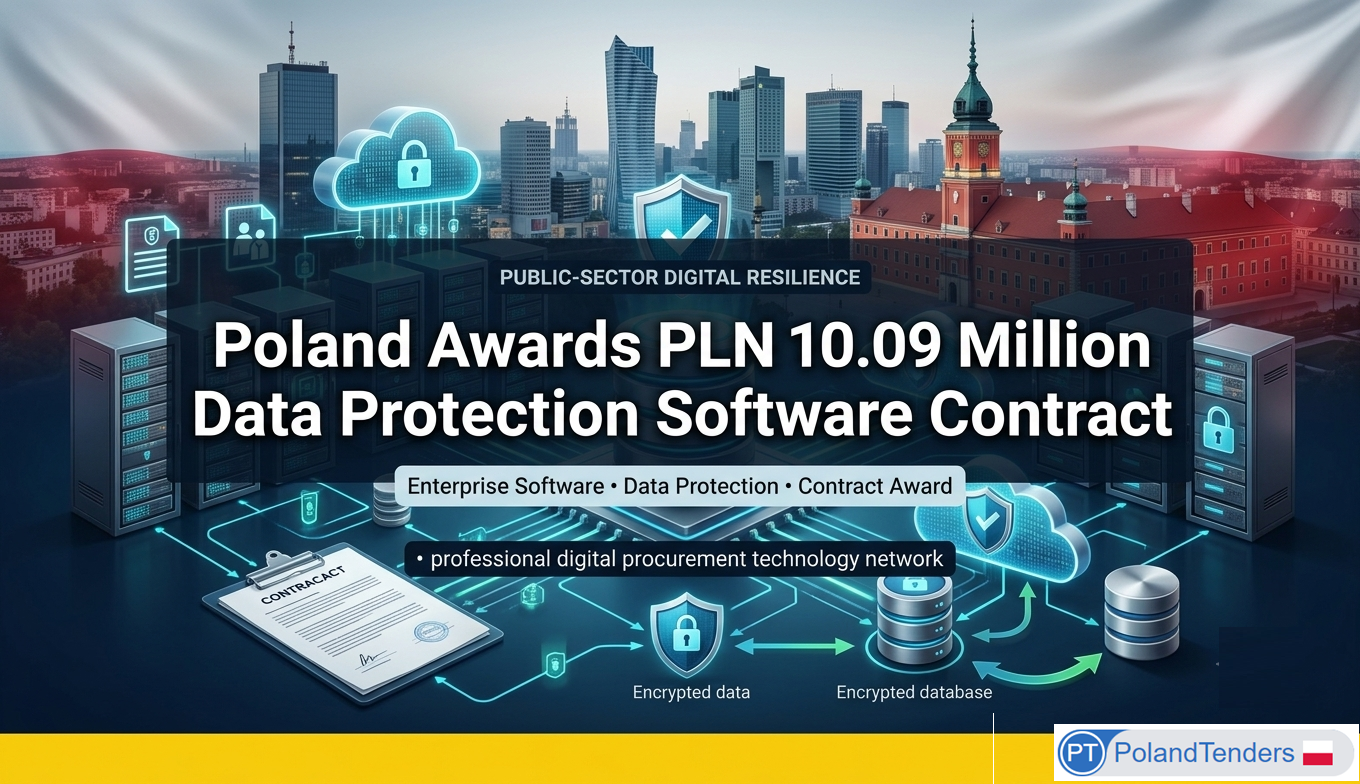
Poland’s Social Security Institution Awards PLN 10.09 Million Data Protection Software Contract to Engave
14 Jul 2026
Poland’s national social security institution is strengthening the technology used to protect and recover critical public-sector data. Zakład Ubezpieczeń Społecznych has awarded a PLN 10.09 million contract to Warsaw-based Engave S.A. for Veeam Data Platform Advanced software, or an equivalent solution, together with long-term technical and manufacturer support. Introduction Every pension payment, social insurance contribution and public benefit depends on digital systems that must remain available even when technology fails, data is damaged or cyber incidents disrupt normal operations. For an institution operating at national scale, data protection is not simply an IT maintenance issue. It is part of the infrastructure that keeps essential public services functioning and allows critical information to be recovered when systems face technical failure, human error or cyber disruption. Poland’s Zakład Ubezpieczeń Społecznych, commonly known as ZUS, has now awarded a major software contract to Engave S.A. for the supply of Veeam Data Platform Advanced licences, or an equivalent platform, together with technical support. The PLN 10,090,517.92 contract will run for 48 months and includes an option allowing ZUS to purchase an additional 1,200 perpetual software licences. The procurement attracted three electronic tenders, all submitted by small or medium-sized businesses. Why This Contract Matters ZUS administers a large part of Poland’s social security system. Its digital infrastructure supports processes connected with pensions, insurance contributions, benefits and services used by employers, employees and citizens across the country. That scale makes the availability and recoverability of data operationally important. A disruption affecting critical systems can create consequences beyond the IT department, potentially affecting public administration, institutional workflows and access to essential services. Veeam Data Platform Advanced is designed around data protection, backup management, recovery and operational resilience. By allowing equivalent software, the procurement remained open to alternative solutions capable of meeting the authority’s technical requirements rather than restricting competition solely to one named product. The four-year support period is also significant. Enterprise software procurement does not end when licence keys are delivered. Public institutions require technical assistance, updates and access to specialist support throughout the operating life of the platform. Contract Timeline Previous TED Notice: 291175-2026 Winner Selected: 24 June 2026 Contract Concluded: 10 July 2026 Notice Dispatched: 13 July 2026 TED Publication Date: 14 July 2026 Contract Duration: 48 months Contract Overview The procurement covers the purchase of Veeam Data Platform Advanced software or an equivalent platform, together with support services. The main contract is classified as a software supply, while technical and support services form an additional part of the requirement. The contract was awarded through an open procedure under Article 132 of Poland’s Public Procurement Law and Directive 2014/24/EU. The procedure was not accelerated. Engave S.A. submitted the winning tender with a value of PLN 10,090,517.92. The company was ranked first after the authority evaluated bids entirely on price. The contract does not establish a framework agreement and does not use a Dynamic Purchasing System. Engave will deliver the requirement through a direct four-year contract. Key Contract Details Contract Information Details Project Purchase of Veeam Data Platform Advanced software or equivalent, together with support Contracting Authority Zakład Ubezpieczeń Społecznych Winning Company Engave S.A. Country Poland Place of Performance Across Poland Sector Enterprise software, data protection and IT support Main Nature of Contract Supplies Additional Nature Services Procurement Procedure Open procedure Winning Contract Value PLN 10,090,517.92 Contract Duration 48 months Award Criterion Price - 100% Electronic Tenders Received 3 SME Tenders Received 3 Winner Selected 24 June 2026 Contract Concluded 10 July 2026 Main CPV Code 48000000 - Software package and information systems Additional CPV Codes 72268000 - Software supply services; 72611000 - Technical computer support services EU Procurement Directive Directive 2014/24/EU Framework Agreement No Dynamic Purchasing System No EU Funding No EU funding involved GPA Coverage Yes Subcontracting No TED Notice ID 486055-2026 TED Publication Date 14 July 2026 Project Scope The contract centres on the supply of Veeam Data Platform Advanced software or an equivalent solution. Platforms in this category help organisations manage data protection, backup, recovery and resilience across complex digital environments. The detailed technical specifications are contained in the procurement documents and were not reproduced in full in the contract award notice. However, the procurement clearly combines software licensing with ongoing technical support. The contract also includes an option that could expand the deployment. ZUS may make a one-time additional purchase of 1,200 perpetual licences for the same software supplied under the main order. A perpetual licence generally provides a continuing right to use a specified version of the software rather than requiring the institution to renew access through a recurring subscription. Support and software maintenance may still operate for a defined period under separate contractual terms. If ZUS exercises the option, Engave will also provide service support and ensure access to manufacturer support on a 24-hour, seven-day-a-week, 365-day basis for the additional licences. This support will continue from the delivery of the licence keys until the end of the support period established under the main contract. ZUS may exercise the option within six months after signing the acceptance protocol for the licences delivered under the basic order. About the Contracting Authority Zakład Ubezpieczeń Społecznych Zakład Ubezpieczeń Społecznych, widely known as ZUS, is Poland’s national social insurance institution. It administers major elements of the country’s social security system and provides services connected with insurance contributions, pensions and public benefits. ZUS is classified as a body governed by public law and carries out general public-service activities. Its Public Procurement Department managed this procurement and is responsible for providing additional information concerning the procedure. The institution’s national responsibilities make the reliability of its digital environment strategically important. Software supporting data protection and recovery contributes to the continuity of systems used for large-scale public administration. About the Organisations Involved Engave S.A. Engave S.A. is the successful supplier for the software and support contract. The Warsaw-based technology company was ranked first with a tender valued at PLN 10,090,517.92. The TED notice classifies Engave as a small economic operator. Its success in a national public-sector technology procurement demonstrates that major government IT contracts are not limited to the largest multinational suppliers. Engave will supply the required software platform and associated support services. The contract does not involve subcontracting, meaning the winning company has not declared that any part of the awarded requirement will be transferred to subcontractors. The award notice identifies Engave as the only successful tenderer. No consortium members, joint-venture partners or additional successful suppliers are listed. Krajowa Izba Odwoławcza Krajowa Izba Odwoławcza, Poland’s National Appeals Chamber, is the review organisation identified for the procurement. It also provides additional information concerning review procedures. The chamber is responsible for hearing challenges relating to public procurement procedures. Its role is independent of contract delivery and provides a formal review mechanism for economic operators seeking to challenge procurement decisions. Procurement Analysis ZUS used an open procedure, allowing qualified suppliers to submit offers under the conditions established in the procurement documents. The process was conducted under Article 132 of Poland’s Public Procurement Law and Directive 2014/24/EU. Three electronic tenders were received. All three came from micro, small or medium-sized businesses registered in Poland. No bids were submitted by suppliers based in other European Economic Area countries or outside the EEA. The award was decided entirely on price. The lowest-priced compliant offer was therefore selected as the most economically advantageous tender. A 100% price criterion can be appropriate where technical requirements are defined in sufficient detail and competing products are expected to meet the same minimum performance standards. In this case, the authority specified Veeam Data Platform Advanced or an equivalent solution, meaning suppliers offering alternatives would still need to demonstrate compliance with the required technical conditions. The procurement does not use a framework agreement or Dynamic Purchasing System. This creates a direct contractual relationship between ZUS and Engave for the full 48-month period. Additional Procurement Facts The procurement was conducted through an open procedure. The procedure was not accelerated. The contract is governed by Directive 2014/24/EU. The main nature of the procurement is supplies. Technical computer support forms an additional service component. The main CPV code is 48000000 for software packages and information systems. Additional CPV classifications cover software supply and technical computer support services. Price was the only award criterion and carried a weighting of 100%. Three tenders were submitted electronically. All three tenders came from micro, small or medium-sized businesses. No tenders were received from companies registered outside Poland. The winning tender was ranked first. The successful offer was not submitted as a variant. No subcontracting was declared. No framework agreement was established. No Dynamic Purchasing System was used. The procurement is covered by the Government Procurement Agreement. The project is not financed through European Union funds. Market & Industry Perspective Public institutions are placing greater importance on the ability to recover data and restore digital services after system failures, cyber incidents and other operational disruptions. As government services become more dependent on large digital platforms, backup and recovery technology is increasingly part of core public infrastructure. The ZUS award reflects demand for platforms that combine software licensing with long-term technical support. Government buyers are not only purchasing technology; they are also seeking operational continuity, access to specialist assistance and support arrangements that remain available throughout the contract period. The procurement also demonstrates that smaller domestic technology companies can compete successfully for major public-sector software contracts. All three bids came from SMEs, suggesting an active Polish supplier market capable of delivering enterprise technology solutions to large public institutions. The option for 1,200 additional perpetual licences could create further demand within the existing contract if ZUS decides to expand deployment. Future procurement may also emerge around system integration, infrastructure modernisation, cyber resilience and long-term support as the institution’s technology environment evolves. Economic Significance The PLN 10.09 million award represents a substantial investment in software licensing and technical support rather than physical infrastructure. Its economic value lies in supporting the availability and recoverability of digital systems used by one of Poland’s most important public institutions. Reliable data protection can reduce the operational and financial impact of system failures by supporting faster recovery and limiting disruption. For a national social insurance institution, the value of resilience may extend beyond the purchase price because prolonged technology outages can affect large numbers of users and administrative processes. The award is also notable for SME participation. Engave is classified as a small economic operator, while all three tenders were submitted by small or medium-sized businesses. This indicates that high-value public-sector technology procurement can create meaningful opportunities for specialised domestic suppliers. Future Procurement Opportunities The most immediate potential expansion is the option for an additional 1,200 perpetual software licences. ZUS may exercise this option once within six months after accepting the licences delivered under the main order. If the option is used, the additional licences must be the same as the software supplied under the basic contract. They will also receive contractor support and continuous manufacturer support until the main support period ends. Beyond the current contract, future opportunities may emerge as ZUS expands its data infrastructure, modernises digital services or introduces additional requirements relating to backup, recovery, cyber resilience and technology support. The four-year contract period may also create a future renewal opportunity when the current support arrangements approach expiry. Suppliers should monitor ZUS procurement plans well before the end of the contract because major enterprise software requirements often involve technical evaluation and budget preparation long before a new tender is published. Opportunities for Suppliers No subcontracting has been declared under the awarded contract, limiting immediate opportunities to participate through the winning supplier. However, the procurement provides useful market intelligence for technology companies seeking future public-sector business in Poland. Potential areas for future demand include: Enterprise backup and data-recovery platforms. Cyber-resilience and disaster-recovery solutions. Software licensing and licence-management services. Technical computer support. Cloud and hybrid-infrastructure protection. Data-centre modernisation. Infrastructure monitoring and management tools. System integration and migration services. Security testing and operational resilience assessments. Manufacturer-backed support services. Public-sector IT consulting and implementation. Training and technical knowledge-transfer services. Suppliers offering equivalent products should prepare clear technical evidence showing that their platforms meet or exceed the functionality, compatibility and support requirements associated with named enterprise software products. What Businesses Should Watch Whether ZUS exercises the option for an additional 1,200 perpetual licences. The timing of licence acceptance, which begins the six-month option period. Future ZUS procurement involving data protection and cyber resilience. Additional requirements for backup, recovery and infrastructure management. Long-term support and renewal opportunities approaching the end of the 48-month contract. Public-sector demand for equivalent alternatives to established enterprise software products. Opportunities for SMEs in large Polish government technology procurements. Similar software and data-resilience tenders from other Polish public institutions. PolandTenders.com Procurement Intelligence This award reflects a broader change in government technology procurement. Data protection is moving from a back-office IT function to an operational-resilience priority because public services increasingly depend on the continuous availability of digital information. The contract also shows how public buyers can reference an established software platform while preserving competition through an “or equivalent” requirement. For alternative technology providers, however, eligibility alone is not enough. Suppliers must demonstrate technical equivalence in a form that procurement evaluators can verify. The use of price as the sole award criterion suggests that ZUS sought to standardise technical quality through mandatory specifications before comparing commercial offers. Once minimum requirements were met, the lowest price determined the winner. For suppliers, this places greater importance on procurement preparation. Companies must understand licensing structures, manufacturer-support obligations and compatibility requirements before pricing their offers because there may be little opportunity to differentiate through qualitative scoring. The strong participation of Polish SMEs is another important signal. All three bids came from smaller businesses, and a small Warsaw-based technology company secured a contract worth more than PLN 10 million. Specialist capability and competitive pricing can therefore provide a route into large public-sector technology contracts even without the scale of a multinational IT group. The next opportunity may not require a new tender immediately. ZUS already has the contractual ability to add 1,200 licences. Suppliers monitoring the market should therefore track both new procurement notices and the use of options within existing government technology contracts. Supplier Takeaways Monitor public-sector demand for backup, recovery and cyber-resilience technology. Prepare detailed equivalence documentation when competing against a named software platform. Build pricing models that account for long-term technical and manufacturer support. Review optional quantities because they may significantly expand the commercial value of a contract. Track ZUS technology procurement before the current 48-month support period expires. Maintain strong manufacturer relationships where continuous vendor support is mandatory. Prepare for price-led competitions when technical requirements are established as minimum conditions. SMEs should not assume that major national public-sector IT contracts are beyond their reach. Key Takeaways ZUS awarded a PLN 10,090,517.92 software and technical-support contract to Engave S.A. The procurement covers Veeam Data Platform Advanced or an equivalent solution. The contract will run for 48 months. ZUS may purchase an additional 1,200 perpetual licences through a one-time option. The optional licences will receive contractor support and continuous manufacturer support. Three electronic tenders were received, all from SMEs. Engave is classified as a small economic operator. The contract was awarded entirely on price. No subcontracting has been declared. The project does not involve EU funding but is covered by the Government Procurement Agreement. Conclusion Poland’s social security system depends on digital infrastructure that must remain available when technology fails or operational disruption occurs. The award to Engave therefore represents more than a software purchase. It is an investment in the protection and recoverability of data supporting essential public services. The PLN 10.09 million contract combines enterprise software with four years of technical support and gives ZUS the flexibility to expand the deployment through an additional 1,200 perpetual licences. The procurement also sends a wider market signal. Three SMEs competed, and a small Polish technology company secured a major national public-sector contract. For specialist suppliers, the award demonstrates that enterprise capability, technical compliance and competitive pricing can create access to significant government technology opportunities. Frequently Asked Questions What software is ZUS purchasing? ZUS is purchasing Veeam Data Platform Advanced software or an equivalent solution, together with technical support. Who won the ZUS software contract? Engave S.A., a Warsaw-based technology company classified as a small economic operator, won the contract. What is the value of the contract? The awarded contract is valued at PLN 10,090,517.92. How long will the contract run? The estimated contract duration is 48 months. What does Veeam Data Platform Advanced do? It is an enterprise data-protection platform designed to support functions such as backup management, data recovery and operational resilience. The detailed technical requirements for this procurement are contained in the tender documentation. Can ZUS purchase additional software licences? Yes. ZUS has a one-time option to purchase an additional 1,200 perpetual licences for the same software supplied under the main contract. How long does ZUS have to exercise the option? ZUS may exercise the option within six months after signing the acceptance protocol for the licences delivered under the basic order. How many tenders were received? Three electronic tenders were received, and all were submitted by micro, small or medium-sized businesses. How was the winner selected? Price was the only award criterion and carried a weighting of 100%. The lowest-priced compliant offer was selected. Does the contract involve subcontracting? No. The winning tender states that subcontracting will not be used. Is the project financed through European Union funds? No. The contract award notice states that the procurement is not financed through EU funds. Is the procurement covered by the Government Procurement Agreement? Yes. The procurement is covered by the Government Procurement Agreement. Source: Tenders Electronic Daily (TED), Contract Award Notice 486055-2026, published on 14 July 2026.
View Details