Poland's Tarnów Waste-to-Energy Project Collapses as Funds Run Dry
Introduction
A €73m district heating cogeneration plant fails to launch, exposing the fragility of municipal infrastructure financing in Central Europe
The Polish city of Tarnów will not get its planned waste to energy cogeneration plant. Miejskie Przedsiębiorstwo Energetyki Cieplnej S.A. (MPEC Tarnów), the municipal heat utility, has cancelled the procurement after receiving five bids it could not afford. The decision to abandon the €73m project, officially valued at 313.7m zloty excluding VAT, reflects a wider financing crisis gripping public infrastructure investment across Poland's regional cities.
The contracting authority confirmed it selected no winner, citing insufficient funds as the sole reason for closure. The decision, published on 20 July 2026, brings an abrupt end to a procurement that began in late 2024.
Why This Contract Matters
Poland generates more than 70 per cent of its electricity from coal. The country's heating networks, which serve most urban populations, remain heavily dependent on fossil fuels. The European Union has pressured Warsaw to accelerate its energy transition, yet municipal budgets remain constrained. The Tarnów project was designed to convert processed municipal waste into heat for the city's district heating system, a proven technology that reduces landfill dependency while cutting emissions. Its failure signals that even well designed green energy projects cannot proceed without adequate funding structures.
Contract Timeline
| Date | Event |
|---|---|
| Late 2024 | Contract notice published (reference 725526-2024) |
| July 2026 | Bids evaluated and procurement cancelled |
| 16 July 2026 | Notice of cancellation dispatched |
| 20 July 2026 | Result published in Official Journal of the EU (OJ S 137/2026) |
Contract Overview
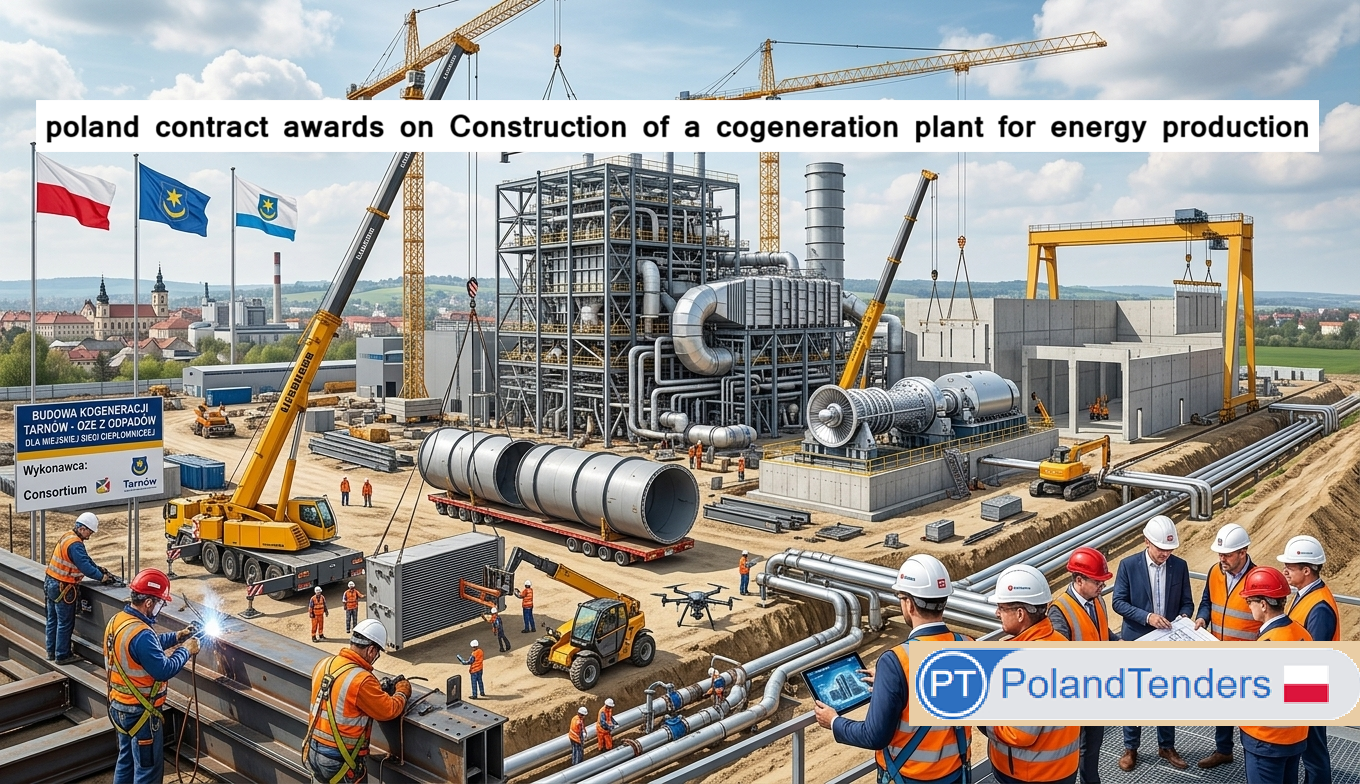
Miejskie Przedsiębiorstwo Energetyki Cieplnej S.A. sought a design and build contractor for a cogeneration installation capable of producing energy from processed municipal waste, referred to in the notice as RDF (Refuse Derived Fuel). The facility was intended to feed heat directly into Tarnów's municipal heating network.
Key Contract Details
| Category | Detail |
|---|---|
| Contract value (estimated) | PLN 313,687,192.36 (approximately €73m) |
| Main CPV code | 45000000 (Construction work) |
| Procedure type | Open procedure |
| Award criteria | Price (77%), energy efficiency K(E) (20%), service and technical assistance (3%) |
| Framework agreement | None |
| GPA coverage | No |
| Legal basis | Directive 2014/25/EU |
| Bids received | 5 |
| SME bidders | 5 |
| Bidders from other EEA countries | 1 |
| Bidders from outside EEA | 1 |
| Electronic bids | 5 |
Project Scope
The scope was comprehensive. The successful contractor would have been required to design and construct the entire installation, including site preparation, demolition of redundant structures, and construction of new buildings, access roads and fire roads. The project involved mechanical, electrical and automation works, the latter designated as AKPiA (automation, control and measurement technology).
Beyond construction, the contract required the contractor to commission the facility, conduct trial runs, carry out guarantee measurements, and provide technical assistance for the first year of operation. The contractor would also have been responsible for warranty service, spare parts supply, and staff training.
The plant was to be built entirely with new equipment, no used or exhibition grade machinery accepted, on MPEC's existing site at ul. Spokojna 65 in Tarnów, a sprawling parcel involving more than a dozen land plots.
About the Contracting Authority
Miejskie Przedsiębiorstwo Energetyki Cieplnej S.A. (MPEC Tarnów)
MPEC Tarnów is the municipal heat utility serving Tarnów, a city of approximately 110,000 people in southern Poland. The company produces and distributes heat, operating under the utilities sector of the EU procurement regime. It falls under Directive 2014/25/EU, which applies to the water, energy, transport and postal services sectors. The contracting entity's declared activity is the production, transport or distribution of gas or heat. MPEC Tarnów is a joint stock company wholly owned by the municipality.
About the Organisations Involved
Miejskie Przedsiębiorstwo Energetyki Cieplnej S.A.
Role: Contracting authority and buyer.
The utility issued the tender, evaluated bids and ultimately decided to cancel. It would have operated the completed facility.
Krajowa Izba Odwoławcza (National Appeal Chamber)
Role: Review organisation.
The National Appeal Chamber is Poland's procurement review body. It handles appeals against contracting authority decisions. Although no appeal was mentioned in the notice, the Chamber would have jurisdiction had any bidder challenged MPEC's decision. The contracting authority is required to provide detailed information about appeal deadlines and procedures.
Publications Office of the European Union
Role: TED eSender.
The Publications Office manages the Tenders Electronic Daily (TED) system. It publishes procurement notices on behalf of contracting authorities. This organisation appears in every TED notice.
No successful bidders
This procurement produced no winner.
Procurement Analysis
MPEC Tarnów chose an open procedure, the most transparent procurement method under EU rules. This allowed any qualified contractor to submit a bid. The procedure is often used when the contracting authority has a clear specification and seeks maximum competition.
Yet competition did not deliver an affordable result. Five bids were submitted, all from SMEs. One bidder came from another EEA country; another from outside the EEA. This international interest suggests the project held genuine appeal for specialised waste to energy contractors. However, after evaluation, MPEC concluded that none of the bids fell within its available budget.
The notice does not disclose whether the bids exceeded the estimated value, whether funding was withdrawn, or whether the authority misjudged the market price for such installations. The stated reason, "Decision of the buyer, because of insufficient funds", offers little clarity.
Additional Procurement Facts
- Previous notice: 725526-2024, published in late 2024.
- Platform: The procedure was conducted entirely via platformazakupowa.pl, the Polish e-procurement portal.
- Language: All communications were in Polish.
- Award criteria: Price dominated at 77 per cent, leaving 23 per cent for technical evaluation (energy efficiency and service quality).
- Framework: No framework agreement or dynamic purchasing system was used.
- GPA: The procurement was not covered by the Government Procurement Agreement, meaning non WTO suppliers could participate.
Market & Industry Perspective
The waste to energy sector in Poland has attracted significant investment over the past decade. Major facilities in Kraków, Poznań and Warsaw demonstrate that municipalities increasingly view incineration as preferable to landfilling. Yet these projects are capital intensive, typically requiring hundreds of millions of zloty. Smaller cities like Tarnów, with limited municipal budgets, often struggle to finance them without central government or EU support.
The five bidders, all SMEs, reflect a market dominated by smaller engineering and construction firms, with limited participation from large European energy or infrastructure groups. This may indicate that major international contractors viewed the project as too small or risky, or that MPEC's procurement terms discouraged larger players.
One bidder from outside the EEA suggests the project attracted international niche specialists capable of delivering waste to energy technology at competitive rates, yet even they could not meet MPEC's price expectations.
Economic Significance
The cancellation will affect Tarnów's district heating system. Without the new facility, MPEC will continue relying on existing assets. Tarnów lacks the municipal waste treatment capacity that many Polish cities have developed, forcing continued reliance on landfill. This creates environmental compliance risks as EU landfill diversion targets tighten.
Employment benefits expected from the construction phase, estimated at several hundred jobs, will not materialise. Long term operational roles also vanish. For local suppliers of construction materials, engineering services and waste logistics, this represents a lost opportunity.
Future Procurement Opportunities
MPEC Tarnów may revisit this project. The underlying problems, waste management and heat decarbonisation, remain. The authority could:
- Relaunch with a revised budget after securing additional municipal or EU funding.
- Restructure the contract by splitting it into separate design, construction and operation contracts to reduce financial exposure.
- Seek private finance through a public private partnership, transferring construction and operational risk to the private sector.
- Reduce scope by building a smaller, lower cost facility.
Any future tender will likely follow a similar open procedure, as MPEC operates in the utilities sector. Suppliers should monitor MPEC Tarnów's procurement announcements and the platformazakupowa.pl portal.
Opportunities for Suppliers
Even though the contract failed, the need remains. Suppliers should position themselves for a potential retender.
- Engineering consultants: MPEC will still require project design, feasibility studies and environmental impact assessments.
- Waste to energy equipment manufacturers: The authority may seek direct equipment supply if it restructures the procurement.
- SME contractors: Prepare early prequalification documents. The procurement attracted SME interest, so competition will remain intense.
- Energy efficiency specialists: The weighting placed on efficiency K(E) (20 per cent) underscores MPEC's focus on operational performance. Suppliers demonstrating superior efficiency metrics will have a competitive edge.
- EU funding experts: Help MPEC navigate EU cohesion funds or the Modernisation Fund, which supports energy transition projects in Poland.
What Businesses Should Watch
- MPEC Tarnów procurement announcements: The authority may issue a revised notice within 12-18 months.
- Polish municipal heat sector: Other cities face similar funding challenges. Watch for cancellations or retenders.
- EU funding cycles: The 2021-2027 cohesion funding period remains open. Pressures to disburse funds may push projects forward.
- Waste management policy: Changes to Polish waste law could force municipalities to invest in treatment capacity, creating new tenders.
PolandTenders.com Procurement Intelligence
This cancellation represents a broader trend: municipal infrastructure projects in Poland are increasingly priced beyond public budgets. Inflation, rising material costs and a tight labour market have driven construction prices up sharply since 2022. Contracting authorities that estimated projects in 2023 or early 2024 are finding that bid prices exceed their budgets. This is not a Poland specific phenomenon; similar patterns appear across Central Europe.
The open procedure, while fair, offered no flexibility for negotiation. Had MPEC used a negotiated procedure with prior call for competition, it could have discussed pricing and scope with bidders before finalising terms. This may have produced a workable compromise, reduced scope, extended timeline or shared financing. The authority chose not to exercise that option.
Suppliers should recognise that Polish municipal utilities are becoming more sophisticated in procurement, yet remain constrained by rigid budgetary processes. The 77 per cent weighting on price reveals a financially stressed buyer. In future tenders, bidders should structure offers that explicitly address financing options, payment milestones and risk sharing mechanisms.
The absence of any disclosed winner raises questions about whether the authority even evaluated bids fully. The notice mentions only that no winner was chosen, not whether the bids were rejected, non compliant or merely above budget. This opacity weakens supplier confidence in the procurement system.
For equipment suppliers and EPC contractors, the lesson is clear: engage early. Pretender dialogue can help shape realistic contract terms. Suppliers who build relationships with municipal utilities outside formal procurement processes often gain critical insight into budget constraints, technical preferences and decision making timelines. This project fell short not because the need was questionable, but because the financing model failed. That is a solvable problem.
Supplier Takeaways
- Track MPEC Tarnów's procurement portal for any reannouncement. The underlying need has not disappeared.
- Prepare alternative financial proposals, including phased construction or private financing options.
- Build relationships with municipal heat utilities. Pretender engagement allows suppliers to understand budget constraints early.
- Monitor EU funding announcements for Polish waste to energy programmes.
- Strengthen SME credentials, all five bidders were SMEs, indicating the authority is not restricting competition to large firms.
- Polish language capability is non negotiable for this buyer.
Key Takeaways
- A €73m waste to energy project in Tarnów, Poland, has been cancelled due to insufficient funds.
- Five bids were received, all from SMEs; no winner was selected.
- The facility would have processed municipal waste into heat for the city's district heating network.
- MPEC Tarnów remains a buyer to watch; the need for waste to energy capacity persists.
- Suppliers should prepare for a potential retender with revised scope or financing.
- The cancellation reflects wider infrastructure funding pressures across Central Europe.
Conclusion
Tarnów will continue to rely on conventional heat generation while its waste management challenges remain unresolved. The cancellation is not a permanent end but a pause, one driven by fiscal reality, not environmental need. For suppliers and financiers willing to solve the funding equation, this project will return. The question is not whether Poland needs waste to energy capacity, but how municipalities will afford it.
Source: TED (Tenders Electronic Daily) - Official Journal of the European Union
Notice reference: 500298-2026, OJ S 137/2026, published 20 July 2026
Contract notice reference: 725526-2024
Buyer: Miejskie Przedsiębiorstwo Energetyki Cieplnej S.A. (MPEC Tarnów)
Document: Contract or concession award notice - standard regime, Poland - Construction work
Frequently Asked Questions (FAQs)
►Cogeneration Plant Price (Cena CHP_RDF): 77%
►Efficiency (Efektywność K(E)): 20%
►Service and Technical Assistance (Serwis i Asysta Techniczna): 3%

Fresh and verified Tenders from Poland. Find, search and filter Tenders/Call for bids/RFIs/RFPs/RFQs/Auctions published by the government, public sector undertakings (PSUs) and private entities.
- 1,000+ Tenders
- Verified Tenders Only
- New Tenders Every Day
- Tenders Result Data
- Archive & Historical Tenders Access
- Consultants for RFI/RFP/RFQ
- Tender Notifications & Alerts
- Search, Sort, and Filter Tenders
- Bidding Assistance & Consulting
- Customer Support
- Publish your Tenders
- Export data to Excel
- API for Tender Data
- Tender Documents

Fill out the form below and you will receive a call from us within 24 hours.
Get FREE SAMPLE TENDERS from Poland in your email inbox.
Copyright © 2014-2026 PolandTenders.com. All Rights Reserved.