Polish Metropolis Secures 23.3 Million PLN Electric Bus Fleet to Accelerate Regional Green Transition
01 Sep 2026
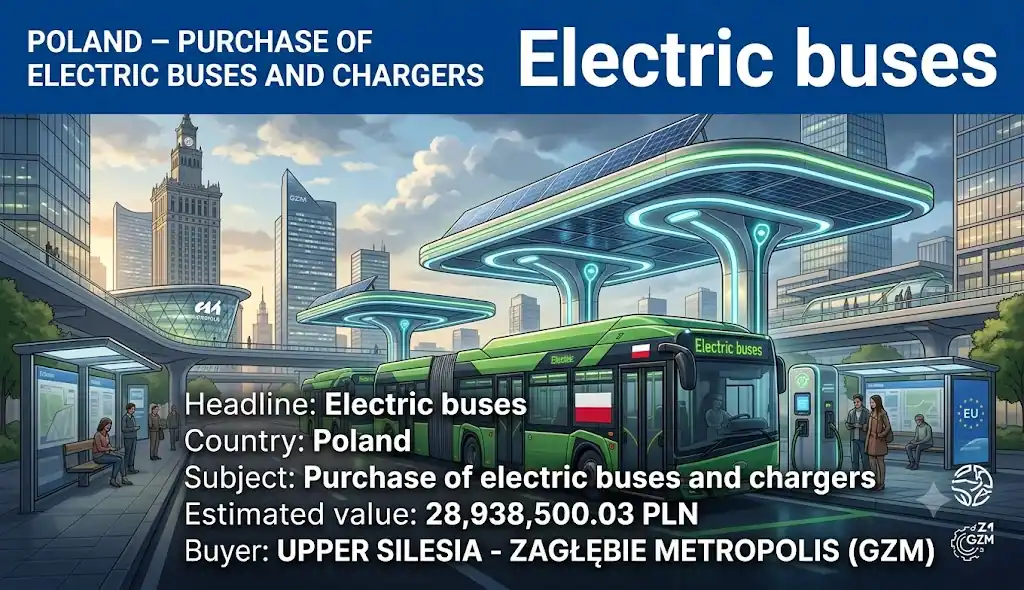
Standfirst GÓRNOŚLĄSKO - ZAGŁĘBIOWSKA METROPOLIA in Poland has awarded a PLN 23.28 million contract for the purchase of new electric buses and charging equipment as part of projects focused on sustainable and intelligent mobility in the region. The contract covers nine new zero-emission electric city buses together with plug-in charging infrastructure, warranty and post-warranty services, technical support and training. The contract was awarded to PAKPCE POLSKI AUTOBUS WODOROWY SPÓŁKA Z OGRANICZONĄ ODPOWIEDZIALNOŚCIĄ, a medium-sized economic operator based in Konin, Poland. The tender was ranked first, with the contract concluded on 21 August 2026. The procurement is associated with the Just Transition Fund 2021/2027 and the European Funds for Silesia 2021-2027 programme. Introduction Public transport authorities across Europe are increasingly investing in zero emission buses and charging infrastructure as cities modernise their public transport fleets. Poland's latest procurement in the Katowicki region provides a concrete example of this transition, combining electric buses, charging systems, after-sales support and technical services within a single supply contract. The procurement, identified by internal reference ZP.270.10.2026, was conducted through an open procedure. Its main CPV classification is 34144910 – Electric buses, while additional classifications cover public-service buses, low-floor buses, information systems and servers, software packages, electrical installation work and chargers. Why This Contract Matters The award is significant because the procurement goes beyond the purchase of electric buses alone. The contracting authority has combined vehicle procurement with dedicated charging infrastructure, warranty and post-warranty services, technical support and training. The contract therefore represents an integrated electric-mobility procurement model in which the successful supplier is responsible for supplying the core vehicles and associated charging equipment while also providing support throughout the operational lifecycle. The procurement also demonstrates the role of EU funding in supporting public transport transformation in the Silesian region. The awarded contract identifies the Just Transition Fund (2021/2027) as the EU-financed programme and references Funduszy Europejskich dla Śląskiego 2021-2027. Contract Timeline 14 July 2026: The winning tender was selected. 21 August 2026: The contract was concluded. 31 August 2026: The award notice was dispatched. 1 September 2026: The award notice was published in OJ S issue 168/2026. The notice records 21 August 2026 as the contract conclusion date and 14 July 2026 as the date on which the winner was chosen. Contract Overview The procurement is structured as a single lot and covers the purchase of electric buses and charging equipment for the implementation of the projects titled “Sustainable, intelligent mobility – the key to the transformation of the region – Stage 1 and Stage 2.” The estimated procurement value was PLN 28,938,500.03 excluding VAT. The awarded tender was valued at PLN 23,283,824.06. The winning tender therefore came in approximately PLN 5.65 million below the published estimate, equivalent to roughly 19.5% below the estimated value. This calculation is a comparison of the published estimate and awarded tender value; the notice does not describe it as an official procurement saving. Key Contract Details CountryPoland RegionKatowicki, NUTS PL22A Contracting authorityGÓRNOŚLĄSKO - ZAGŁĘBIOWSKA METROPOLIA Procurement referenceZP.270.10.2026 ProcedureOpen procedure Contract natureSupplies Main CPV34144910 – Electric buses Estimated value excluding VATPLN 28,938,500.03 Awarded valuePLN 23,283,824.06 Number of lots1 Winning supplierPAKPCE POLSKI AUTOBUS WODOROWY SPÓŁKA Z OGRANICZONĄ ODPOWIEDZIALNOŚCIĄ Winning tender rank1 EU programmeJust Transition Fund (2021/2027) EU funds identifierFunduszy Europejskich dla Śląskiego 2021-2027 Framework agreementNo Dynamic purchasing systemNo GPA coveredYes The core procurement and award information is stated in the TED notice. Project Scope The contract covers the successive delivery of nine brand-new electric city buses. The buses are specified as zero-emission EV12 vehicles with an overall length between 11.8 metres and 12.2 metres. In addition to the buses, the procurement includes: 1 dual-station wired charger with a power rating of at least 80 kW, configured as 2 × 40 kW. 3 dual-station wired chargers with a power rating of at least 120 kW, configured as 2 × 60 kW. Warranty and post-warranty service for the buses and chargers. Technical support for the supplied equipment. Training related to the supplied buses and charging equipment. The tender documentation referenced in the notice contains the detailed formal requirements, technical parameters, equipment specifications, warranty conditions and service requirements for the EV12 buses and the 80 kW and 120 kW plug-in chargers. Electric Bus Requirements The central component of the procurement is the delivery of nine electric city buses. The specified vehicle category is EV12, with a required overall length between 11.8 and 12.2 metres. The main CPV classification, 34144910 – Electric buses, confirms that the primary procurement requirement concerns electric public-transport vehicles. Additional CPV classifications include 34121100 – Public-service buses and 34121400 – Low-floor buses. The award notice itself does not provide every technical specification of the buses, such as battery capacity, driving range, passenger capacity or charging time. Those details are referred to in the technical tender documentation and should not be inferred from the award notice alone. Charging Infrastructure The charging component is an important part of the procurement. The contract requires four dual-station wired charging units in total: Charger typeQuantityMinimum powerConfiguration Plug-in 80 kW180 kW2 × 40 kW Plug-in 120 kW3120 kW2 × 60 kW The charging equipment is separately recognised in the additional CPV classification 31158000 – Chargers, while the procurement also includes electrical installation work under CPV 45317000. About the Contracting Authority GÓRNOŚLĄSKO - ZAGŁĘBIOWSKA METROPOLIA GÓRNOŚLĄSKO - ZAGŁĘBIOWSKA METROPOLIA is the buyer, the organisation providing additional procurement information and the organisation signing the contract. The authority is based in Katowice, Poland, in the Katowicki NUTS region. The notice classifies the buyer as a body governed by public law. Its contracting-authority activity is listed as general public services, while its contracting-entity activity includes urban railway, tramway, trolleybus or bus services. About the Winning Supplier PAKPCE POLSKI AUTOBUS WODOROWY SPÓŁKA Z OGRANICZONĄ ODPOWIEDZIALNOŚCIĄ PAKPCE POLSKI AUTOBUS WODOROWY SPÓŁKA Z OGRANICZONĄ ODPOWIEDZIALNOŚCIĄ was selected as the winner of the procurement. The company submitted the only tender recorded in the award notice and achieved first rank. The winning tender was valued at PLN 23,283,824.06. The contract identifier is ZP.270.1.2026. The notice identifies the supplier as a medium-sized economic operator, with its address in Konin, Poland. The notice also records Poland as the country of origin of the product or service. Subcontracting is marked as “Not yet known” rather than confirming that subcontractors will or will not be used. Procurement Analysis The procurement was conducted using an open procedure under the applicable Polish public procurement framework. The notice identifies Directive 2014/25/EU as its EU legal basis and states that the proceedings were conducted under Poland's Public Procurement Law of 11 September 2019. The procurement used a single-lot structure. Unlike a multi-lot procurement, suppliers were competing for the complete package of nine buses and associated charging equipment rather than separate vehicle and infrastructure lots. The award notice records one tender received. The winning supplier's tender was ranked first and selected for contract award. Evaluation Criteria The authority used three disclosed award criteria with a combined maximum of 100 points: Price – maximum 60 points. Warranty period and conditions – maximum 25 points. Technical and operational assessment of the buses – maximum 15 points. This means that price represented the largest individual component of the evaluation, but the procurement was not based on price alone. Warranty terms and the technical and operational characteristics of the electric buses together accounted for up to 40 points. For suppliers, this structure is important because it indicates that competitive pricing needed to be accompanied by attractive warranty conditions and strong technical and operational characteristics. Economic Significance The contract represents an investment of more than PLN 23.28 million in electric public transport equipment. The procurement combines vehicles, charging infrastructure and lifecycle support, making the award economically broader than a conventional bus purchase. The awarded value is approximately 19.5% below the estimated value of PLN 28.94 million. While this difference is commercially notable, it should be treated as a comparison between the estimate and the winning tender rather than automatically described as a confirmed saving. The EU funding component further highlights the role of regional and European programmes in supporting the transition toward more sustainable public transport. The award notice specifically identifies the Just Transition Fund and the European Funds for Silesia 2021-2027. Role of EU Funding The procurement is linked to the Just Transition Fund (2021/2027). The contract information identifies the project or programme as the Just Transition Fund and provides the EU funds identifier as Funduszy Europejskich dla Śląskiego 2021-2027. This connection is particularly relevant for suppliers tracking publicly funded electric-mobility projects in Poland. EU-backed regional programmes can create procurement opportunities for buses, chargers, electrical infrastructure, software and related services. Additional Procurement Facts The procurement covers one lot. Nine new electric city buses are being supplied. The buses are EV12 zero-emission vehicles between 11.8 and 12.2 metres long. One 80 kW dual-station charger is included. Three 120 kW dual-station chargers are included. Warranty and post-warranty support are part of the procurement. Technical support and training are included. The procurement uses an open procedure. One tender was received. The winning tender was ranked first. The contract value is PLN 23,283,824.06. The procurement is linked to EU funding. The procurement is covered by the Government Procurement Agreement. No framework agreement is used. No dynamic purchasing system is used. These details are directly reflected in the published award notice. Market & Industry Perspective The procurement provides an important signal for the Polish electric-bus market because the requirement combines vehicle supply with charging infrastructure and long-term support services. For electric-bus manufacturers and mobility technology companies, this type of procurement can create opportunities across several interconnected areas: vehicle manufacturing, charging equipment, electrical installation, software, technical support, maintenance and training. The additional CPV classifications are particularly useful indicators. In addition to electric buses, the procurement references information systems and servers, software utilities, industry-specific software, software and information systems, electrical installation work and chargers. This broad classification suggests that future public-transport procurements may extend beyond the physical vehicle to include the digital and electrical infrastructure required to operate an electric fleet. Opportunities for Suppliers Companies operating in electric mobility and public transportation can draw several lessons from this procurement. Monitor Polish metropolitan authorities: Urban and regional transport programmes can generate sizeable electric-bus opportunities. Track charging infrastructure: Bus tenders may include charging equipment rather than procuring vehicles separately. Prepare integrated solutions: Suppliers able to provide vehicles, chargers, support and training may be well positioned for bundled procurements. Compete beyond price: The evaluation model allocated 25 points to warranty conditions and 15 points to technical and operational assessment. Monitor EU-funded programmes: The Just Transition Fund and regional European funding programmes can support transport modernisation. Follow CPV classifications: CPV 34144910 and related bus and charging classifications can help suppliers identify comparable procurement notices. What Businesses Should Watch New electric-bus procurements from Polish metropolitan and municipal authorities. Charging infrastructure tenders linked to fleet electrification. EU-funded sustainable mobility projects in Silesia and other Polish regions. Procurements using CPV 34144910 for electric buses. Public-service and low-floor bus procurements under CPVs 34121100 and 34121400. Charging equipment opportunities under CPV 31158000. Electrical installation opportunities associated with electric-bus depots. Software and information-system requirements included in smart-mobility projects. PolandTenders.com Procurement Intelligence This award demonstrates why procurement intelligence should extend beyond the headline contract value. The PLN 23.28 million award provides information about the buyer, winning supplier, competition level, evaluation methodology, CPV classifications, funding source and the technical scope of the procurement. For suppliers, the most important signal is the integrated nature of the requirement. The buyer did not procure only nine electric buses. The contract also covers four dual-station chargers, warranty and post-warranty services, technical support and training. The evaluation model provides another valuable competitive benchmark. With 60 points allocated to price, 25 to warranty period and conditions and 15 to technical and operational assessment, suppliers needed to compete across both commercial and product-performance dimensions. The EU-funded nature of the project also provides an important market indicator. Businesses tracking the Just Transition Fund and regional European funding programmes can use awarded contracts like this one to identify the types of equipment and services being financed. For procurement professionals, the award also shows the value of analysing unsuccessful competition or, in this case, the absence of it. The notice records only one tender, meaning the published result does not show a multi-bid competitive field. Suppliers can therefore use the procurement as a benchmark for contract size and technical scope, while avoiding assumptions about broader market competition. Supplier Takeaways PLN 23.28 million: Value of the awarded contract. 9 electric buses: New EV12 zero-emission city buses are included. 4 dual-station chargers: One 80 kW unit and three 120 kW units. Integrated services: Warranty, post-warranty service, technical support and training are included. Single winner: PAKPCE POLSKI AUTOBUS WODOROWY SPÓŁKA Z OGRANICZONĄ ODPOWIEDZIALNOŚCIĄ. Single tender: The award notice records one tender received. Evaluation: Price carried 60 points, warranty 25 points and technical-operational assessment 15 points. EU funding: The project is associated with the Just Transition Fund 2021/2027 and European Funds for Silesia 2021-2027. Market opportunity: The procurement demonstrates demand for integrated electric-mobility solutions in Poland. Key Takeaways GÓRNOŚLĄSKO - ZAGŁĘBIOWSKA METROPOLIA awarded a PLN 23.28 million electric-mobility contract. The contract covers nine new zero-emission EV12 city buses. The buses must have an overall length between 11.8 and 12.2 metres. The procurement includes one 80 kW and three 120 kW dual-station plug-in chargers. Warranty, post-warranty service, technical support and training are included. The winning supplier is PAKPCE POLSKI AUTOBUS WODOROWY SPÓŁKA Z OGRANICZONĄ ODPOWIEDZIALNOŚCIĄ. The winning tender was ranked first and the contract was concluded on 21 August 2026. Price was worth up to 60 points, warranty up to 25 points and technical-operational assessment up to 15 points. The procurement is connected with the Just Transition Fund 2021/2027. The contract value was approximately 19.5% below the published estimated value. Conclusion Poland's PLN 23.28 million award for electric buses and charging infrastructure represents a substantial investment in zero-emission public transportation in the Katowicki region. The procurement combines nine EV12 buses with dedicated charging infrastructure, lifecycle support, technical assistance and training. The award is particularly relevant for electric-bus manufacturers, charging-equipment suppliers, infrastructure contractors and mobility technology companies because it demonstrates how public authorities can combine several elements of fleet electrification into one procurement package. For businesses seeking future opportunities, the key areas to monitor are Polish metropolitan transport programmes, EU-funded sustainable mobility initiatives, electric-bus procurements and associated charging and electrical infrastructure. The use of CPV 34144910 for electric buses, together with related bus, charger, software and electrical classifications, provides a useful starting point for identifying comparable tenders. The award also highlights the importance of monitoring contract-award notices. Beyond identifying the winning supplier and contract value, the notice reveals the evaluation structure, level of competition, funding programme and technical scope information that can help suppliers prepare more effectively for future public-sector opportunities.Source: Tenders Electronic Daily (TED), Contract Award Notice 600518-2026, OJ S 168/2026, published 1 September 2026.
View Details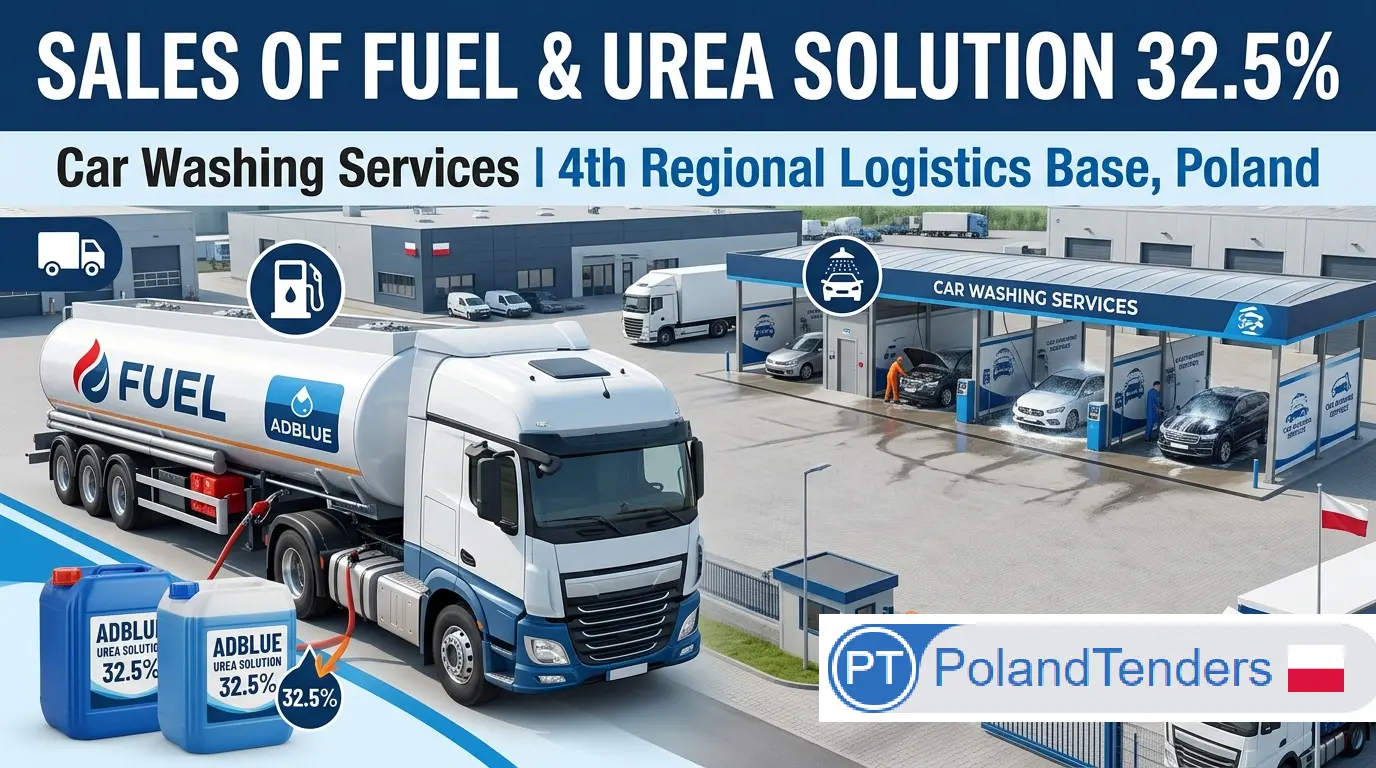
Polish Armed Forces Secure 420 Million PLN Fuel and Logistics Framework with PKN Orlen Amid Geopolitical Pressures
31 Aug 2026
Introduction Maintaining the operational readiness of a modern military requires more than advanced weaponry. It demands a resilient, nationwide logistical backbone capable of supporting continuous mobility. For the Polish Armed Forces, ensuring that official vehicles can reliably refuel and receive maintenance across the country is a critical component of national defense infrastructure. Poland’s 4th Regional Logistics Base has awarded a five year, 420 million PLN contract to national energy giant PKN Orlen to provide this essential support. Why This Contract Matters This agreement directly supports the mobility and operational continuity of Poland’s military logistics. By consolidating fuel procurement and ancillary services into a single, cashless framework, the authority mitigates the administrative burden of decentralized purchasing. Executed under an accelerated procedure, the tender underscores the urgent strategic imperative to secure these supply chains. It guarantees nationwide coverage for military convoys and individual service vehicles amid ongoing regional instability and heightened security demands on the Eastern Border. Contract Timeline The contracting authority selected the winning bidder on 21 July 2026. The formal contract was concluded shortly thereafter on 24 August 2026. The official notice was published in the Tenders Electronic Daily on 31 August 2026. The agreement is structured to run for a duration of five years from the date of conclusion. Contract Overview This is a single-lot contract for the supply of fuel and 32.5% urea solution (AdBlue), coupled with automated and manual car washing services at commercial fuel stations. The procurement is designed for cashless transactions utilizing fuel cards. It covers official vehicles of the Polish Armed Forces across a mandated minimum of 85% of Poland’s county-level municipalities, ensuring broad geographic accessibility. Key Contract Details Contracting Authority 4 Regionalna Baza Logistyczna Procedure Type Open Procedure (Accelerated) Contract Type Supplies and Services CPV Codes 09211100 (Motor oils), 09211400 (Gear oils), 30192920 (Correction fluid) Contract Duration 5 Years Contract Value 420,367,776.64 PLN (excluding VAT) Award Criteria Price (60%), Network Availability (40%) Number of Bids Received 1 Project Scope The supplier is responsible for providing fuel and urea solution, alongside vehicle washing services at commercial stations. The operational requirement mandates that the supplier’s network must honor the provided military fuel cards in at least 85% of Poland’s county towns and cities with county rights. This geographic threshold ensures that military vehicles operating anywhere in the country have reliable access to necessary resources without requiring specialized, dedicated military infrastructure at every location. About the Contracting Authority 4 Regionalna Baza Logistyczna (4th Regional Logistics Base) A public law body based in Wrocław, Poland, operating under the Ministry of National Defence. It is responsible for managing logistical support, supply chain operations, and infrastructure maintenance for the Polish Armed Forces in its designated region and nationally. About the Organisations Involved 4 Regionalna Baza Logistyczna The contracting authority and buyer. It initiated the procurement to secure logistical support and will execute payments under the resulting contract. PKN Orlen S.A. The successful bidder. A large enterprise and Poland’s largest multi-utility and fuel retailer, headquartered in Płock. Its extensive nationwide network of commercial fuel stations made it the sole viable candidate to meet the strict geographic availability requirements of the tender. Krajowa Izba Odwoławcza (National Chamber of Appeal) The official review organisation for public procurement disputes in Poland. No complaints are recorded for this specific procedure. Procurement Analysis The contracting authority invoked an accelerated open procedure. It explicitly cited the current geopolitical situation, the protection of the Eastern Border, and the movement of allied troops as justification for the shortened timeline. The evaluation criteria balanced cost (60%) with operational reach (40%). The 40% weighting for network availability acted as a formidable barrier to entry. It effectively limited the competition to major national fuel retailers capable of guaranteeing coverage across 85% of county towns. The official notice contains two notable data anomalies. First, it lists "Correction fluid" (CPV 30192920) as an additional classification, which is almost certainly a clerical error by the buyer given the context of motor and gear oils. Second, the statistical section records one bid received from a "micro, small or medium tenderer," yet the declared winner, PKN Orlen S.A., is explicitly classified as a "Large" enterprise. The contracting authority has not disclosed the reason for this classification mismatch. Additional Procurement Facts The procurement is not financed by EU funds. The agreement is covered by the Government Procurement Agreement (GPA). Subcontracting is not permitted for this contract. The authority retained the right to cancel the procedure if public funds were not granted, in accordance with Article 257 of the Polish Public Procurement Law. Market & Industry Perspective The Polish fuel retail market is highly consolidated. It is dominated by a few major players with the capital and infrastructure to maintain nationwide networks. For a contract of this scale and geographic requirement, PKN Orlen’s market position is virtually unassailable. The inclusion of vehicle washing services alongside fuel supply represents a trend toward bundled logistical services, maximizing the utility of military fuel cards and streamlining vendor management. Economic Significance A five-year, 420 million PLN commitment provides significant revenue visibility for PKN Orlen. It simultaneously locks in predictable fuel and maintenance costs for the Polish military. In an environment of potential energy price volatility, securing a long-term framework with a domestic supplier aligns with Poland’s broader strategy of energy sovereignty and supply chain resilience. Future Procurement Opportunities As the Polish Armed Forces continue to modernize and expand, ancillary logistics contracts will remain a steady pipeline. Future tenders may increasingly focus on alternative fuels. Authorities may also seek advanced telematics integrated into fuel card systems. This would allow the military to monitor fleet efficiency, track consumption patterns, and prevent fraud in real time. Opportunities for Suppliers While the primary fuel supply is consolidated, specialized maintenance providers or regional car wash operators may explore partnership opportunities with the primary contractor, although this specific notice states subcontracting is not permitted. Suppliers of fleet management software should monitor the military’s evolving needs for digital tracking of fuel consumption and vehicle maintenance, as this represents a logical adjacent market. What Businesses Should Watch Market participants should monitor how the Polish Ministry of Defence adapts its procurement strategies in response to prolonged regional conflicts. An increase in accelerated or direct awards for logistical support may become the norm. This would allow the state to bypass standard competitive timelines to ensure immediate operational readiness. PolandTenders.com Procurement Intelligence This contract exemplifies the intersection of national security imperatives and public procurement mechanics. The use of an accelerated procedure is a clear signal that the contracting authority prioritizes speed and guaranteed supply chain continuity over prolonged market competition. Strategically, the 40% weighting on network availability demonstrates that in military logistics, operational reach is nearly as valuable as price. Suppliers must learn that meeting stringent geographic or operational thresholds is the primary gatekeeper in defense support contracts. Price competition only occurs among those who can clear that high bar. Relevant suppliers should position themselves by highlighting their nationwide infrastructure and ability to integrate seamlessly with government cashless payment systems. Future contracts in this market will likely evolve to demand greater digital transparency. Authorities will increasingly require suppliers to provide real-time data analytics on fuel consumption and vehicle servicing alongside the physical supply of goods, transforming a simple commodity purchase into a comprehensive fleet management partnership. Supplier Takeaways Operational reach and geographic coverage can outweigh pure price competition in defense logistics tenders. Accelerated procedures are increasingly common in defense procurement due to geopolitical pressures, requiring suppliers to maintain rapid response capabilities. Data anomalies in TED notices, such as mismatched company sizes or erroneous CPV codes, are common. Suppliers should focus on the core operational requirements rather than administrative clerical errors. Key Takeaways PKN Orlen S.A. secured a five-year, 420 million PLN contract to supply fuel, urea, and vehicle washing services for the Polish Armed Forces. The tender was executed under an accelerated open procedure due to the geopolitical situation and Eastern Border security needs. Award criteria heavily weighted network availability (40%), requiring coverage in 85% of Polish county towns. The official notice contains discrepancies regarding the size classification of the bidder and an anomalous CPV code for "correction fluid." Conclusion This procurement successfully secures a vital logistical lifeline for the Polish Armed Forces over the next five years. By partnering with the nation’s largest fuel retailer, the 4th Regional Logistics Base has ensured that military mobility remains uncompromised. As regional security demands continue to escalate, this framework provides the predictability and coverage necessary to sustain defense operations across the entire country. Source: Tenders Electronic Daily (TED), Contract Award Notice 597160-2026, Official Journal of the European Union, published on 31/08/2026.
View Details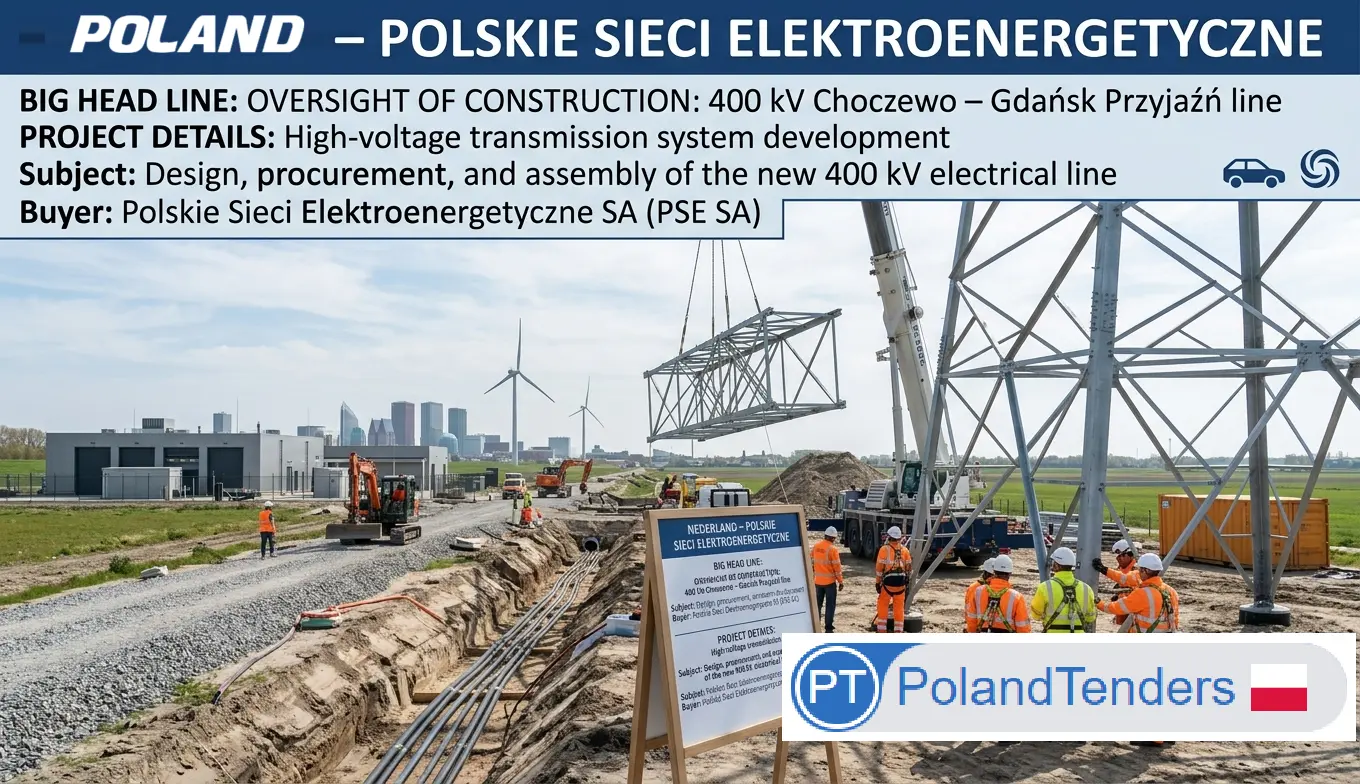
Spanish Constructor Aldesa Secures 212 Million PLN Polish High-Voltage Grid Contract in Competitive 11-Bidder Race
28 Aug 2026
Introduction Modernising and expanding high-voltage transmission infrastructure is a strict prerequisite for energy security and the integration of renewable energy sources in Central Europe. Poland’s national grid operator has taken a decisive step in this direction by awarding a major construction contract for a critical 400 kV power line segment. Polskie Sieci Elektroenergetyczne S.A. (PSE) has awarded a 32-month, 212 million PLN construction contract to Aldesa Construcciones Polska. The award underscores the cross-border nature of Eastern European energy infrastructure development and the intense competition for specialized grid construction expertise. Why This Contract Matters This contract covers Section II of the Choczewo – Gdańsk Przyjaźń 400 kV transmission line. This infrastructure is vital for grid stability in the Pomeranian region. Specifically, it supports growing industrial electricity demand and facilitates the integration of offshore wind capacity from the Baltic Sea into the national grid. Delays in such projects directly impact Poland’s broader energy transition timeline. Contract Timeline The contracting authority concluded the contract with the winning bidder on 30 July 2026. The official notice was published in the Tenders Electronic Daily on 28 August 2026. The project execution is scheduled to last for 32 months from the contract signing date, placing the expected completion window in early 2029. Contract Overview This is a single-lot works contract for the construction of a high-voltage power line. The scope includes the development of formal and technical documentation, followed by the physical execution of works necessary to build and commission Section II of the line. The project runs from tower number 64 to the Gdańsk Przyjaźń substation. The contracting authority explicitly permitted the use of equivalent technical solutions, provided the bidder could prove they met or exceeded the specified parameters. Key Contract Details Contracting Authority Polskie Sieci Elektroenergetyczne S.A. (PSE) Procedure Type Open Procedure Contract Type Works (Construction) CPV Code 45000000 (Construction work) Contract Duration 32 Months Contract Value 212,091,287.74 PLN (excluding VAT) Award Criterion Price (100%) Number of Bids Received 11 Project Scope The winning contractor is responsible for the full lifecycle of this specific grid segment. This encompasses engineering design, civil works, tower erection, cable installation and final commissioning. The notice specifies that the buyer will utilize a Contractor Qualification System. This pre-vetting mechanism ensures that only firms with proven experience in 400 kV power lines and substations are permitted to participate in the bidding phase. About the Contracting Authority Polskie Sieci Elektroenergetyczne S.A. (PSE) PSE is the transmission system operator (TSO) for Poland. It is a state-controlled entity responsible for the secure, reliable and efficient operation of the national high-voltage power grid, as well as managing cross-border electricity flows. About the Organisations Involved Aldesa Construcciones Polska sp. z o.o. The successful bidder. Classified as a large enterprise, this entity is the Polish subsidiary of the Spanish infrastructure group Aldesa. Based in Warsaw, the company possesses extensive experience in complex civil engineering and energy infrastructure projects across Central and Eastern Europe. Krajowa Izba Odwoławcza The National Chamber of Appeal. This independent body serves as the official review organisation for public procurement disputes in Poland, ensuring compliance with national and EU procurement laws. Procurement Analysis The open procedure attracted 11 tender submissions, indicating strong market appetite for major Polish energy infrastructure projects. The bidder pool was notably diverse, including one micro, small, or medium enterprise, two bidders from other European Economic Area countries and one from outside the EEA. The award was determined entirely on price, with a 100 percent weighting. In complex infrastructure tenders, a sole price criterion can be risky. However, PSE mitigated this risk by requiring bidders to be pre-qualified through its specialized Contractor Qualification System for 400 kV lines. By filtering for technical capability upfront, the authority ensured that all 11 bids were technically compliant. This allowed PSE to safely award the contract to the lowest-priced qualified bidder, maximizing value for public funds. The authority also applied a reverse procedure, evaluating commercial offers before verifying the top bidder’s formal qualifications, which accelerates the award timeline. Additional Procurement Facts The procurement is covered by the Government Procurement Agreement (GPA). Subcontracting arrangements are not yet known. The contracting authority retains the right to award follow-up contracts for similar works under specific legal provisions. All communication and bid submission occurred exclusively via PSE’s dedicated electronic procurement platform. Market & Industry Perspective The Polish energy grid is undergoing a historic expansion. The country is actively phasing out coal dependency while simultaneously developing a massive offshore wind sector in the Baltic Sea. This dual transition requires thousands of kilometers of new high-voltage transmission lines. The market for such specialized construction is dominated by a select group of large, multinational engineering firms with the capital and technical expertise to manage high-risk, multi-year projects. Aldesa’s victory highlights the consolidation of European energy construction expertise. Spanish and other Southern European engineering groups are increasingly leveraging their regional subsidiaries to capture market share in the rapidly growing Central European infrastructure market. Economic Significance For the Polish state, this 212 million PLN investment is a critical down payment on future energy resilience. It directly supports the economic viability of upcoming offshore wind farms by guaranteeing a pathway to transmit power to major demand centers. For Aldesa Construcciones Polska, the contract provides substantial revenue visibility over a 32-month period. It also reinforces the company’s reference portfolio in the highly specialized high-voltage sector, strengthening its position for future TSO tenders. Future Procurement Opportunities PSE operates under a multi-year capital expenditure plan. This contract is merely one segment of the broader Choczewo – Gdańsk Przyjaźń project. Additional tenders for adjacent sections of this line are highly probable in the near term. Furthermore, similar 400 kV expansion projects are planned across other regions of Poland to alleviate grid congestion. Suppliers should anticipate a steady pipeline of high-voltage construction tenders throughout the remainder of the decade. Opportunities for Suppliers While the prime contract is awarded, significant downstream opportunities exist. Specialized subcontractors focusing on civil engineering, foundation works, tower assembly and high-voltage electrical fitting should proactively approach Aldesa to establish supply chain partnerships. Manufacturers and distributors of high-voltage materials, such as specialized cables, insulators and steel structures, will also see direct demand generated by this project’s execution phase. What Businesses Should Watch Market participants should monitor the execution pace of this 32-month contract. Any delays in high-voltage line construction can create bottlenecks that delay the operational launch of associated offshore wind farms. Observers should also watch PSE’s evolving qualification criteria. As grid technology advances to include smart grid features and high-voltage direct current (HVDC) components, the technical bar for pre-qualification will likely rise, further narrowing the field of eligible bidders. PolandTenders.com Procurement Intelligence This award exemplifies a highly effective procurement strategy for complex public infrastructure: the decoupling of technical qualification from commercial evaluation. By utilizing a rigorous pre-qualification system, PSE successfully de-risked the tender process. This approach allows the contracting authority to apply a 100 percent price weighting with confidence, knowing that technical failure risk has already been mitigated. Suppliers must learn that in such environments, the real competition often occurs before the tender is even published, during the qualification phase. Relevant suppliers should position themselves by ensuring their technical certifications and past performance records are meticulously maintained and registered in the buyer’s qualification systems. Future contracts in this market will continue to favor large, financially stable consortia or subsidiaries of multinational groups capable of absorbing the inherent risks of multi-year grid construction. Additionally, the diverse bidder pool indicates that Polish energy infrastructure remains highly attractive to international capital and expertise. This cross-border competition will continue to drive down prices while maintaining high technical standards. Supplier Takeaways Pre-qualification systems are increasingly used by TSOs to de-risk complex tenders, enabling safe reliance on 100 percent price-based award criteria. International engineering groups are actively capturing market share in Central Europe through localized subsidiaries. Subcontractors should align with prime winners early in the project lifecycle to secure downstream civil and electrical work packages. Maintaining up-to-date technical references for high-voltage projects is mandatory for passing future pre-qualification hurdles. Key Takeaways Aldesa Construcciones Polska won a 32-month, 212 million PLN contract to build a critical segment of a 400 kV power line near Gdańsk. The open procedure attracted 11 bids, including international participants, demonstrating strong market competition. The award was based entirely on price, made defensible by PSE’s strict Contractor Qualification System. The project is vital for integrating Baltic Sea offshore wind capacity into the Polish national grid. Subcontracting details are not yet known, presenting immediate opportunities for specialized trade firms. Conclusion This procurement successfully secures a vital component of Poland’s energy transition infrastructure. By awarding the contract to an experienced international player through a highly competitive process, PSE has balanced fiscal responsibility with technical reliability. As Poland accelerates its grid modernization efforts, this contract serves as a blueprint for how state-owned utilities can efficiently procure complex, high-value construction works while maintaining strict competitive pressure. Source: Tenders Electronic Daily (TED), Contract Award Notice 594054-2026, Official Journal of the European Union, published on 28/08/2026.
View Details