Smartcom IT Secures 1.71 Million PLN Network Infrastructure Upgrade for Royal Castle in Wawel
16 Oct 2026
Standfirst Preserving national cultural heritage requires modern digital infrastructure to protect physical assets and manage visitor flows. The Royal Castle in Wawel has selected a domestic micro enterprise to execute a critical local area network and wireless modernization project. This single bid outcome highlights the specialized compliance requirements inherent in public sector technology deployments. Introduction Cultural institutions face mounting pressure to digitize operations while protecting historical assets. The Royal Castle in Wawel relies on secure network infrastructure to manage ticketing systems and digital archives. This specific procurement addresses the urgent need to upgrade local area network and wireless capabilities across the historic site. Executed through an open procedure under standard European directives this tender reflects the regulatory framework governing public technology acquisitions. Publishing such contract awards on the official Tenders Portal provides vital market intelligence for information technology firms. It illustrates how public procurement balances operational urgency with competitive transparency. Directing capital toward digital infrastructure indicates a mature approach to cultural heritage management. Supply chain impact is concentrated on domestic technology integrators capable of navigating strict compliance protocols. This ensures that sensitive institutional data remains supported by validated national industrial partners. Why This Contract Matters Operational readiness is the primary driver for this acquisition. Network components form the digital backbone of modern museum operations. Any failure in these electronic systems can disrupt visitor services and compromise security monitoring making reliable hardware upgrades a fundamental requirement for institutional efficiency. The award to a local micro enterprise validates the capacity of the domestic technology sector. It proves that smaller firms possess the technical depth to meet the stringent demands of cultural heritage sites. This reduces reliance on large multinational vendors and strengthens national technological autonomy. This contract drives continuous improvement through its specific award criteria. By weighting additional functionalities and extended warranty periods heavily alongside price the buyer mitigates the risk of selecting a supplier based solely on initial cost. This structured approach ensures that the selected supplier is incentivized to maintain high usability standards. Contract Timeline The winner selection occurred on 01/10/2026. The formal conclusion of the contract took place shortly after on 15/10/2026. The notice was subsequently published in the Official Journal of the European Union on 16/10/2026. The estimated duration for the project execution spans 45 days. This tight timeline requires the contractor to deliver and integrate the required network equipment rapidly. The schedule aligns with the operational cycles of the cultural institution to minimize disruption to daily visitor services. Contract Overview This agreement covers the supply and installation of network devices. The total contract value is set at 1,713,000.00 PLN. The arrangement is a specific contract rather than a framework agreement providing a defined scope of work. Supplier responsibilities include delivering the hardware and executing the physical installation. The contractor must also configure the switches and integrate them with existing storage and content management software. The primary contractor has engaged a specialized subcontractor to handle the physical assembly and configuration tasks. Key Contract Details Contract TitleDostawa dla Zamku Królewskiego na Wawelu – Państwowych Zbiorów Sztuki urządzeń sieciowych Contracting AuthorityZamek Królewski na Wawelu - Państwowe Zbiory Sztuki Contract Value1,713,000.00 PLN Procedure TypeOpen Number of Bids Received1 Winner(s)Smartcom IT spółka z ograniczoną odpowiedzialnością Contract Conclusion Date15/10/2026 Main CPV Code32422000 Network components Project Scope The deliverables encompass modern local area network and wireless equipment. The primary goal is to upgrade the digital infrastructure within the historic castle grounds. This includes deploying new network components and ensuring they integrate with existing content management systems. The geographic scope of performance is centered in Kraków. The technical requirements demand strict adherence to heritage site preservation standards. The contractor must manage the full lifecycle of the deployment from initial delivery to final system configuration. About the Contracting Authority The buyer is the Royal Castle in Wawel State Art Collections. This central government cultural institution manages one of the most significant historical sites in Poland. Its primary responsibility is preserving national heritage and managing public access to the collections. It operates under strict national and European public procurement regulations balancing cultural preservation needs with fiscal accountability. About the Organisations Involved Royal Castle in Wawel State Art Collections Acting as the primary buyer this entity oversees cultural technology acquisitions. It manages the full procurement lifecycle and coordinates the digital requirements of the historic institution. Smartcom IT spółka z ograniczoną odpowiedzialnością This micro enterprise serves as the sole winner of the contract. The company specializes in network infrastructure and possesses the technical capacity to handle complex heritage site integrations. ITcom.pl Michał Władarz This micro enterprise serves as the designated subcontractor. The firm provides specialized assembly and configuration services for network switches ensuring rapid deployment and technical compliance. Krajowa Izba Odwoławcza This body functions as the review organisation. It handles disputes and appeals related to public procurement procedures in Poland ensuring legal compliance and fair competition across all government contracting activities. Publications Office of the European Union This entity acts as the TED eSender. It facilitates the standardized transmission of notices to the Official Journal of the European Union ensuring regulatory transparency. Procurement Analysis The open procedure yielded exactly one tender from a micro enterprise. This lack of competition is a critical analytical point for market observers. It indicates a market with limited qualified suppliers or a highly specific set of compliance requirements that only one entity could meet. The tender documentation included extensive exclusion criteria related to national security and international sanctions. Bidders had to prove strict compliance with regulations concerning Russian aggression. These stringent requirements likely deterred larger international firms and restricted participation to specialized domestic entities. The award criteria allocated 40 points to price and 60 points to quality metrics. The quality metrics evaluated extended warranty periods and additional system functionalities. This structure indicates a mature procurement baseline where long term operational reliability is prioritized over pure cost savings. Additional Procurement Facts The procurement project is not financed with European Union Funds. The contract is covered by the Government Procurement Agreement. This allows suppliers from signatory countries to participate in the bidding process. The legal basis for this procedure is Directive 2014/24/EU. This specific directive governs standard public procurement across the European Economic Area. It provides the necessary framework for acquiring critical cultural infrastructure while maintaining core principles of transparency. Market and Industry Perspective The cultural heritage technology sector is rapidly adopting advanced network infrastructure. Suppliers must maintain specialized engineering teams to develop solutions that respect historical preservation constraints. This creates high technical barriers and requires significant upfront research and development investments. Future RFPs and RFQs in this domain will likely continue to emphasize system reliability and security. Suppliers must align their proposals with detailed BOQs and respond promptly to GPNs. The market will reward firms that can demonstrate both technical innovation and strict adherence to public sector compliance protocols. Economic Significance This contract injects direct financial value into the Polish technology sector. It supports specialized network engineering jobs and sustains advanced technical capabilities within the domestic industrial base. The investment reinforces the local digital economy and high technology supply chain. The multiplier effect extends beyond the primary contractor. Local hardware distributors and specialized logistics firms will also benefit from the sustained operation of this critical system. This supports a broader ecosystem of technology suppliers centered around the Kraków region. Future Procurement Opportunities Suppliers interested in this sector should actively monitor the official Tenders Portal. Tracking Active Tenders and Live Notices for Tenders is essential for capturing early market intelligence regarding cultural institution requirements. Early engagement allows firms to prepare their technical proposals and secure necessary certifications. Cultural institutions across the country are likely to issue similar requirements as they modernize their digital infrastructure. Companies should prepare to respond to upcoming live tender opportunities by maintaining updated security certifications and clear capacity statements. Demonstrating past performance in similar heritage projects will be a key differentiator. Opportunities for Suppliers The contract structure creates immediate opportunities for niche equipment manufacturers. Firms offering specialized network hardware or advanced configuration services can position themselves as valuable partners to the prime contractor through subcontracting arrangements. Building these relationships early is crucial for securing a share of the contract value. Building relationships with prime contractors before a tender is announced is a highly effective strategy. Suppliers must monitor Latest Active Tenders Procurement updates to identify these collaborative opportunities early and align their service offerings with market needs. Specialized knowledge of heritage site constraints will make subcontractors highly attractive to prime bidders. What Businesses Should Watch Industry participants must track the enforcement of quality criteria in future awards. Shifts in the weighting between price and technical merit signal changing buyer priorities in cultural technology and evolving operational methodologies. Observing how the buyer values extended warranty periods will inform future bidding strategies. Observing government cultural budget allocations is also critical. Increases in digital transformation funding will directly correlate with a higher volume of public procurement notices in the network sector. This will create new tenders opportunities across national institutions as they seek to maximize visitor engagement. PolandTenders.com Procurement Intelligence Strategic trend analysis reveals a clear shift toward integrated digital infrastructure in European cultural institutions. Buyers are moving away from fragmented network setups and specifying unified platforms that offer superior security and management capabilities. This transition creates significant opportunities for domestic technology providers. The importance of this award lies in its demonstration of domestic capability in specialized cultural technology. When a local micro enterprise wins a major heritage integration contract it highlights the effectiveness of policies designed to broaden public procurement participation. It also secures technological sovereignty in a critical area of national heritage preservation. The future evolution of this market will likely incorporate stricter cybersecurity mandates and data sovereignty requirements. Cultural contractors will need to prove that their network solutions meet both national security protocols and allied interoperability requirements. This will drive innovation in secure software architecture and hardware manufacturing. Supplier Takeaways Cultural heritage procurements increasingly require integrated network solutions that respect strict physical preservation constraints. Quality criteria heavily weighting extended warranty periods signal a buyer focus on long term operational reliability and total cost of ownership. Stringent exclusion criteria regarding international sanctions restrict market participation to specialized domestic entities with clean compliance records. Subcontracting opportunities exist for specialized hardware providers supporting the prime contractor in complex heritage site deployments. Key Takeaways The contract value is 1,713,000.00 PLN for the supply and installation of network components. Only one tender was received from a micro enterprise indicating a highly specialized supplier market. The award criteria weighted price at 40 points and quality at 60 points emphasizing extended warranties and additional functionalities. The project duration is 45 days requiring rapid deployment to minimize disruption to museum operations. The procurement is covered by the Government Procurement Agreement allowing international supplier access subject to strict compliance checks. Conclusion This contract ensures the Royal Castle in Wawel possesses the advanced digital infrastructure required to secure its operations and enhance visitor services. It highlights the unique dynamics of cultural procurement where technical capability and strict compliance drive award decisions. Source: Tenders Electronic Daily (TED), Contract Award Notice 718099-2026, Official Journal of the European Union, published on 16/10/2026.
View Details
Poland Awards Workshop Equipment Contracts Worth PLN 790,886 Across 11 Lots
15 Oct 2026
Standfirst Poland’s 31st Military Economic Unit has awarded contracts for a range of workshop equipment, including a laser marking machine, measuring instruments, power tools, hand tools and specialist tool sets. The procurement was divided into 11 lots, with ATMSOLUTIONS INTERNATIONAL, METALZBYT-HURT and FORCH-POLSKA selected for different parts of the order. The combined value of the successful tenders is PLN 790,886.48. The awards followed an open procurement procedure, with the contracts concluded on 30 September 2026.IntroductionPoland’s 31 Wojskowy Oddział Gospodarczy (31st Military Economic Unit) has completed a multi-lot procurement for workshop equipment and tools intended for military logistics and technical support facilities. The procurement, identified by reference 72/ZP/26, covered a laser marking machine, mats, measuring instruments, power tools, hand tools and several specialist tool sets.The contract award notice was published in the Official Journal of the European Union’s Supplement to the Official Journal (OJ S) on 15 October 2026, under publication number 712367-2026. The procurement was conducted through an open procedure under Directive 2014/24/EU.The authority divided the purchase into 11 lots to cover different equipment categories. The published results identify three successful suppliers: ATMSOLUTIONS INTERNATIONAL Sp. z o.o., METALZBYT-HURT Sp. z o.o. and FORCH-POLSKA Sp. z o.o.Across the 11 lots, the combined winning tender values total PLN 790,886.48. The largest individual award concerns a specialist CRM 59 tool set, while the laser marking machine is another significant component of the procurement.Why This Contract MattersMilitary logistics and technical support organisations rely on appropriate equipment to maintain workshop operations and support technical tasks. This procurement brings together general-purpose tools and more specialised equipment under one coordinated purchasing process.The 11-lot structure allows suppliers to compete for defined categories rather than necessarily supplying the entire package. This can create opportunities for businesses specialising in particular equipment types, including laser marking technology, measuring instruments, power tools, hand tools and workshop tool sets.The award also illustrates the role of public procurement in supplying operational equipment to defence-related organisations. The notice classifies the buyer as a defence contractor and lists defence as its area of activity.For suppliers, the results provide insight into the types of equipment purchased, the contract values recorded for each lot and the companies selected to deliver the orders. They also offer a reference point for businesses tracking public-sector demand for workshop and technical equipment in Poland.Contract TimelineThe principal dates recorded in the award notice are:11 September 2026: The successful suppliers were selected for the respective lots.30 September 2026: The contracts were concluded.14 October 2026: The award notice was dispatched for publication.15 October 2026: The notice was published in OJ S 200/2026.The notice specifies an estimated duration of 40 days for each lot. The detailed delivery and performance requirements are set out in the procurement documentation, which should be consulted for lot-specific obligations.Contract OverviewThe procurement title, translated from Polish, is Purchase of a Laser Marking Machine, Tools and Equipment, and Workshop Tools and Equipment. The procedure reference is 72/ZP/26.The main procurement classification is CPV 43800000 – Workshop equipment. Additional lot-level classifications include electronic meters, tools and hand tools, reflecting the varied equipment being purchased.The procurement was divided into 11 lots:Lot 1: Laser marking machineLot 2: MatsLot 3: Measuring instrumentsLot 4: Power toolsLot 5: Hand toolsLot 6: CRM 55 tool setLot 7: CRM 56 tool setLot 8: CRM 57 tool setLot 9: CRM 58 tool setLot 10: CRM 59 tool setLot 11: CRM 60 tool setThe authority did not provide for an option to extend the purchase through additional options. The notice also states that the procurement was not financed by European Union funds and was not covered by the Government Procurement Agreement (GPA).Key Contract DetailsDetailInformationContracting authority31 Wojskowy Oddział GospodarczyCountryPolandProcurement reference72/ZP/26Notice number712367-2026Publication date15 October 2026ProcedureOpen procedureLegal basisDirective 2014/24/EUMain CPV code43800000 – Workshop equipmentNumber of lots11Combined estimated valuePLN 909,578.19Combined winning tender valuesPLN 790,886.48Successful suppliersATMSOLUTIONS INTERNATIONAL, METALZBYT-HURT and FORCH-POLSKASupplier selection date11 September 2026Contract conclusion date30 September 2026Estimated duration40 days per lotEU fundingNoGPA coverageNoContract optionsNo options specifiedFramework agreementNoDynamic purchasing systemNoThe combined estimated and winning tender values above are calculated by adding the 11 lot-level figures in the published notice. They are not presented as a separately reported overall contract value.Project ScopeThe procurement covers equipment for workshop and technical support operations. Its scope ranges from an individual laser marking machine to general workshop tools and multiple specialist tool sets.The lot descriptions are as follows:LotEquipment categoryEstimated value excluding VATSuccessful tender value1Laser marking machinePLN 68,754.00PLN 72,570.002MatsPLN 1,826.92PLN 1,730.223Measuring instrumentsPLN 13,563.22PLN 20,381.114Power toolsPLN 13,863.96PLN 15,360.275Hand toolsPLN 2,333.00PLN 4,382.056CRM 55 tool setPLN 43,047.00PLN 29,433.857CRM 56 tool setPLN 46,432.00PLN 52,861.078CRM 57 tool setPLN 27,751.60PLN 26,436.819CRM 58 tool setPLN 43,694.70PLN 42,980.3110CRM 59 tool setPLN 528,852.00PLN 388,138.8011CRM 60 tool setPLN 119,459.79PLN 136,611.99Total11 lotsPLN 909,578.19PLN 790,886.48The procurement documents contain the detailed specifications for each lot. The award notice does not provide enough technical detail to identify the exact equipment models, specifications or individual components included in every package.About the Contracting AuthorityThe buyer is 31 Wojskowy Oddział Gospodarczy, or the 31st Military Economic Unit, in Poland. The notice classifies the organisation as a defence contractor and lists defence as the contracting authority’s activity.The procurement was divided between two delivery locations associated with military logistics and technical supply facilities:Lot 1: ZLT warehouse at the Leźnica Wielka support group, 95-043 Leźnica Wielka.Lots 2–11: ZLT aviation technical supply warehouse at the Nowy Glinnik support group, 97-217 Lubochnia.The notice lists the contact email as mar.broda@ron.mil.pl. It identifies the 31st Military Economic Unit as the organisation responsible for additional procurement information and access to the procurement documents.About the Organisations InvolvedThe award notice names three successful suppliers across the 11 lots.ATMSOLUTIONS INTERNATIONAL Sp. z o.o.ATMSOLUTIONS INTERNATIONAL won Lot 1, covering the laser marking machine. Its tender value was PLN 72,570.00. The contract identifier is 415/31WOG/2026/ZP.METALZBYT-HURT Sp. z o.o.METALZBYT-HURT was selected for Lots 2, 3, 4 and 5, covering mats, measuring instruments, power tools and hand tools. The company also won Lots 7, 8, 9, 10 and 11, covering the CRM 56, CRM 57, CRM 58, CRM 59 and CRM 60 tool sets.Its awards therefore span nine of the 11 lots, with a combined tender value of PLN 688,882.62 across those lots.FORCH-POLSKA Sp. z o.o.FORCH-POLSKA won Lot 6, which covers the CRM 55 tool set. Its tender value was PLN 29,433.85. The contract identifier is 416/31WOG/2026/ZP.The published notice records no subcontracting for the successful tenders. It does not provide a full supplier profile or detailed technical descriptions of the winning products, so additional company or product claims should be checked against separate official sources.Procurement AnalysisThe procurement produced 11 lot-level awards to three suppliers. METALZBYT-HURT won nine lots, while ATMSOLUTIONS INTERNATIONAL and FORCH-POLSKA each won one.The combined estimated value of the 11 lots was PLN 909,578.19, while the combined successful tender values total PLN 790,886.48. The difference is PLN 118,691.71, or approximately 13.0% of the combined estimated value.This comparison is an aggregate calculation based on the published figures. It should not be treated as a confirmed saving, as the notice does not provide a separate assessment of final costs, delivery performance or other financial effects.The largest lot by estimated value was Lot 10 for the CRM 59 tool set, estimated at PLN 528,852.00. METALZBYT-HURT's winning tender was PLN 388,138.80, approximately 26.6% below that lot's estimate.The notice records a range of tender counts across the lots. Lot 1 received four tenders, while Lot 2, Lot 3, Lot 4 and Lot 5 each received one. Lots 6–11 each received two tenders. These are lot-level figures; they should not be interpreted as the number of unique companies participating in the entire procurement.The award criteria shown in the notice use price as the decisive criterion for the lots. The procurement documentation remains the source for the detailed bid requirements and any additional conditions.Additional Procurement FactsSeveral other details provide context for the award:Procedure type: Open procedure, not accelerated.Legal framework: Directive 2014/24/EU.Main procurement classification: CPV 43800000 – Workshop equipment.Lot-specific classifications: Include electronic meters and tools.Delivery locations: Leźnica Wielka for Lot 1 and Nowy Glinnik for Lots 2–11.Contract duration: Estimated at 40 days per lot.Renewals: None.Contract options: The authority did not provide for options.EU funding: The project was not financed by EU funds.GPA coverage: The notice states that the procurement is not covered by the GPA.Subcontracting: No subcontracting was indicated for the successful tenders.Review organisation: Krajowa Izba Odwoławcza, Poland’s National Appeals Chamber.The notice also sets out bidder exclusion conditions and supporting documentation requirements under Polish public procurement rules. Businesses considering similar Polish defence-related tenders should consult the relevant tender specifications and eligibility requirements rather than relying solely on the summary award notice.Market and Industry PerspectiveThe procurement is relevant to suppliers of industrial and workshop equipment, tools, measuring instruments and specialist tool sets. It demonstrates how a public buyer can group related purchases into separate lots while retaining competition for individual product categories.For equipment suppliers, the lot structure is particularly important. A business focused on laser marking technology could compete for the first lot without necessarily supplying general tools or complete tool sets. Similarly, distributors specialising in hand tools or measuring equipment could target the corresponding lots.The awards also show that one supplier can secure multiple categories within a single procurement. METALZBYT-HURT's success across nine lots illustrates the potential value of a broad product offering in a multi-lot tender. However, the published notice does not establish why the company won these lots or whether it offered the lowest price in every case beyond the stated award methodology.The figures also highlight the importance of checking estimated values at lot level. Some successful tender values were below their estimates, while others exceeded them. Suppliers should assess each lot individually rather than assume that the overall procurement estimate determines the outcome for every category.Economic SignificanceThe combined value of the winning tenders is PLN 790,886.48. The largest portion relates to the CRM 59 tool set under Lot 10, valued at PLN 388,138.80. Lot 11, for the CRM 60 tool set, carries a winning tender value of PLN 136,611.99.Together, these two lots account for a substantial share of the total procurement value. The remaining lots cover the laser marking machine, mats, measuring instruments, power tools, hand tools and CRM 55–58 tool sets.For the contracting authority, the awards establish suppliers for the equipment categories covered by the procedure. For the successful companies, the contracts provide orders linked to a public-sector defence buyer.The notice does not quantify wider economic benefits, productivity gains or operational savings. The difference between estimated and winning tender values provides a price comparison only and should not be presented as a verified financial saving.Future Procurement OpportunitiesThe award notice does not announce a separate future tender, but the procurement provides useful market intelligence for suppliers following Polish defence and workshop equipment purchases.Businesses can monitor future notices from military logistics units and other public authorities for demand relating to tools, workshop equipment, measurement devices and technical supplies. Reviewing award notices alongside original tenders can help suppliers understand purchasing categories, typical lot structures and the kinds of products being procured.Suppliers should also pay attention to delivery requirements and procurement eligibility conditions. This procedure specified different delivery locations for Lot 1 and Lots 2–11 and included detailed exclusion and documentation requirements under Polish law.Businesses can use PolandTenders.com’s tender listings to monitor procurement opportunities and its contract awards section to follow published results.Opportunities for SuppliersThe award offers several practical lessons for companies supplying industrial equipment and workshop tools.Target relevant lots: Review each lot separately to identify categories that match the supplier’s products and distribution capabilities.Prepare product-specific bids: The technical specifications are contained in the procurement documents. Suppliers should ensure that proposed equipment meets the stated requirements.Check delivery arrangements: Confirm delivery addresses, deadlines and logistics obligations before submitting an offer.Review eligibility requirements: Polish public procurement procedures may require specific declarations, criminal-record information and other supporting documents.Assess pricing lot by lot: Estimated values differ significantly between equipment categories. A separate commercial calculation is needed for each lot.Monitor repeat demand: Similar notices can help suppliers anticipate future requirements for tools, workshop equipment and technical supplies.Track award results: Knowing which suppliers have secured contracts can help businesses understand market activity and identify areas for future competition.Companies can register with PolandTenders.com to explore relevant procurement notices and follow opportunities across markets.What Businesses Should WatchBusinesses tracking this market should pay particular attention to future tenders from Polish defence and military logistics organisations. Equipment categories such as workshop tools, measuring instruments and specialist tool sets may appear as separate lots or as part of broader supply contracts.Suppliers should distinguish between estimated procurement values and awarded tender values. In this case, the overall estimate was higher than the combined winning tender values, but several individual lots had winning tender values above their respective estimates. Aggregate comparisons can therefore conceal differences between individual categories.Companies should also review whether tenders require electronic submission, qualified electronic signatures, specific declarations or other formal documentation. The notice includes Polish-language procurement conditions, so non-Polish suppliers may need appropriate language and compliance support.For further information about monitoring tenders and awards, businesses can visit the PolandTenders.com login page or use the contact page for platform-related enquiries.PolandTenders.com Procurement IntelligenceThis procurement illustrates the value of tracking public contract awards at lot level. While the overall notice covers 11 equipment categories, the individual awards reveal where the largest contract values are concentrated and which suppliers secured the different portions of the order.METALZBYT-HURT's success across nine lots is the most notable supplier outcome in the notice. Its awards range from lower-value general equipment categories to the high-value CRM 59 and CRM 60 tool sets. ATMSOLUTIONS INTERNATIONAL won the laser marking machine lot, while FORCH-POLSKA secured the CRM 55 tool set.For suppliers assessing this market, the award provides a practical reference for product categories, lot-level values and the use of price as the stated award criterion. It does not, however, disclose detailed technical evaluation findings, product brands or the reasons individual suppliers were selected beyond the published award results.PolandTenders.com recommends using award notices together with the original tender documents. This helps businesses understand not only which supplier won, but also the detailed specifications, eligibility conditions, delivery requirements and submission procedures that shaped the competition.The PolandTenders.com contract award portal can support ongoing monitoring of public procurement results and supplier activity.Supplier TakeawaysPoland’s 31st Military Economic Unit awarded contracts covering 11 lots of workshop equipment and tools.The combined winning tender values total PLN 790,886.48.The combined estimated value of the lots was PLN 909,578.19.ATMSOLUTIONS INTERNATIONAL won Lot 1 for a laser marking machine.METALZBYT-HURT won nine lots, including mats, measuring instruments, power tools, hand tools and CRM 56–60 tool sets.FORCH-POLSKA won Lot 6 for the CRM 55 tool set.The largest award was PLN 388,138.80 for the CRM 59 tool set.Contracts were concluded on 30 September 2026, with an estimated duration of 40 days per lot.Suppliers should consult the original tender documents for technical specifications, delivery requirements and eligibility conditions.Key TakeawaysContracting authority: 31 Wojskowy Oddział Gospodarczy, Poland.Procurement reference: 72/ZP/26.Publication number: 712367-2026.Publication date: 15 October 2026.Scope: Laser marking machine, mats, measuring instruments, power tools, hand tools and CRM 55–60 tool sets.Number of lots: 11.Successful suppliers: ATMSOLUTIONS INTERNATIONAL, METALZBYT-HURT and FORCH-POLSKA.Combined winning tender value: PLN 790,886.48.Combined estimated value: PLN 909,578.19.Contract conclusion date: 30 September 2026.Estimated duration: 40 days per lot.Award method: Price criterion as specified in the notice.ConclusionPoland’s 31st Military Economic Unit has completed an 11-lot procurement for workshop equipment and tools, awarding contracts to ATMSOLUTIONS INTERNATIONAL, METALZBYT-HURT and FORCH-POLSKA. The combined winning tender values amount to PLN 790,886.48, with the largest award covering the CRM 59 tool set.The procurement provides useful insight for businesses supplying workshop equipment, measuring instruments, hand tools and specialist tool sets to public-sector and defence-related buyers. Its lot structure demonstrates how suppliers can compete for specific product categories, while the published values offer a reference for future market monitoring.Companies interested in similar opportunities should review the original procurement documents carefully and continue monitoring PolandTenders.com tender notices and contract award announcements.SourceTED – Tenders Electronic Daily, Contract or concession award notice – standard regimePublication number: 712367-2026OJ S issue: 200/2026Publication date: 15 October 2026Procurement reference: 72/ZP/26View the notice on TED
View Details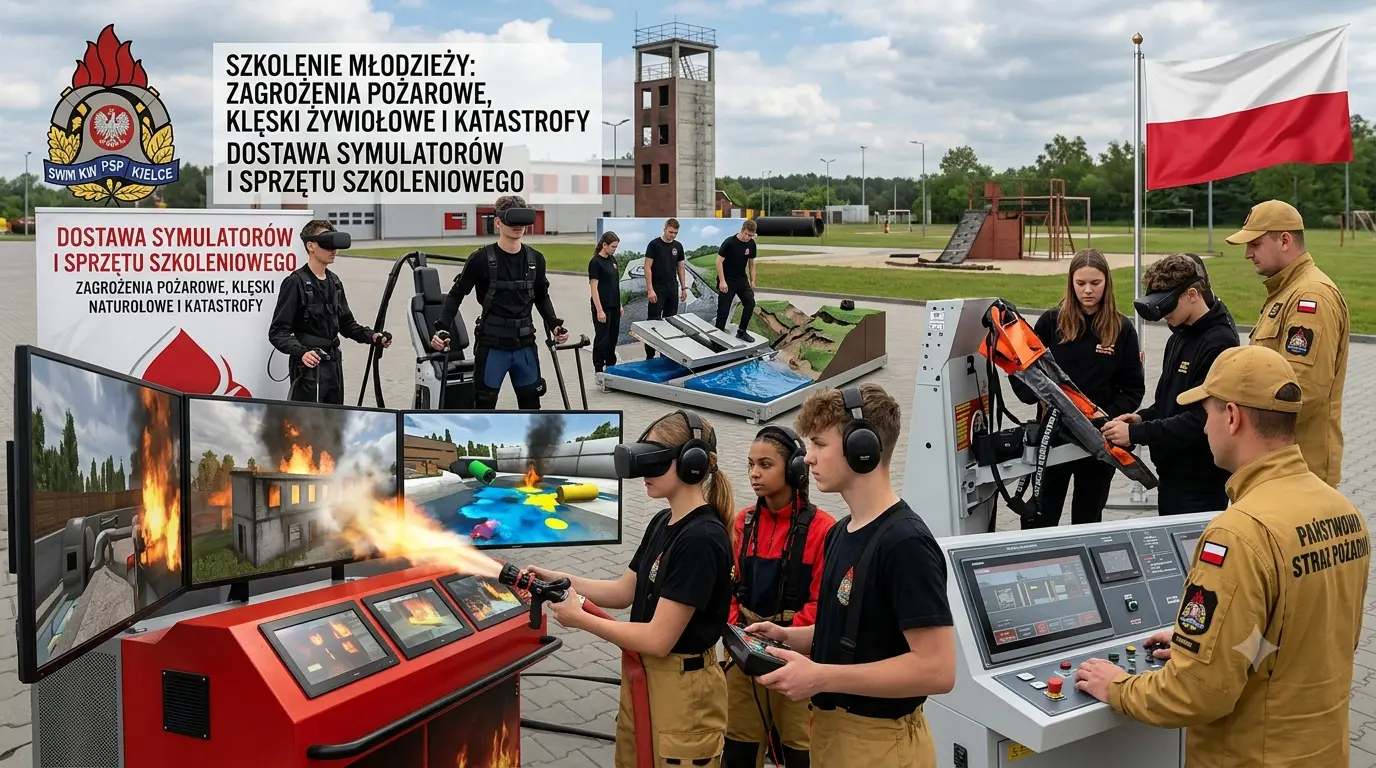
Kielce State Fire Service Training Equipment Tender Sees Multiple Lots Cancelled Amid Funding Shortfalls
14 Oct 2026
Standfirst The Provincial Headquarters of the State Fire Service in Kielce has closed five out of seven lots for youth disaster and fire safety training equipment due to insufficient funds and inadmissible bids. Two lots remain ongoing. This mixed outcome highlights the fiscal constraints and technical compliance challenges currently affecting regional public safety procurement. Introduction Educating the next generation on fire safety and natural disaster response requires specialized interactive tools. The Polish State Fire Service relies on advanced simulators and virtual reality systems to teach youth how to react during emergencies. This specific procurement addresses the critical need for modern training equipment across the Swietokrzyskie region. Executed through an open procedure under standard directives, this tender was divided into seven distinct lots. Publishing such contract updates on the official Tenders Portal provides essential market intelligence for educational technology firms. It demonstrates how public procurement attempts to secure vital safety capabilities while navigating complex budgetary realities. Directing capital toward virtual training infrastructure reflects a modern approach to civil defense education. However, the supply chain impact is currently stalled. The cancellation of multiple lots due to insufficient funds indicates a disconnect between initial budget estimates and actual market pricing for advanced simulation hardware. Why This Contract Matters Operational readiness in civil defense depends on effective public education. Interactive simulators and thermal imaging tools form the practical foundation of youth safety training. Any failure to procure these tools delays critical educational programs, making reliable funding and technical compliance fundamental requirements for public safety. The receipt of multiple bids across the lots validates the interest of the domestic technology sector. It proves that national firms possess the capacity to supply advanced virtual reality and simulation equipment. However, the high rejection rate highlights the strict technical baselines required by emergency services. This procurement drives continuous improvement by exposing gaps in budget planning and technical specification. By canceling lots due to insufficient funds, the buyer mitigates the risk of underfunded contracts. This structured approach ensures that future RFPs and RFQs will better align with actual market costs for specialized training hardware. Contract Timeline The estimated duration for the supply and delivery of the equipment spans from 21/09/2026 to 15/12/2026. The change notice updating the status of the lots was published in the Official Journal on 14/10/2026. This timeline reflects the original delivery expectations before the cancellations occurred. The review deadlines allow interested parties 10 or 15 days to appeal depending on the communication method. The staggered closure of the lots reflects the sequential evaluation process applied by the contracting authority. Such transparency in reporting failed lots is crucial for maintaining market trust. Contract Overview This agreement was structured to cover the supply of various training simulators and safety equipment. The procurement was divided into seven lots ranging from logistical survival gear to mobile fire hazard simulators. Each lot targeted a specific educational objective within the broader civil defense curriculum. The total contract value remains unawarded for the five closed lots. Supplier responsibilities for the ongoing lots include delivering fully functional virtual reality headsets, interactive displays and specialized fire training mannequins. The contractors must ensure all equipment meets strict educational and safety standards before final acceptance. Key Contract Details Contract TitleSzkolenie młodzieży w dziedzinie zagrożeń związanych z pożarami, klęskami żywiołowymi, katastrofami Contracting AuthorityKomenda Wojewódzka Państwowej Straży Pożarnej w Kielcach Contract ValueUnawarded for closed lots Procedure TypeOpen Number of Bids Received1 to 3 per lot Winner(s)None for closed lots; Ongoing for lots 4 and 6 Contract Conclusion DatePending for ongoing lots Main CPV Code34152000 Training simulators Project Scope The deliverables encompass a wide array of educational safety tools. This includes tactical thermal imaging cameras, multimedia virtual reality equipment, logistical survival tents and mobile simulators for ecological education. The equipment is designed to provide immersive and practical learning experiences for young students. The technical requirements demand high fidelity visual outputs and durable physical components. The geographic scope of performance is centered in Kielce, Poland, requiring suppliers to deliver and potentially install the equipment at regional training facilities. Compliance with European safety standards for educational hardware is mandatory. About the Contracting Authority The buyer is the Provincial Headquarters of the State Fire Service in Kielce. This regional authority manages public order, safety and emergency response operations across the Swietokrzyskie Voivodeship. It plays a vital role in coordinating disaster response and public education initiatives. Its primary responsibility is ensuring the public and emergency personnel possess the necessary training and equipment. It operates under strict national and European public procurement regulations, balancing educational needs with fiscal accountability. The authority must navigate complex funding streams to deliver modern safety infrastructure. About the Organisations Involved Komenda Wojewódzka Państwowej Straży Pożarnej w Kielcach Acting as the primary buyer, this entity oversees public safety acquisitions. It manages the full procurement lifecycle and coordinates the educational needs of regional fire and rescue services. Krajowa Izba Odwoławcza This body functions as the review organisation. It handles disputes and appeals related to public procurement procedures in Poland, ensuring legal compliance and fair competition across all government contracting activities. Sąd Polubowny przy Prokuratorii Generalnej Rzeczypospolitej Polskiej This entity acts as the mediation organisation. It provides alternative dispute resolution services to facilitate amicable settlements between contracting authorities and economic operators, reducing the need for prolonged legal battles. Procurement Analysis The open procedure produced a highly fragmented outcome across the seven lots. Five lots were closed without a winner. Three were canceled due to insufficient funds, one due to an unspecified alternative reason, and one because all tenders were inadmissible. This high failure rate is a critical data point for market analysts. The award criteria allocated 60 points to price and 40 points to the warranty period. The buyer required a minimum warranty of 24 months, offering maximum points for a 48 month guarantee. This structure indicates a strong focus on long term asset reliability for educational equipment, prioritizing total cost of ownership over initial capital expenditure. The cancellation of multiple lots due to insufficient funds suggests that the initial budget estimates were significantly below market prices for advanced virtual reality and simulator technology. Alternatively, the technical specifications may have been overly restrictive, leading to widespread bid rejections and subsequent budget shortfalls when evaluating the received offers. Two lots remain ongoing, indicating that the buyer is still attempting to secure the core simulation equipment. This partial success highlights the need for buyers to conduct thorough market consultations before finalizing budget allocations for specialized technology. It also demonstrates the resilience of the procurement process in attempting to salvage viable portions of a broader project. Additional Procurement Facts The procurement project is fully or partially financed with European Union Funds. The contract is not covered by the Government Procurement Agreement. This restricts participation to suppliers meeting national requirements and excludes international Government Procurement Agreement signatory suppliers from automatic access. The legal basis is Directive 2014/24/EU governing standard public procurement. The use of European Union funds adds an extra layer of financial compliance and reporting requirements for the contracting authority. This funding dependency directly impacts the fiscal flexibility of the buyer when market prices exceed initial estimates. Market and Industry Perspective The civil defense education sector is rapidly adopting virtual reality and interactive simulators. Suppliers must maintain specialized engineering teams to develop realistic fire and disaster scenarios. This creates high technical barriers and requires significant upfront research and development investments, which can deter smaller firms from participating. Future RFPs and RFQs in this domain will likely continue to emphasize immersive learning environments. Suppliers must align their proposals with detailed BOQs and respond promptly to GPNs. The market will reward firms that can demonstrate both technical innovation and strict adherence to educational safety protocols, particularly those with proven track records in public sector deployments. Economic Significance This contract was intended to inject direct financial value into the Polish educational technology sector. It would have supported specialized software development jobs and sustained advanced manufacturing capabilities within the domestic industrial base. The investment was designed to reinforce the local digital economy and high technology supply chain. The multiplier effect extends beyond the primary contractors. Local hardware distributors and specialized logistics firms would have benefited from the sustained operation of these training programs. The current funding shortfalls temporarily stall these economic benefits for the Kielce region, highlighting the broader economic risks of public procurement failures. Future Procurement Opportunities The most immediate opportunity lies in the expected retendering of the five failed lots. Suppliers interested in civil defense education should actively monitor the official Tenders Portal. Tracking Active Tenders and Live Notices for Tenders is essential for capturing early market intelligence on revised requirements and adjusted budget allocations. Regional fire services across the country are likely to issue similar requirements as they modernize their training infrastructure. Companies should prepare to respond to upcoming live tender opportunities by maintaining updated security certifications and clear capacity statements. Demonstrating past performance in similar educational simulation projects will be a key differentiator in future bids. Opportunities for Suppliers The contract structure creates immediate opportunities for niche equipment manufacturers. Firms offering specialized virtual reality headsets or advanced thermal imaging sensors can position themselves as valuable partners to prime contractors through subcontracting arrangements. Building these relationships early is crucial for securing a share of future contract values. Building relationships with prime contractors before a tender is announced is a highly effective strategy. Suppliers must monitor Latest Active Tenders Procurement updates to identify these collaborative opportunities early and align their service offerings with market needs. Specialized knowledge of civil defense training methodologies will make subcontractors highly attractive to prime bidders. What Businesses Should Watch Industry participants must track the enforcement of quality criteria in future awards. Shifts in the weighting between price and technical merit signal changing buyer priorities in civil defense education and evolving training methodologies. Observing how the buyer values extended warranty periods will inform future bidding strategies and pricing models. Observing government and European Union budget allocations is also critical. Increases in public safety funding will directly correlate with a higher volume of public procurement notices in the simulation sector. This will create new tenders opportunities across regional emergency services as they seek to maximize training efficiency and public engagement. PolandTenders.com Procurement Intelligence Strategic trend analysis reveals a clear shift toward immersive digital training in European civil defense. Buyers are moving away from traditional classroom instruction and specifying simulator upgrades that offer superior practical preparation for emergency scenarios. This transition creates significant opportunities for domestic technology providers capable of delivering high fidelity educational tools. The importance of this notice lies in its demonstration of budgetary friction in public procurement. When multiple lots are canceled due to insufficient funds, it highlights the critical need for buyers to conduct rigorous market soundings before committing to fixed budgets for rapidly evolving technology sectors. This friction often leads to more realistic budgeting in subsequent procurement cycles. The future evolution of this market will likely incorporate stricter sustainability mandates for electronic equipment and digital accessibility requirements. Educational contractors will need to prove that their simulation solutions meet both environmental standards and inclusive design principles. This will drive innovation in hardware manufacturing and software development, favoring firms with comprehensive corporate responsibility frameworks. Supplier Takeaways Public safety education procurements are increasingly reliant on advanced virtual reality and interactive simulation technologies. Extended warranty periods are heavily weighted in award criteria, signaling a buyer focus on long term total cost of ownership. Budget shortfalls leading to lot cancellations highlight the necessity for suppliers to provide accurate market pricing during early consultation phases. Subcontracting opportunities exist for niche hardware providers supporting the prime contractors in delivering specialized educational equipment. Key Takeaways Five out of seven lots were closed without a winner due to insufficient funds and inadmissible bids. The procurement was fully or partially financed with European Union Funds, adding strict compliance requirements. The award criteria allocated 60 points to price and 40 points to the warranty period, emphasizing long term reliability. Two lots remain ongoing, indicating the buyer is still attempting to secure core simulation equipment. The high failure rate exposes a significant disconnect between initial budget estimates and actual market pricing for advanced training hardware. Conclusion This procurement highlights the complex intersection of public safety education, technological innovation and fiscal constraints. The expected retendering of the failed lots will be a critical event for suppliers monitoring the European civil defense training sector. Source: Tenders Electronic Daily (TED), Contract Award Notice 710367-2026, Official Journal of the European Union, published on 14/10/2026.
View Details