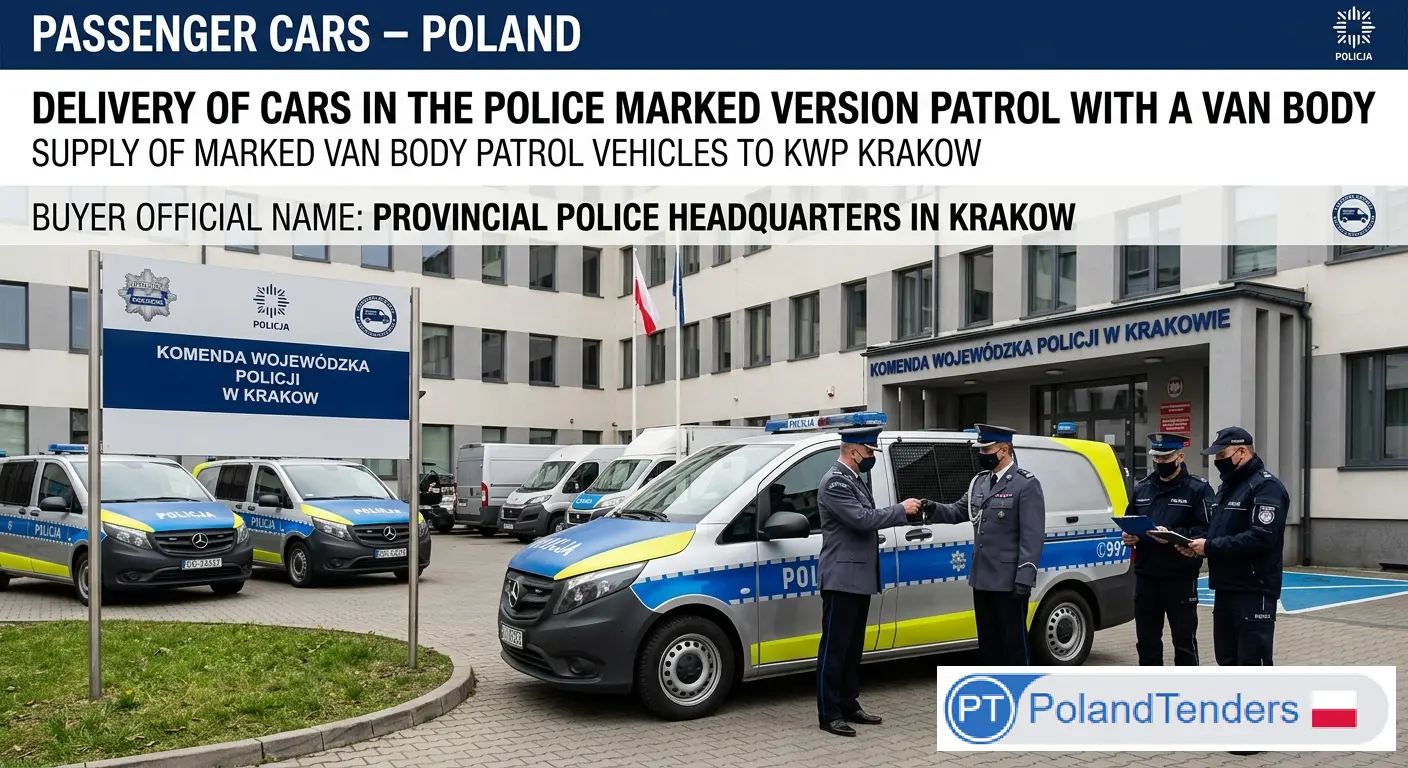
Kraków Police Line Up Five Suppliers for a Fleet of Up to 110 Patrol Vans
11 Aug 2026
Standfirst The Kraków Regional Police Headquarters has appointed five vehicle suppliers to a ranked framework agreement for marked police patrol vans, worth a combined 165.6 million złoty across their disclosed offers. Fleet Leasing Serwis topped the ranking, ahead of four other Polish vehicle dealers and converters competing to supply up to 110 vehicles. Introduction Police forces need vehicles that are more than just transport, they need to be fit for patrol duty, properly marked, safely equipped, and backed by reliable servicing across a wide geographic area. Sourcing a large batch of these vehicles requires balancing price against genuine operational requirements like safety equipment and diagnostic access for in-house mechanics. Komenda Wojewódzka Policji w Krakowie, the regional police headquarters for the Kraków area, has just closed a tender for exactly this kind of fleet, appointing multiple suppliers to a framework that will supply up to 110 marked patrol vans. Why This Contract Matters Patrol vehicles are frontline operational equipment for policing, and their reliability, safety features and long term serviceability directly affect officer safety and the force's ability to respond to incidents. A framework of this scale, covering up to 110 vehicles, represents a meaningful fleet renewal for the Kraków regional force. The tender's structure also stands out. Rather than choosing a single winner, the police appointed five ranked suppliers to a framework with reopening of competition, giving the force flexibility to draw on multiple vehicle sources as its actual purchasing needs unfold. Contract Timeline This procedure follows an earlier related notice referenced as 417276-2026. All five winners were selected on the same date, 24 July 2026. Contracts with Fleet Leasing Serwis, Zdunek and Frank-Cars were concluded on 5 August 2026, while contracts with STEELER and Auto-Zięba were concluded on 7 August 2026. The notice recording these awards was dispatched on 10 August 2026 and published in the Official Journal of the European Union on 11 August 2026, under OJ S issue 153/2026. Delivery is informationally set to begin from 1 August 2026, though the notice clarifies this start date is indicative only and depends on the actual date each contract is signed, with the lot's duration running through 19 December 2027. Contract Overview Komenda Wojewódzka Policji w Krakowie ran an open procedure under Directive 2014/24/EU and Poland's Public Procurement Law of 11 September 2019 for the supply of marked police patrol vans. The classification is CPV code 34110000, Passenger cars, covering a maximum quantity of 110 vehicles to be delivered to the force's warehouse in Kraków. The procurement is structured as a framework agreement with reopening of competition, meaning the police appointed multiple ranked suppliers rather than a single winner, with actual vehicle orders to be competed among them as specific purchasing needs arise. Five suppliers were appointed, with disclosed offer values ranging from 31,357,865.45 PLN for the top ranked bidder to 37,070,000.00 PLN for the lowest ranked. Summing the five disclosed values gives a combined total of approximately 165,608,221.30 PLN, though the notice does not state an official aggregate figure, and this sum should be read as the combined value of all five ranked offers rather than a confirmed total contract value or spending commitment. Key Contract Details Contracting AuthorityKomenda Wojewódzka Policji w Krakowie Contract TitleSupply of vehicles in marked police patrol version with van type body Procedure TypeOpen procedure, not accelerated Legal BasisDirective 2014/24/EU and Polish Public Procurement Law of 11 September 2019 CPV Code34110000 Passenger cars Maximum Quantity110 vehicles Framework StructureFramework agreement with reopening of competition, 5 ranked suppliers Award CriteriaPrice 75 percent, technical parameters 10 percent, safety 5 percent, comfort 5 percent, diagnostic tool access 5 percent Combined Disclosed Offer Values (excl VAT)Approximately 165,608,221.30 PLN across all five ranked suppliers Tenders Received7, including 3 from SMEs, none from other EEA or non-EEA countries EU FundingNot financed with EU funds Covered by GPANo SubcontractingNo, all five winners Winners Selected24 July 2026, uniformly across all five winners Review OrganisationKrajowa Izba Odwoławcza (National Appeal Chamber) Project Scope The contract covers the supply of up to 110 passenger vehicles with van type bodies, configured as marked police patrol vehicles, delivered to the force's warehouse at ul. Mogilska 109 in Kraków, with transport costs borne by the supplier. Each vehicle must come with a warranty at least as long as the manufacturer's standard warranty, along with Polish language documentation covering the vehicle's specifications and warranty and service requirements. The technical specification permits equivalent solutions to those described in the tender documents, provided they meet the same performance standards, in line with Polish public procurement law's provisions for functional equivalence rather than requiring an exact named product match. About the Contracting Authority Komenda Wojewódzka Policji w Krakowie Komenda Wojewódzka Policji w Krakowie is registered as a body governed by public law, controlled by a central government authority, with public order and safety as its classified activity. Based in Kraków, it is the regional police headquarters responsible for policing across the Kraków area, and this procurement will renew and expand its marked patrol vehicle fleet. About the Organisations Involved Fleet Leasing Serwis Spółka z ograniczoną odpowiedzialnością Spółka Komandytowa Fleet Leasing Serwis, based in Kraków and classified as a large enterprise, ranked first among the five appointed suppliers with a disclosed offer value of 31,357,865.45 PLN, the lowest of the five ranked bids. Przedsiębiorstwo Usługowo-Handlowe Zdunek Spółka z ograniczoną odpowiedzialnością Zdunek, based in Gdańsk and classified as a medium sized enterprise, ranked second with a disclosed offer value of 32,492,927.72 PLN. STEELER Marcin Piasecki STEELER, based in Sokółka and classified as a medium sized enterprise, ranked third with a disclosed offer value of 32,661,420.00 PLN. Auto-Zięba Spółka z ograniczoną odpowiedzialnością Auto-Zięba, based in Katowice and classified as a medium sized enterprise, ranked fourth with a disclosed offer value of 32,026,008.13 PLN. Frank-Cars Spółka z ograniczoną odpowiedzialnością Frank-Cars, based in Częstochowa and classified as a large enterprise, ranked fifth with a disclosed offer value of 37,070,000.00 PLN, the highest of the five ranked bids. Krajowa Izba Odwoławcza Krajowa Izba Odwoławcza, based in Warsaw, is Poland's National Appeal Chamber, named as the review organisation for this procurement, the standard body for hearing Polish public procurement disputes. Procurement Analysis The Kraków police ran this as an open procedure with award criteria dominated by price at 75 percent, alongside four quality criteria worth 5 to 10 points each, covering automatic transmission, side and curtain airbags for front row seats, a heated windshield, and access to vehicle diagnostic tools across the force's internal service locations, of which there are up to 17 across Poland. Seven tenders were received in total, three from SME classified bidders, none from outside Poland. Five of those seven tenders were successful and appointed to the ranked framework, indicating a reasonably competitive but not oversubscribed field for a contract of this scale and specificity. The diagnostic access criterion is a particularly practical detail, reflecting the operational reality that a police fleet's in-house maintenance network needs reliable, unrestricted diagnostic communication with vehicle electronic systems, including safety modules like ABS and airbags, rather than being dependent on manufacturer authorised service centres for every diagnostic task. Additional Procurement Facts None of the five appointed suppliers declared any subcontracting. The contract is not financed with EU funds and is not covered by the Government Procurement Agreement. No dynamic purchasing system applies, and the notice does not disclose an official aggregate value for all contracts awarded, meaning the combined figure cited in this article reflects PolandTenders.com's own summation of the individually disclosed offer values rather than a figure stated directly by the buyer. Market and Industry Perspective The winner list spans a mix of Polish vehicle leasing and dealership businesses, from the Kraków based Fleet Leasing Serwis to regional dealers and converters in Gdańsk, Sokółka, Katowice and Częstochowa, reflecting a domestic Polish vehicle supply market for public sector fleet contracts of this kind, with no international bidders participating. The use of a ranked, multi supplier framework with reopening of competition is a common approach for large vehicle fleet procurements, giving the buyer continued competitive tension and supply flexibility across the framework's life rather than locking in a single source for the full 110 vehicle requirement. Economic Significance With disclosed offer values across the five appointed suppliers totalling roughly 165.6 million złoty, this framework represents a substantial vehicle fleet investment for the Kraków regional police force, though actual spending will depend on how many of the up to 110 vehicles are ultimately ordered and from which ranked supplier. Future Procurement Opportunities Because this is a framework agreement with reopening of competition, the Kraków police will run further mini competitions among the five appointed suppliers as specific vehicle orders are placed through to the end of 2027, giving each ranked supplier repeated opportunities to compete for individual order tranches. Vehicle suppliers not appointed to this framework should watch for a future renewal tender once the current framework's term concludes, following the same pattern established by the earlier related notice referenced in this procurement. Opportunities for Suppliers Vehicle dealers and fleet suppliers interested in Polish police and public safety vehicle contracts should note the heavy price weighting in this tender, at 75 percent, meaning competitive pricing remains the dominant factor even as several practical technical and safety criteria carry meaningful additional weight. The presence of three medium sized enterprises among the five winners also confirms that mid sized regional vehicle dealers can successfully compete against larger operators for public sector fleet contracts of this scale. What Businesses Should Watch Vehicle suppliers and fleet management firms active in the Polish public safety sector should watch for further mini competitions under this framework as the Kraków police place individual vehicle orders through to December 2027, and should monitor for the framework's eventual renewal cycle. PolandTenders.com Procurement Intelligence This award illustrates how Polish police forces manage large vehicle fleet renewals using multi supplier, ranked frameworks rather than single source contracts, preserving ongoing competitive pressure across a multi year procurement window while still giving the buyer flexibility to manage delivery timing and volume as operational needs evolve. Its strategic importance lies in the balance struck between price and practical operational criteria. With price carrying 75 percent of the score, cost efficiency clearly matters, but the inclusion of specific, operationally grounded quality criteria, particularly guaranteed diagnostic access across the force's internal service network, shows the buyer protecting its long term maintenance capability rather than optimising purely for upfront purchase price. Suppliers can learn a clear lesson from how this framework was structured: appointing five ranked suppliers rather than one gives the buyer resilience against any single supplier's capacity constraints while keeping competitive tension alive throughout the framework's life. Firms bidding for similar large public fleet contracts should expect that even strong technical offers will not overcome a significant price disadvantage, given the 75 percent weighting observed here, but should not neglect the technical criteria entirely, since they collectively account for a meaningful quarter of the total score. Supplier Takeaways Award criteria weighted price at 75 percent, with the remaining 25 percent split across four specific technical, safety and service related criteria Five suppliers were appointed to a ranked framework with reopening of competition, rather than a single winner taking the full contract Seven tenders were received, all from Polish domestic bidders, with three classified as SMEs Guaranteed, unrestricted diagnostic access for the buyer's internal service network was a specific scored criterion, reflecting long term maintenance priorities No subcontracting was declared by any of the five winning suppliers Key Takeaways Komenda Wojewódzka Policji w Krakowie has appointed five suppliers to a ranked framework for up to 110 marked police patrol vans Fleet Leasing Serwis ranked first with the lowest disclosed offer value of 31,357,865.45 PLN, ahead of Zdunek, STEELER, Auto-Zięba and Frank-Cars Combined disclosed offer values across all five suppliers total approximately 165.6 million złoty The framework uses reopening of competition, and the contract period runs through 19 December 2027 The procurement is not EU funded and is not covered by the Government Procurement Agreement Conclusion This framework secures a flexible, multi supplier route for the Kraków regional police to renew its marked patrol vehicle fleet over the next roughly eighteen months, balancing competitive pricing with practical operational requirements like guaranteed diagnostic access. For the five appointed suppliers, it opens a recurring opportunity to compete for individual vehicle orders as the force's actual needs unfold. For Poland's public vehicle supply market more broadly, this award confirms that mid sized regional dealers can hold their own alongside larger operators in competing for substantial public safety fleet contracts, provided their pricing is sharp enough to clear a heavily price weighted evaluation. Source: Tenders Electronic Daily (TED), Contract Award Notice 555094-2026, Official Journal of the European Union, OJ S issue 153/2026, published on 11/08/2026.
View Details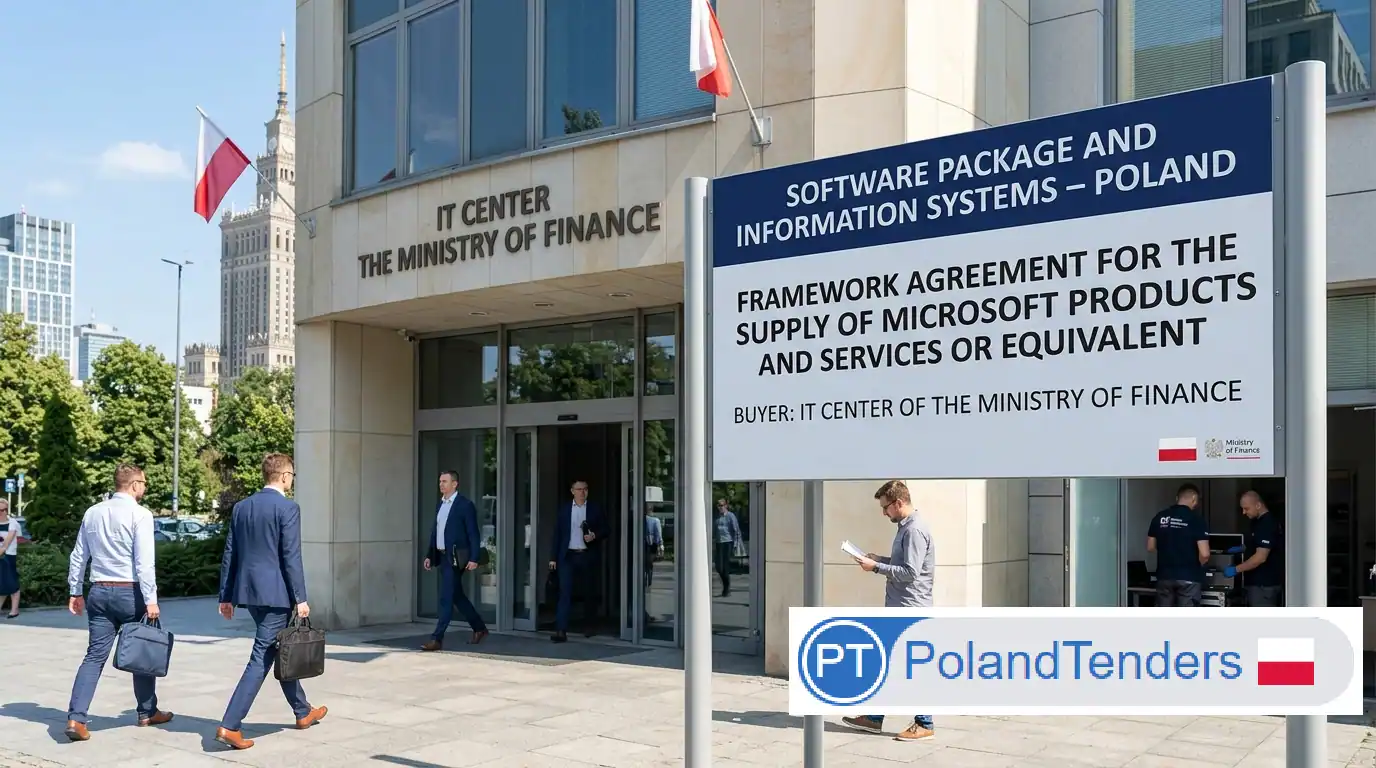
Poland's Ministry of Finance Locks In Microsoft Licensing Partners in a PLN 323 Million Framework, Then Quietly Fixes the Paperwork
10 Aug 2026
Standfirst Centrum Informatyki Resortu Finansów, the IT arm of Poland's Ministry of Finance, has appointed SoftwareOne Polska, A.P.N. Promise and a Polish Croatian consortium led by Span Polska to a two part Microsoft licensing framework worth up to PLN 323 577 235.77. This notice itself is a correction, clarifying how the winning consortium on one of the two lots was named in the original result. Introduction Running the software behind Poland's tax administration, customs and treasury operations requires a steady, well managed supply of Microsoft licences and someone has to hold the contracts that make that possible. Centrum Informatyki Resortu Finansów, known as CIRF, the central IT procurement body for Poland's finance sector, has now settled who that will be for the next three years. Three companies or rather three separate corporate arrangements, will share the work: SoftwareOne Polska, which won a place on both parts of the framework, the Warsaw Stock Exchange listed A.P.N. Promise and a consortium pairing a Polish firm with its Croatian sister company, Span Polska and Span d.d. This particular notice does not announce anything new. It corrects how that Croatian Polish consortium's name appeared in the original published result. Why This Contract Matters Government software licensing frameworks of this kind rarely make headlines, but they underpin the daily operation of core state functions, in this case the IT systems supporting Poland's entire finance ministry apparatus. A framework worth over PLN 323 million, split between enterprise licensing and a support services heavy second lot, is a meaningful commitment to keeping that infrastructure current and supported for years to come. The contract also touches current European security policy directly. Its exclusion conditions explicitly bar suppliers connected to Russia under the EU's sanctions regulation, extending to subcontractors and suppliers accounting for more than 10 percent of contract value, a now familiar feature of EU public technology procurement since 2022. Contract Timeline Original tender notice referenced by this procedure: 718288-2025 Lot 1 winners selected: 14 April 2026, contracts concluded 21 May 2026 Lot 2 winners selected: 17 April 2026, contracts concluded 21 July 2026 Previous result notice now being corrected: 547682-2026 Notice dispatched to the Publications Office: 7 August 2026 Published in the Official Journal, OJ S 152/2026: 10 August 2026 Contract Overview CIRF ran an open procedure, using Poland's so called reversed procedure under Article 139 of its Public Procurement Law, in which the buyer evaluates tenders first and only then checks the winning bidder's qualifications, for a framework agreement covering Microsoft products and services or equivalent, split into two lots. Lot 1 covers software supply and licensing under a Microsoft Enterprise Agreement style group licensing programme. Lot 2 covers licensing under a Microsoft Products and Services Agreement style programme, combined with support services for the products listed in the manufacturer's price catalogue. Each lot drew three tenders and was awarded to two winning parties operating under a framework with reopening of competition, meaning further mini competitions among the appointed suppliers will determine individual call offs. This specific notice is a change notice, correcting how the winning consortium's name was recorded for Lot 2. Key Contract Details Contracting authorityCentrum Informatyki Resortu Finansów (CIRF) Contract titleFramework agreement for supply of Microsoft products and services or equivalent, in 2 parts CPV codes48000000, Software package and information systems, plus 72000000, IT services Procedure typeOpen procedure, using Poland's reversed procedure mechanism Legal basisDirective 2014/24/EU and Poland's Public Procurement Law Combined maximum framework valuePLN 323 577 235.77, excluding VAT Lot 1 maximum valuePLN 230 081 300.81 Lot 2 maximum valuePLN 93 495 934.96 Duration per lot36 months Award criteria100 percent price, based on minimum discount percentages across product categories, plus a maximum hourly support rate for Lot 2 Tenders received3 per lot Lot 1 winnersSoftwareOne Polska Sp. z o.o. and A.P.N. Promise S.A. Lot 2 winnersSoftwareOne Polska Sp. z o.o. and Konsorcjum Span Polska Sp. z o.o. (leader) / Span d.d. (partner) EU fundingYes, potentially through Poland's Digital Development Funds 2021-2027 and National Recovery and Resilience Plan GPA coverageYes Framework structureFramework agreement with reopening of competition, both lots Review and mediation bodyKrajowa Izba Odwoławcza (National Appeals Chamber) Notice reference552076 2026, OJ S 152/2026, published 10 August 2026, change notice Project Scope Lot 1 covers the supply of software along with all types of licences, sublicences or subscriptions, plus other Microsoft products or equivalent products, listed in the manufacturer's price catalogue, delivered under group licensing programmes for Poland's finance sector. Lot 2 covers the same categories of licensing under a different group licensing programme, alongside support services for the products in that catalogue, priced separately by the hour. The tender documentation reserves the right for the buyer to specify further options at the stage of individual call off competitions and notes that the procurement may be partly financed through Poland's European Funds for Digital Development 2021-2027, its National Recovery and Resilience Plan or other financial mechanisms, without confirming the precise share of funding involved. About the Contracting Authority Centrum Informatyki Resortu Finansów is a central government authority based in Radom, active in general public services, functioning as the dedicated IT procurement and infrastructure body for Poland's Ministry of Finance and its subordinate administration, including the country's tax and customs services. About the Organisations Involved Centrum Informatyki Resortu Finansów As covered above, CIRF is the buyer for both lots of this framework. Krajowa Izba Odwoławcza Poland's National Appeals Chamber serves as both the review organisation and the mediation organisation for this contract, the country's standard central body for public procurement disputes, with detailed statutory appeal deadlines set out in the notice ranging from 10 to 30 days depending on the circumstances. SoftwareOne Polska Sp. z o.o. SoftwareOne Polska, classified as a large enterprise, is the only supplier to win a place on both lots of this framework. It operates as the Polish arm of SoftwareOne, the global software and cloud services group that completed its acquisition of Crayon Group in mid 2025, a deal that has since made SoftwareOne one of the largest independent Microsoft licensing partners operating across Europe, a position this Polish framework award reinforces. A.P.N. Promise S.A. A.P.N. Promise S.A., winner of Lot 1 alongside SoftwareOne, is a Warsaw Stock Exchange listed Polish IT company holding Microsoft Licensing Solution Provider and Cloud Solution Provider status, alongside partnerships with VMware, Veeam, Citrix, NetApp and Symantec. The company serves banking, public administration and manufacturing clients and has been pursuing expansion across Central and Eastern Europe, including a recently registered subsidiary in Serbia. Konsorcjum Span Polska Sp. z o.o. / Span d.d. The winning consortium on Lot 2, alongside SoftwareOne, pairs Span Polska Sp. z o.o. as leader with Span d.d., a large Croatian IT company, as partner. Span d.d., based in Zagreb and listed on the Zagreb Stock Exchange, was founded in 1993 and has grown into one of Croatia's leading Microsoft partners, holding all six Microsoft Solutions Partner designations, with operations extending across Slovenia, the United Kingdom, the United States, Germany, Ukraine, Azerbaijan, Switzerland, Moldova, Estonia and Georgia. This notice's correction specifically clarifies how this consortium's name and structure were recorded following the original result. Procurement Analysis Both lots were decided entirely on price, structured around a set of minimum discount percentages bidders offered against the manufacturer's list prices for different product categories, plus, for Lot 2, a maximum hourly rate for support services. Each criterion followed the same mechanic: the highest discount offered earns full points, with other bids scored proportionally lower, a transparent, formulaic approach well suited to a catalogue based licensing framework where the underlying products themselves are fixed. Both lots attracted three tenders each, with one bid on each lot coming from a tenderer registered in another European Economic Area country, matching Span d.d.'s Croatian registration. Appointing two suppliers per lot under a framework with reopening of competition gives CIRF ongoing competitive tension for individual call offs throughout the three year term, rather than locking in a single provider. As a change notice, this document's core function is corrective rather than substantive: it clarifies the naming of the winning Lot 2 consortium as originally published, a reminder that even large, carefully evaluated government IT frameworks sometimes require administrative follow up after the initial result is published. Additional Procurement Facts This project is confirmed as fully or partially financed with EU funds, potentially through Poland's Digital Development Funds 2021-2027 or its National Recovery and Resilience Plan. Both lots are confirmed as covered by the Government Procurement Agreement. Exclusion grounds explicitly reference Article 5k of EU Council Regulation 833/2014, the Russia sanctions regime, extending to subcontractors and suppliers accounting for more than 10 percent of contract value. None of the winning tenders on either lot involve subcontracting. All tenders on both lots were submitted electronically and none came from micro, small or medium enterprises. Market and Industry Perspective This framework offers a clear snapshot of who dominates large scale Microsoft licensing for Central European public administration: a newly enlarged SoftwareOne, fresh from absorbing Crayon, alongside established national Microsoft partners like Poland's own APN Promise and Croatia's Span, increasingly operating through cross border consortium structures to compete for major government contracts. The presence of a Croatian firm winning Polish government business through a formal consortium illustrates how thoroughly integrated the region's Microsoft partner ecosystem has become. Economic Significance At a combined PLN 323 577 235.77 ceiling across three years, this framework represents a substantial, if not exceptional, commitment within Poland's broader public sector IT spending, reflecting the scale of licensing and support needs across the country's finance ministry and its subordinate tax and customs administration. Future Procurement Opportunities With reopening of competition built into both lots, the appointed suppliers will continue competing against each other for individual call offs throughout the three year term, giving CIRF ongoing leverage on pricing. A full recompete of the framework is the natural next major opportunity once the current term concludes. Opportunities for Suppliers Microsoft licensing partners and resellers active in Poland and neighbouring markets should note CIRF's clear preference for appointing multiple suppliers per lot under a reopening framework, preserving ongoing competitive pressure rather than locking in a single provider for three years. Firms with strong discount positioning and, ideally, cross border partnership capacity, as demonstrated by the Span consortium, appear well placed to compete for similar Polish public sector licensing frameworks. What Businesses Should Watch How call offs are allocated between the two winning suppliers on each lot as mini competitions proceed under the reopening framework. The specific EU funding mechanisms ultimately applied to this framework, given the notice's reference to multiple possible funding sources. SoftwareOne's continued consolidation of Microsoft licensing business across Central and Eastern European public sector contracts following its Crayon acquisition. Further cross border consortium bids from Span and similar regional Microsoft partners in future Polish public procurement. PolandTenders.com Procurement Intelligence This notice, though procedurally a correction rather than a new award, still offers a useful reminder of how consolidated Europe's Microsoft licensing reseller market has become. SoftwareOne's presence across both lots of a major Polish government framework, so soon after absorbing Crayon, confirms that the wave of consolidation reshaping this sector is translating directly into broader public sector market share, not just corporate scale on paper. The correction itself is a small but instructive data point for anyone tracking multinational consortium bids in EU procurement. Cross border partnerships like Span Polska and Span d.d.'s joint bid require precise, consistent naming across notices to be tracked accurately and this kind of clarification, however routine, is a reminder that public procurement records benefit from active monitoring rather than a single point in time snapshot. Strategically, the two supplier per lot structure with reopening competition is a sound model for buyers wary of vendor lock in on long term software licensing frameworks. Other public bodies procuring similar multi year Microsoft or equivalent licensing arrangements could reasonably look to CIRF's approach here, appointing multiple qualified suppliers and preserving genuine price competition throughout the contract term, as a template worth replicating. Supplier Takeaways Both lots were decided entirely on price, structured as minimum discount percentages against catalogue prices, a formulaic and transparent evaluation approach. CIRF appointed two suppliers per lot under a reopening framework, preserving ongoing competition for individual call offs rather than locking in one provider. Cross border consortium bids, as demonstrated by the Polish Croatian Span partnership, are a viable route into large Polish public sector IT frameworks. SoftwareOne's win across both lots reflects its strengthened market position following the 2025 Crayon acquisition. This framework's exclusion conditions reflect current EU Russia sanctions requirements, a now standard feature of European public technology procurement. Key Takeaways CIRF appointed SoftwareOne Polska, A.P.N. Promise and a Span Polska and Span d.d. consortium to a two part Microsoft licensing framework worth up to PLN 323 577 235.77. This notice is a change notice correcting how the winning Lot 2 consortium was named in the original result. Both lots ran for three years and were decided entirely on price, based on discount percentages and, for Lot 2, a maximum hourly support rate. SoftwareOne Polska won a place on both lots, while A.P.N. Promise won only Lot 1 and the Span consortium won only Lot 2. The framework is potentially co-financed through Poland's EU backed digital development and recovery funding programmes. Both lots operate as frameworks with reopening of competition among the appointed suppliers. Conclusion Behind a routine administrative correction sits a genuinely significant piece of Polish government IT procurement: a three year, nine figure commitment to keeping the finance ministry's software licensing current, split between a newly dominant global reseller and two established regional Microsoft specialists, one Polish, one operating in through a cross border partnership from Croatia. The paperwork may need the occasional fix, but the underlying relationship and the market position it confirms for SoftwareOne across Central Europe, is very much settled. Source: Tenders Electronic Daily (TED), Contract Award Notice 552076-2026, Official Journal of the European Union, OJ S 152/2026, published on 10 August 2026.
View Details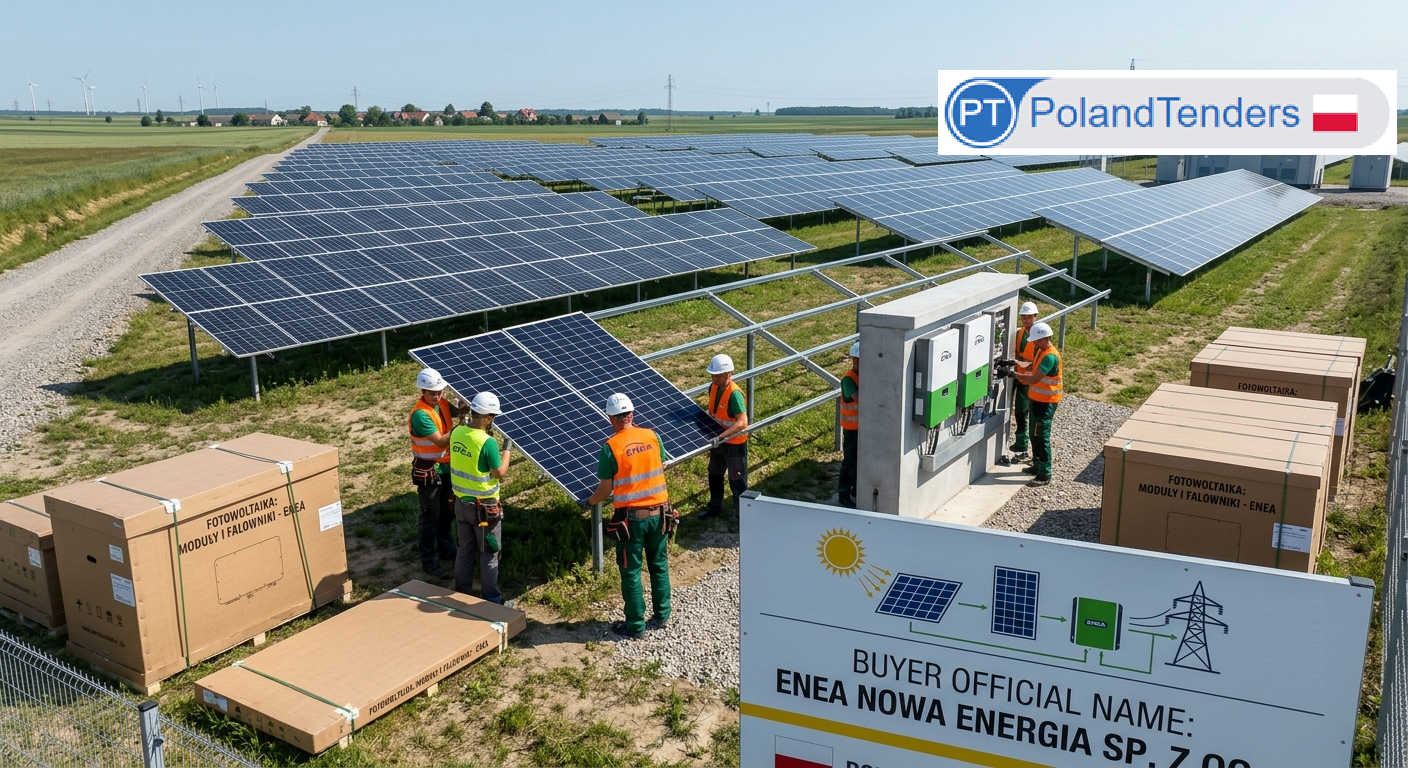
Polish Energy Group ENEA Locks In Solar Panel and Inverter Suppliers for Its Farm Building Spree
07 Aug 2026
Standfirst ENEA Nowa Energia and four of its project subsidiaries have appointed suppliers to two framework agreements covering photovoltaic modules and inverters for solar farms under construction across Poland. Grodno, Gaia Solar and Prosac Productos secured ranked positions on the panel supply framework, while the inverter framework's winners are not named in this notice despite confirmation that winners were chosen. Introduction Poland's solar power expansion depends on a steady, predictable supply of two core components: photovoltaic panels and the inverters that convert the direct current they generate into electricity usable on the grid. For a utility building multiple solar farms at once, securing that supply chain in advance, rather than negotiating it project by project, can determine how quickly new capacity actually comes online. ENEA Nowa Energia, together with four related project companies, has just closed exactly this kind of arrangement, appointing suppliers to two parallel framework agreements that will feed equipment to solar farms being built across the country. Why This Contract Matters This procurement underpins a substantial pipeline of Polish solar capacity, with the buyers disclosing a maximum planned volume of 317.61 MW across all the installations the framework is intended to supply. That is enough capacity to meaningfully move the needle on Poland's renewable energy build out and the suppliers appointed here will help determine how reliably that pipeline gets built. The procurement also illustrates how large Polish utility groups structure multi site renewable projects, using a single central tender to appoint suppliers that multiple project subsidiaries can then draw on independently as their individual farms reach the equipment ordering stage. Contract Timeline Winners for the photovoltaic module lot were selected on 19 June 2026, with the resulting framework agreement concluded on 13 July 2026. The procurement follows an earlier related notice referenced as 250523-2026. This result notice was dispatched on 6 August 2026 and published in the Official Journal of the European Union on 7 August 2026, under OJ S issue 151/2026. Each framework agreement runs for 48 months from conclusion, with no renewal option built in. Contract Overview ENEA Nowa Energia sp. z o.o. ran this as an open procedure under Directive 2014/25/EU, the EU's utilities procurement directive, reflecting ENEA's status as an electricity sector operator rather than a general public administration. The main classification is CPV code 09332000, Solar installation, with an additional classification of 09331200, Solar photovoltaic modules. The procurement is structured as two parts, each resulting in its own framework agreement. Part I covers the supply of photovoltaic modules and Part II covers the supply of inverters. Both frameworks run for 48 months and will supply equipment to solar farm construction sites across all of Poland, with individual call off orders placed against each framework as ENEA's project companies confirm specific installations. The notice sets a minimum call off threshold of 3.03 MW per installation. The contracting authority has not disclosed a separate estimated value for either lot at the procedure stage. At the results stage, a maximum framework agreement value of 193,709,660.00 PLN is recorded, but this identical figure appears attached to both the photovoltaic module lot and the inverter lot, as well as to the overall notice level maximum. This strongly suggests the figure represents a combined ceiling across both frameworks rather than two separate lot specific maximums, though the notice does not clarify this distinction and readers should treat it with that caveat. Key Contract Details Lead BuyerENEA Nowa Energia sp. z o.o., acting jointly with four subsidiary project companies Contract TitleSupply of photovoltaic modules and inverters for solar farms under construction across Poland Procedure TypeOpen procedure, not accelerated Legal BasisDirective 2014/25/EU (utilities) CPV Code (Main)09332000 Solar installation Additional CPV Code09331200 Solar photovoltaic modules Maximum Planned Volume317.61 MW across all planned installations Lot 1Framework agreement for photovoltaic module supply Lot 2Framework agreement for inverter supply Framework Duration48 months, no renewals Minimum Call Off Size3.03 MW per installation Award CriteriaPrice weighted 100 percent, both lots Disclosed Maximum Framework Value193,709,660.00 PLN (figure recorded identically for both lots, likely a combined ceiling) Lot 1 Winners (Ranked)1. Grodno SA, 2. Gaia Solar SA, 3. Prosac Productos SL Lot 2 WinnersNot disclosed by name in this notice, despite confirmation that winners were chosen EU FundingNot financed with EU funds, both lots Covered by GPAYes, both lots Review OrganisationKrajowa Izba Odwoławcza (National Appeal Chamber) Project Scope Lot 1 covers the supply of factory new photovoltaic modules, manufactured no earlier than 12 months before delivery, meeting Polish certification and technical approval requirements. Lot 2 covers factory new inverters under the same freshness and certification conditions. Both frameworks supply equipment directly to solar farm construction sites at locations across Poland, determined by ENEA's project subsidiaries as their individual farms progress. Suppliers were permitted to bid for one or both lots and the buyers placed no limit on how many lots a single supplier could win. The framework operates with reopening of competition, meaning individual delivery orders will be further competed among the appointed suppliers rather than allocated automatically. About the Contracting Authority ENEA Nowa Energia sp. z o.o., based in Radom, is a body governed by public law with economic affairs as its classified activity and electricity related activities as its contracting entity activity, reflecting its role within Poland's ENEA Group, a major state linked energy utility. It acted as lead buyer alongside four subsidiary project companies, ENEA PV Rydzyna sp. z o.o., ENEA PV Gablin sp. z o.o., ENEA PV Stare Brynki sp. z o.o. and EN 201 sp. z o.o., all based in Poznań, jointly procuring under article 38 of Poland's Public Procurement Law. Under this structure, two multilateral framework agreements will be signed, each between the joint buyers as a group and the selected suppliers, with each individual project company then independently placing its own call off orders against the framework as its specific solar farm construction requires equipment. About the Organisations Involved Grodno SA Grodno SA, based in Michałów-Grabina, Poland and classified as a large enterprise, was ranked first among the winners of Lot 1, the photovoltaic module supply framework, with a recorded tender value of 157,532,856.00 PLN. Gaia Solar SA Gaia Solar SA, based in Teolin, Poland and classified as a large enterprise, was ranked second on Lot 1 with the same recorded tender value of 157,532,856.00 PLN. The notice separately flags Gaia Solar SA as the leader of a tendering party, a designation not applied to the other two Lot 1 winners, though the notice does not explain the practical significance of that distinction here. Prosac Productos SL Prosac Productos SL, based in Fuentelcésped, Spain and classified as a medium sized enterprise, was ranked third on Lot 1, also with a recorded tender value of 157,532,856.00 PLN. As the only non Polish winner on this lot, its selection reflects genuine cross border participation in the tender. Notably, all three Lot 1 winners share an identical recorded tender value of 157,532,856.00 PLN, a figure that sits below the notice's own disclosed lowest admissible tender threshold of 174,332,158.88 PLN for this lot. This is an inconsistency the contracting authority has not explained and it should be read as a data discrepancy rather than an indication that all three suppliers tendered at exactly the same price below the qualifying threshold. Krajowa Izba Odwoławcza The Krajowa Izba Odwoławcza, Poland's National Appeal Chamber, is named as the review organisation for both lots, the standard body for hearing procurement challenges under Polish public procurement law. Unsuccessful bidders and other interested parties may invoke legal remedies through this body under the provisions of Poland's Public Procurement Law. Procurement Analysis Both lots were decided entirely on price, weighted at 100 percent, an approach consistent with equipment supply frameworks for standardised, certifiable products like solar panels and inverters, where technical compliance is typically handled as a qualification threshold rather than a scored criterion. Lot 1 attracted three tenders and resulted in three ranked winners, a structure consistent with a cascade style framework where call off orders would go first to the top ranked supplier and cascade downward if capacity or terms require it. Lot 2 attracted two tenders and the notice records three separate result entries confirming winners were chosen, though none names the winning suppliers, an omission that limits transparency on who will actually supply inverters under this framework. The recurring appearance of the same 193,709,660.00 PLN figure across both lots' framework maximum fields and at the notice's overall summary level, is worth treating with particular caution. Rather than two independently disclosed lot ceilings, this pattern suggests the buyers may have recorded a single combined framework maximum across both parts of the procurement, mapped identically into each lot's individual result field. Additional Procurement Facts Neither lot is financed with EU funds and both are covered by the Government Procurement Agreement, meaning suppliers from GPA member countries outside the EU were also entitled to compete, consistent with the framework's open reach to a Spain registered winner on Lot 1. No dynamic purchasing system applies to either lot. Subcontracting status for the three named Lot 1 winners is recorded as not yet known, rather than a confirmed yes or no. On Lot 2, of the two tenders received, none came from tenderers registered in other EEA countries, none from outside the EEA and none from SMEs, indicating the competing bids came from Polish domestic operators. Market and Industry Perspective The winner list on Lot 1 reflects a mix of established Polish solar equipment suppliers, Grodno and Gaia Solar, alongside a Spanish manufacturer, Prosac Productos, illustrating how Poland's rapidly growing solar sector continues to draw both domestic and international suppliers into its equipment supply chains. The scale of the underlying pipeline, up to 317.61 MW across the installations this framework will supply, reflects the broader momentum behind utility scale solar development in Poland, an area where ENEA Group has been an active developer through its network of single purpose project companies. Economic Significance Even accounting for the ambiguity in how the disclosed 193.7 million PLN maximum applies across the two lots, this procurement represents a significant equipment supply commitment supporting hundreds of megawatts of new Polish solar capacity, underscoring the scale of investment behind ENEA's renewable energy expansion programme. For the appointed suppliers, ranked positions on a multi year, multi site framework of this kind offer a meaningful and recurring revenue channel as ENEA's various project subsidiaries bring their solar farms to the equipment ordering stage over the coming four years. Future Procurement Opportunities With the framework structured around reopening of competition, the near term opportunity for appointed and unsuccessful suppliers alike lies in the individual call off competitions that will follow as each ENEA project subsidiary places its own delivery orders. Suppliers should also watch for clarification of who actually won Lot 2, since the current notice leaves that question unanswered despite confirming an award was made. Given the 48 month framework term and the scale of ENEA's disclosed pipeline, further related notices covering other elements of the same solar farm construction programme are plausible as individual project companies progress toward completion. Opportunities for Suppliers Photovoltaic module and inverter manufacturers active in or targeting the Polish market should note that this framework's reopening of competition structure means the ranked positions secured here are not the end of the competitive process, further pricing competition will occur as specific delivery orders are placed against the framework over its four year life. Suppliers who did not win a position on Lot 1 and any supplier interested in the still unnamed Lot 2 winners, should monitor for further disclosure or subsequent related notices from ENEA Nowa Energia and its project subsidiaries. What Businesses Should Watch Solar equipment suppliers should watch for clarification on the identity of Lot 2's winning suppliers, given the current gap in this notice, as well as for the pace of individual call off competitions launched under both frameworks as ENEA's solar farm projects reach construction milestones. It is also worth tracking whether the ambiguity around the shared 193.7 million PLN maximum value gets resolved in any future related notice, since that would clarify the true scale of spending planned under each individual lot. PolandTenders.com Procurement Intelligence This procurement illustrates how large utility groups developing multiple renewable energy projects simultaneously use centralised framework agreements, run by a lead group company on behalf of several project subsidiaries, to secure equipment supply chains at scale rather than negotiating separately for each individual solar farm. Its strategic importance lies in the joint buyer structure itself. By having ENEA Nowa Energia run a single tender on behalf of four project subsidiaries under Polish joint procurement rules, the group secures consistent supplier terms and pricing discipline across its entire solar development pipeline, while still allowing each subsidiary to place its own orders independently as its project timeline dictates. Suppliers can draw two lessons from how this award was structured. First, cascade style ranked frameworks, as seen on Lot 1 with three separately ranked winners, reward suppliers who can offer competitive terms even without winning the top position, since lower ranked suppliers still gain a route to future business. Second, the data gaps in this notice, particularly the unnamed Lot 2 winners and the ambiguous shared framework maximum, are a reminder that TED notices for complex multi buyer, multi lot utility frameworks sometimes carry incomplete or duplicated fields and readers should treat headline figures with appropriate caution rather than taking them at face value. Firms targeting future ENEA Group solar equipment tenders should prepare for price led, 100 percent price weighted competitions and should structure their offers with an eye toward the reopening of competition mechanism that will govern actual delivery orders over the framework's four year term. Supplier Takeaways Award criteria on both lots were based entirely on price, with no disclosed technical or quality scoring Lot 1's three ranked winners share an identical recorded tender value that falls below the notice's own disclosed lowest admissible tender threshold, an unexplained inconsistency Lot 2's winning suppliers are not named in this notice despite confirmation that winners were chosen, a gap worth monitoring for future clarification The framework uses reopening of competition, meaning actual delivery orders will be separately competed among appointed suppliers over the 48 month term A Spanish manufacturer, Prosac Productos SL, secured a ranked position alongside two Polish suppliers on the module supply lot, reflecting genuine cross border competition Key Takeaways ENEA Nowa Energia and four project subsidiaries have appointed suppliers to two 48 month framework agreements for photovoltaic modules and inverters The frameworks support a disclosed maximum planned volume of 317.61 MW across solar farms under construction throughout Poland Grodno SA, Gaia Solar SA and Prosac Productos SL were ranked first, second and third respectively on the photovoltaic module supply lot The inverter supply lot's winning suppliers are not disclosed by name in this notice Both lots are covered by the Government Procurement Agreement and are not financed with EU funds Conclusion This procurement shows a major Polish energy group using a centralised, jointly run tender to lock in equipment suppliers across its expanding solar farm portfolio, appointing ranked suppliers to a photovoltaic module framework while leaving its inverter framework's winners undisclosed in this particular notice. For ENEA's project subsidiaries, it should mean a more predictable equipment pipeline as individual solar farms move toward construction. For the appointed suppliers, from Poland's Grodno and Gaia Solar to Spain's Prosac Productos, it secures a foothold in one of Central Europe's more active utility scale solar development programmes, with real commercial outcomes still to be determined through the reopening of competition process over the framework's four year life. Source: Tenders Electronic Daily (TED), Contract Award Notice 547663-2026, Official Journal of the European Union, OJ S issue 151/2026, published on 07/08/2026.
View Details