Katowice Airport Bypasses Bidding to Secure Exclusive 3D Baggage Screening Technology
21 Jul 2026
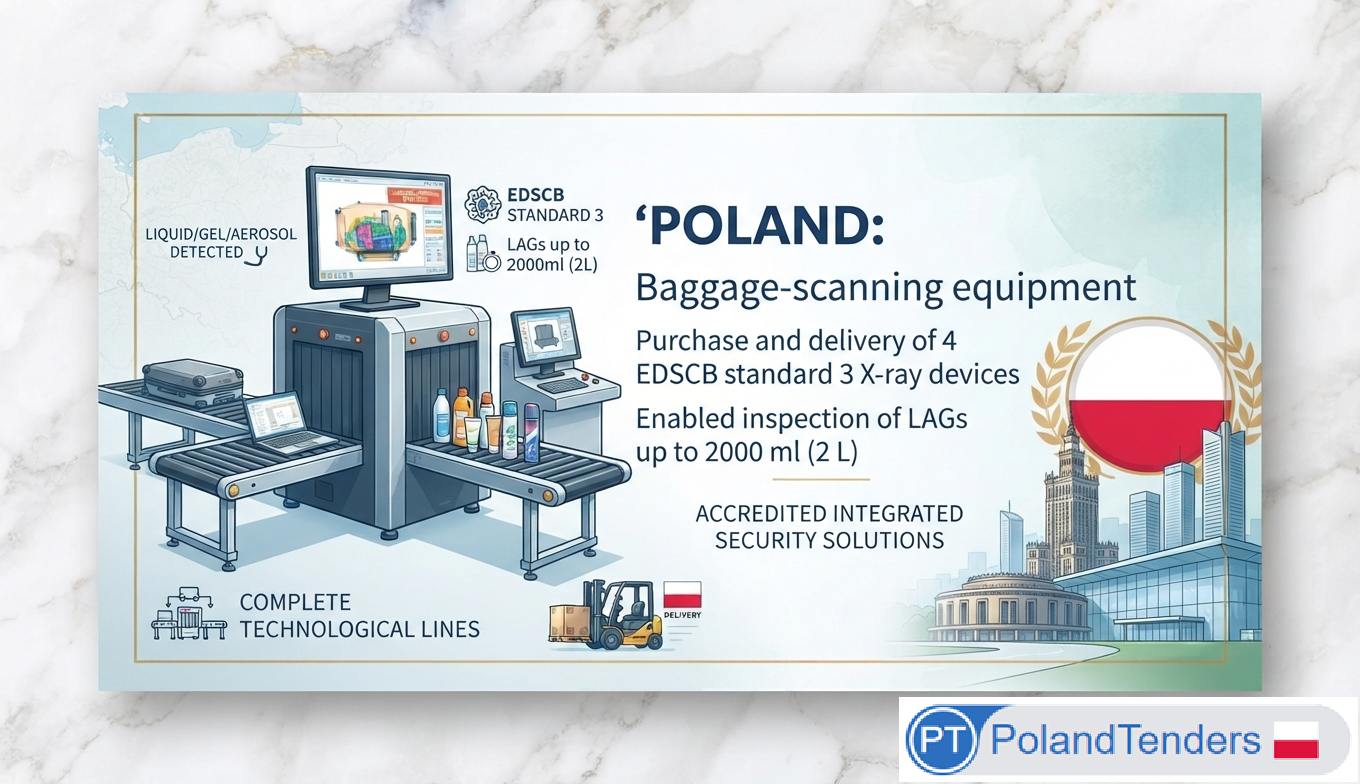
Katowice Airport Is Buying the Scanners That Could End the 100ml Liquids Rule for Its Passengers Standfirst: Katowice Airport's operator has awarded a €4 million contract, without competitive tendering, for four advanced X-ray scanners capable of screening liquids, gels and aerosols up to two litres without passengers needing to remove them from their bags. Only one manufacturer worldwide currently holds the certification this equipment requires and the contract went to its sole Polish distributor. Airport security checkpoints across Europe have spent nearly two decades enforcing the familiar rule: liquids over 100 millilitres come out of your bag or they don't fly. That rule exists because older X-ray scanners simply cannot tell explosive liquids apart from shampoo or water with enough confidence. Newer scanning technology can and Katowice Airport has just committed to installing four of the machines capable of doing exactly that. Why This Contract Matters This contract covers four units of what the notice calls RTG EDSCB Standard 3 equipment, X-ray Explosive Detection Systems for Cabin Baggage, certified to the European Civil Aviation Conference's third and most advanced security standard. Crucially, this specific certification comes bundled with an approved "liquid relief" concept of operations, meaning security staff can screen liquids, gels and aerosols up to two litres directly inside a passenger's carry on bag, without asking them to remove and separately screen each item. For an airport, that capability translates directly into faster security lines, shorter queues and a better passenger experience, while also keeping pace with an EU wide push to upgrade airport screening technology to modern explosive detection standards. Katowice, sometimes described as a busy but comparatively modest gateway to Poland's Upper Silesia region, is positioning itself to match security capabilities already rolling out at larger regional competitors. Contract Timeline 8 July 2026 - Winner selected. 13 July 2026 - Contract formally concluded. 20 July 2026 - Result notice dispatched to the EU Publications Office. 21 July 2026 - Notice published in OJ S issue 138/2026. 1 August 2026 - Planned start of contract performance. 1 February 2027 - Planned completion of delivery and installation. Contract Overview Górnośląskie Towarzystwo Lotnicze S.A., the company that operates Katowice Airport (formally Międzynarodowy Port Lotniczy Katowice im. Wojciecha Korfantego w Pyrzowicach), used a negotiated procedure without prior call for competition, a direct award, to purchase four units of this scanning equipment along with complete supporting technological lines. The airport justified bypassing competitive tendering entirely on technical grounds: it determined that only one equipment manufacturer in the world currently holds the required certification, leaving no genuine competitive market to test. The contract, worth PLN 17,466,000 (roughly €4 million), was awarded to Anglosec sp. z o.o., a Warsaw based small enterprise that serves as the exclusive Polish distributor for the qualifying equipment. As expected for a direct award of this kind, only one tender was received. Key Contract Details Contracting entity: Górnośląskie Towarzystwo Lotnicze S.A. (Katowice Airport operator) Contract title: Purchase and delivery of 4 units of RTG EDSCB Standard 3 X-ray equipment enabling screening of liquids, gels and aerosols (LAGs) up to 2,000 ml (2L), with complete technological lines CPV classification: 38581000 -Baggage scanning equipment Procedure type: Negotiated without prior call for competition (direct award) Legal basis: Directive 2014/25/EU (Utilities Directive) Applicable cross border law: EU Regulation 833/2014, as amended by Regulation 2022/576 (the EU's Russia related trade restriction framework) Justification for direct award: Absence of competition for technical reasons, only one manufacturer holds the required ECAC Standard 3 certification with approved liquid relief functionality Place of performance: Ożarowice, Katowice Airport, Poland Contract value: PLN 17,466,000 (approximately EUR 4 million) Framework agreement: None; a direct supply contract Contract duration: 1 August 2026 to 1 February 2027 (six months, covering delivery and installation) Number of tenders received: 1 Winning tenderer: Anglosec sp. z o.o. (classified as a small enterprise) Date winner selected: 8 July 2026 Contract conclusion date: 13 July 2026 Subcontracting: Disclosed as applicable, though the value and percentage were not specified GPA coverage: Yes EU funding: Not financed with EU funds Project Scope The contract covers the purchase and delivery of four RTG EDSCB Standard 3 units, the Polish abbreviation for X-ray Explosive Detection Systems for Cabin Baggage, along with the complete technological lines needed to integrate them into the airport's security checkpoints. Standard 3 is the highest tier of ECAC certification currently in use for cabin baggage screening and the specific approval attached to this equipment, referenced in the notice as CONOPS (concept of operations) number 95596016, permits screening liquids, gels and aerosols up to two litres without requiring passengers to remove them from their bags. According to the airport's own justification in the notice, this functionality is essential for maintaining checkpoint throughput, shortening passenger processing times, improving passenger comfort and security and keeping the airport's infrastructure aligned with current and anticipated EU civil aviation security standards. The airport also explicitly framed the investment as necessary to preserve its competitiveness against other regional airports in Poland and Central and Eastern Europe. About the Contracting Authority Górnośląskie Towarzystwo Lotnicze S.A. is the company that owns and operates Katowice Airport, one of Poland's regional international airports serving the Upper Silesia metropolitan area. Classified in the notice as a contracting entity operating in airport related activities, the company ran this procurement directly and remains the point of contact for enquiries about the procedure. About the Organisations Involved Górnośląskie Towarzystwo Lotnicze S.A., Buyer The airport operator initiated this direct award procurement, built the technical justification for bypassing competitive tendering and now holds the resulting supply contract. It is also named as the organisation providing further information about the procurement procedure. Anglosec sp. z o.o., Winning Tenderer Anglosec, based in Warsaw and classified as a small enterprise, is the sole winner of this contract. According to the airport's own justification in the notice, Anglosec holds exclusive distribution and representation rights in Poland for the HI SCAN 6040 CTiX, the specific scanning equipment manufactured by Smiths Detection Germany GmbH that carries the required ECAC Standard 3 liquid relief certification. The notice states Anglosec has the competencies for sales, installation, commissioning and servicing of this equipment and confirms it is the only entity in Poland capable of supplying it. Subcontracting is disclosed as applicable to this contract, though the specific value or percentage was not stated. Krajowa Izba Odwoławcza, Review Authority Poland's National Appeals Chamber, based in Warsaw, is the body designated to hear any legal challenge to this procurement. The notice specifies a 10 day deadline for filing an appeal from the day information about the contested decision was communicated electronically and confirms that legal remedies are also available to organisations representing small and medium enterprises and to Poland's Ombudsman for Small and Medium Entrepreneurs. PROEBIZ, Procurement Service Provider PROEBIZ, based in Ostrava, Czechia, is named in the notice as the procurement service provider, reflecting the technical platform used to run the tendering process, even though this particular procurement proceeded as a direct award with only one participant. Procurement Analysis Górnośląskie Towarzystwo Lotnicze used a negotiated procedure without prior call for competition, a route permitted under Polish public procurement law when supplies can only be provided by a single economic operator for objective technical reasons. The airport's justification, laid out in considerable detail in the notice, rests on a specific claim: that as of the airport's review of the ECAC's public equipment certification list in May 2026, only Smiths Detection Germany GmbH held Standard 3 certification with an approved liquid relief concept of operations allowing screening of liquids up to two litres and that this functionality exists in only one product, the HI-SCAN 6040 CTiX. The airport further argued that running a competitive tender without this specific capability would represent an irrational and inefficient use of public funds, since equipment lacking the liquid relief functionality would not meet its operational objectives. Because Smiths Detection sells through exclusive national distributors and Anglosec holds that exclusive position in Poland, the airport concluded no genuine alternative competitive process was available and that running one anyway would risk delays, procedural disputes and continued non compliance with current aviation security standards, without any realistic prospect of increased competition. The notice also flags that this procurement falls under the EU's cross border trade restriction framework tied to Regulation 833/2014, as amended by Regulation 2022/576, the legal instrument underpinning the EU's sanctions regime introduced following Russia's invasion of Ukraine. Its inclusion here indicates the airport confirmed compliance with those restrictions as part of running this procurement, a standard requirement for EU public contracts since 2022 rather than an indication of any specific issue with this particular award. Additional Procurement Facts The procurement is confirmed as GPA covered. The project is not financed with EU funds. No framework agreement or dynamic purchasing system was used. The single tender received came from a Polish micro, small or medium enterprise, submitted electronically. No tenders were received from other EEA countries or from outside the EEA, consistent with a direct award to a pre-identified sole supplier. Market & Industry Perspective Explosive detection technology for cabin baggage has become one of the more concentrated equipment markets in aviation security, with certification to the highest ECAC standards and particularly the liquid relief capability described in this notice, currently limited to a small number of manufacturers globally. Smiths Detection, a major British headquartered security technology group, is among the most established names in this space and its exclusive distribution model means national markets like Poland's are served through a single authorised representative rather than open retail competition. For Anglosec, this contract reinforces its position as the gatekeeper for this specific technology within Poland, a role that is likely to translate into further business as other Polish airports face similar pressure to modernise their own screening infrastructure to the same standard. Economic Significance At roughly €4 million, this is a moderate but meaningful capital investment for a regional airport operator, reflecting the real cost of keeping pace with evolving European aviation security requirements. For Katowice Airport, the upgrade is framed explicitly as a competitiveness issue: an airport unable to offer the faster, liquid relief screening experience risks looking outdated next to peers in the region that have already modernised their checkpoints. Future Procurement Opportunities Other Polish and Central and Eastern European regional airports facing the same pressure to modernise their security checkpoints to ECAC Standard 3 with liquid relief capability are likely to bring similar procurement to market in the coming years and given the concentrated supplier market described in this notice, many of those contracts may also proceed as direct awards to the same or similarly positioned exclusive distributors. Opportunities for Suppliers Companies able to service, maintain or calibrate this class of Standard 3 explosive detection equipment may find subcontracting opportunities as Anglosec delivers and installs the four units. Equipment manufacturers seeking to compete in this space should note the high certification bar this market currently imposes and the resulting scarcity of qualifying suppliers. Companies specialising in airport security infrastructure integration should monitor other Polish regional airports for similar checkpoint modernisation tenders. What Businesses Should Watch Watch for similar direct award procurements at other Polish and regional European airports seeking the same liquid relief screening capability, since the underlying certification scarcity described in this notice is likely to shape how those contracts are procured as well. Watch also whether additional manufacturers achieve the required ECAC Standard 3 certification with liquid relief approval in the coming years, which could open this currently narrow market to genuine competition. PolandTenders.com Procurement Intelligence This contract illustrates how tightly certification requirements can concentrate a public procurement market, even for equipment that airports urgently need. When only one manufacturer holds the specific technical approval required and that manufacturer sells exclusively through a single national distributor, competitive tendering becomes, in the buyer's own words, incapable of delivering genuine competition, making a direct award the rational procurement route despite the general EU preference for open competition. For suppliers, the lesson is less about competing for this particular contract and more about recognising where certification scarcity creates similar dynamics elsewhere. As European aviation security standards continue to tighten, airports across the continent are likely to face comparable procurement decisions and companies that secure early certification to the newest standards or exclusive distribution rights for those that do, stand to capture a disproportionate share of this modernisation wave. Expect more European airports to justify direct awards for next generation screening equipment on similar technical grounds, at least until certification to the highest ECAC standards becomes more widely available across multiple manufacturers. Supplier Takeaways Recognise that high certification equipment markets, like this one, often produce direct awards rather than open tenders and position accordingly through distribution partnerships rather than solo competitive bids. Track other Polish and Central European regional airports for similar Standard 3 screening equipment procurement as EU aviation security standards continue to evolve. Service and maintenance providers should approach Anglosec directly regarding potential subcontracting opportunities tied to this installation. Equipment manufacturers should prioritise achieving liquid relief certification, given how directly it appears to determine procurement outcomes in this specific technology category. Key Takeaways Katowice Airport's operator awarded a direct contract worth approximately €4 million for four Standard 3 X-ray scanners capable of screening liquids up to two litres without removal from bags. The award bypassed competitive tendering because only one manufacturer, Smiths Detection Germany GmbH, currently holds the required certification. The contract went to Anglosec sp. z o.o., the exclusive Polish distributor for the qualifying equipment. Delivery and installation are scheduled between August 2026 and February 2027. Any legal challenge would go to Poland's Krajowa Izba Odwoławcza within 10 days of electronic notification. Conclusion The rule requiring passengers to bag and separately scan their liquids has persisted for nearly two decades because the technology to safely do otherwise wasn't widely available. Katowice Airport's investment in four Standard 3 scanners with liquid relief certification suggests that may be starting to change locally, even if, for now, only one manufacturer in the world can supply the equipment capable of making it happen. Source: EU Official Journal, Contract Award Notice 504899-2026, OJ S 138/2026, published 21 July 2026. Contracting authority: Górnośląskie Towarzystwo Lotnicze S.A.
View Details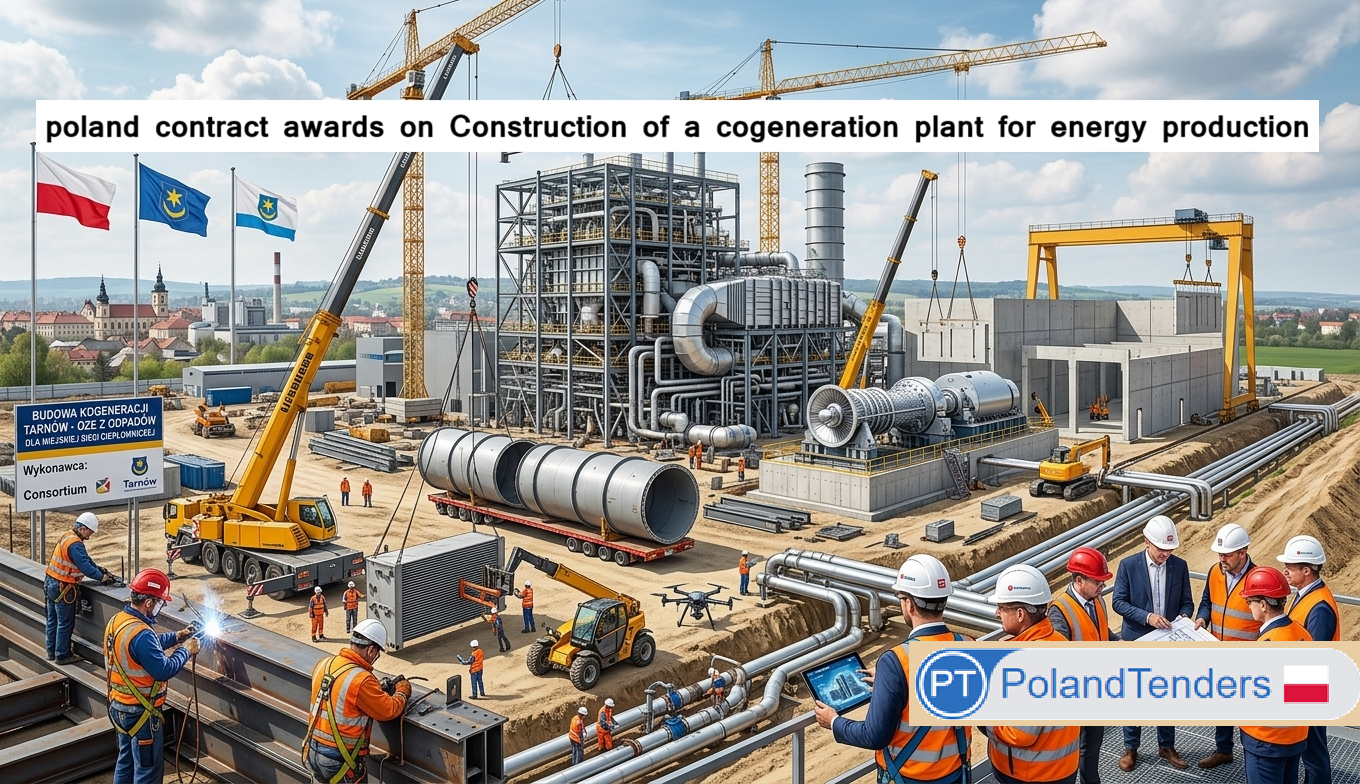
Poland's Tarnów Waste-to-Energy Project Collapses as Funds Run Dry
20 Jul 2026
Introduction A €73m district heating cogeneration plant fails to launch, exposing the fragility of municipal infrastructure financing in Central Europe The Polish city of Tarnów will not get its planned waste to energy cogeneration plant. Miejskie Przedsiębiorstwo Energetyki Cieplnej S.A. (MPEC Tarnów), the municipal heat utility, has cancelled the procurement after receiving five bids it could not afford. The decision to abandon the €73m project, officially valued at 313.7m zloty excluding VAT, reflects a wider financing crisis gripping public infrastructure investment across Poland's regional cities. The contracting authority confirmed it selected no winner, citing insufficient funds as the sole reason for closure. The decision, published on 20 July 2026, brings an abrupt end to a procurement that began in late 2024. Why This Contract Matters Poland generates more than 70 per cent of its electricity from coal. The country's heating networks, which serve most urban populations, remain heavily dependent on fossil fuels. The European Union has pressured Warsaw to accelerate its energy transition, yet municipal budgets remain constrained. The Tarnów project was designed to convert processed municipal waste into heat for the city's district heating system, a proven technology that reduces landfill dependency while cutting emissions. Its failure signals that even well designed green energy projects cannot proceed without adequate funding structures. Contract Timeline Date Event Late 2024 Contract notice published (reference 725526-2024) July 2026 Bids evaluated and procurement cancelled 16 July 2026 Notice of cancellation dispatched 20 July 2026 Result published in Official Journal of the EU (OJ S 137/2026) Contract Overview Miejskie Przedsiębiorstwo Energetyki Cieplnej S.A. sought a design and build contractor for a cogeneration installation capable of producing energy from processed municipal waste, referred to in the notice as RDF (Refuse Derived Fuel). The facility was intended to feed heat directly into Tarnów's municipal heating network. Key Contract Details Category Detail Contract value (estimated) PLN 313,687,192.36 (approximately €73m) Main CPV code 45000000 (Construction work) Procedure type Open procedure Award criteria Price (77%), energy efficiency K(E) (20%), service and technical assistance (3%) Framework agreement None GPA coverage No Legal basis Directive 2014/25/EU Bids received 5 SME bidders 5 Bidders from other EEA countries 1 Bidders from outside EEA 1 Electronic bids 5 Project Scope The scope was comprehensive. The successful contractor would have been required to design and construct the entire installation, including site preparation, demolition of redundant structures, and construction of new buildings, access roads and fire roads. The project involved mechanical, electrical and automation works, the latter designated as AKPiA (automation, control and measurement technology). Beyond construction, the contract required the contractor to commission the facility, conduct trial runs, carry out guarantee measurements, and provide technical assistance for the first year of operation. The contractor would also have been responsible for warranty service, spare parts supply, and staff training. The plant was to be built entirely with new equipment, no used or exhibition grade machinery accepted, on MPEC's existing site at ul. Spokojna 65 in Tarnów, a sprawling parcel involving more than a dozen land plots. About the Contracting Authority Miejskie Przedsiębiorstwo Energetyki Cieplnej S.A. (MPEC Tarnów) MPEC Tarnów is the municipal heat utility serving Tarnów, a city of approximately 110,000 people in southern Poland. The company produces and distributes heat, operating under the utilities sector of the EU procurement regime. It falls under Directive 2014/25/EU, which applies to the water, energy, transport and postal services sectors. The contracting entity's declared activity is the production, transport or distribution of gas or heat. MPEC Tarnów is a joint stock company wholly owned by the municipality. About the Organisations Involved Miejskie Przedsiębiorstwo Energetyki Cieplnej S.A. Role: Contracting authority and buyer. The utility issued the tender, evaluated bids and ultimately decided to cancel. It would have operated the completed facility. Krajowa Izba Odwoławcza (National Appeal Chamber) Role: Review organisation. The National Appeal Chamber is Poland's procurement review body. It handles appeals against contracting authority decisions. Although no appeal was mentioned in the notice, the Chamber would have jurisdiction had any bidder challenged MPEC's decision. The contracting authority is required to provide detailed information about appeal deadlines and procedures. Publications Office of the European Union Role: TED eSender. The Publications Office manages the Tenders Electronic Daily (TED) system. It publishes procurement notices on behalf of contracting authorities. This organisation appears in every TED notice. No successful bidders This procurement produced no winner. Procurement Analysis MPEC Tarnów chose an open procedure, the most transparent procurement method under EU rules. This allowed any qualified contractor to submit a bid. The procedure is often used when the contracting authority has a clear specification and seeks maximum competition. Yet competition did not deliver an affordable result. Five bids were submitted, all from SMEs. One bidder came from another EEA country; another from outside the EEA. This international interest suggests the project held genuine appeal for specialised waste to energy contractors. However, after evaluation, MPEC concluded that none of the bids fell within its available budget. The notice does not disclose whether the bids exceeded the estimated value, whether funding was withdrawn, or whether the authority misjudged the market price for such installations. The stated reason, "Decision of the buyer, because of insufficient funds", offers little clarity. Additional Procurement Facts Previous notice: 725526-2024, published in late 2024. Platform: The procedure was conducted entirely via platformazakupowa.pl, the Polish e-procurement portal. Language: All communications were in Polish. Award criteria: Price dominated at 77 per cent, leaving 23 per cent for technical evaluation (energy efficiency and service quality). Framework: No framework agreement or dynamic purchasing system was used. GPA: The procurement was not covered by the Government Procurement Agreement, meaning non WTO suppliers could participate. Market & Industry Perspective The waste to energy sector in Poland has attracted significant investment over the past decade. Major facilities in Kraków, Poznań and Warsaw demonstrate that municipalities increasingly view incineration as preferable to landfilling. Yet these projects are capital intensive, typically requiring hundreds of millions of zloty. Smaller cities like Tarnów, with limited municipal budgets, often struggle to finance them without central government or EU support. The five bidders, all SMEs, reflect a market dominated by smaller engineering and construction firms, with limited participation from large European energy or infrastructure groups. This may indicate that major international contractors viewed the project as too small or risky, or that MPEC's procurement terms discouraged larger players. One bidder from outside the EEA suggests the project attracted international niche specialists capable of delivering waste to energy technology at competitive rates, yet even they could not meet MPEC's price expectations. Economic Significance The cancellation will affect Tarnów's district heating system. Without the new facility, MPEC will continue relying on existing assets. Tarnów lacks the municipal waste treatment capacity that many Polish cities have developed, forcing continued reliance on landfill. This creates environmental compliance risks as EU landfill diversion targets tighten. Employment benefits expected from the construction phase, estimated at several hundred jobs, will not materialise. Long term operational roles also vanish. For local suppliers of construction materials, engineering services and waste logistics, this represents a lost opportunity. Future Procurement Opportunities MPEC Tarnów may revisit this project. The underlying problems, waste management and heat decarbonisation, remain. The authority could: Relaunch with a revised budget after securing additional municipal or EU funding. Restructure the contract by splitting it into separate design, construction and operation contracts to reduce financial exposure. Seek private finance through a public private partnership, transferring construction and operational risk to the private sector. Reduce scope by building a smaller, lower cost facility. Any future tender will likely follow a similar open procedure, as MPEC operates in the utilities sector. Suppliers should monitor MPEC Tarnów's procurement announcements and the platformazakupowa.pl portal. Opportunities for Suppliers Even though the contract failed, the need remains. Suppliers should position themselves for a potential retender. Engineering consultants: MPEC will still require project design, feasibility studies and environmental impact assessments. Waste to energy equipment manufacturers: The authority may seek direct equipment supply if it restructures the procurement. SME contractors: Prepare early prequalification documents. The procurement attracted SME interest, so competition will remain intense. Energy efficiency specialists: The weighting placed on efficiency K(E) (20 per cent) underscores MPEC's focus on operational performance. Suppliers demonstrating superior efficiency metrics will have a competitive edge. EU funding experts: Help MPEC navigate EU cohesion funds or the Modernisation Fund, which supports energy transition projects in Poland. What Businesses Should Watch MPEC Tarnów procurement announcements: The authority may issue a revised notice within 12-18 months. Polish municipal heat sector: Other cities face similar funding challenges. Watch for cancellations or retenders. EU funding cycles: The 2021-2027 cohesion funding period remains open. Pressures to disburse funds may push projects forward. Waste management policy: Changes to Polish waste law could force municipalities to invest in treatment capacity, creating new tenders. PolandTenders.com Procurement Intelligence This cancellation represents a broader trend: municipal infrastructure projects in Poland are increasingly priced beyond public budgets. Inflation, rising material costs and a tight labour market have driven construction prices up sharply since 2022. Contracting authorities that estimated projects in 2023 or early 2024 are finding that bid prices exceed their budgets. This is not a Poland specific phenomenon; similar patterns appear across Central Europe. The open procedure, while fair, offered no flexibility for negotiation. Had MPEC used a negotiated procedure with prior call for competition, it could have discussed pricing and scope with bidders before finalising terms. This may have produced a workable compromise, reduced scope, extended timeline or shared financing. The authority chose not to exercise that option. Suppliers should recognise that Polish municipal utilities are becoming more sophisticated in procurement, yet remain constrained by rigid budgetary processes. The 77 per cent weighting on price reveals a financially stressed buyer. In future tenders, bidders should structure offers that explicitly address financing options, payment milestones and risk sharing mechanisms. The absence of any disclosed winner raises questions about whether the authority even evaluated bids fully. The notice mentions only that no winner was chosen, not whether the bids were rejected, non compliant or merely above budget. This opacity weakens supplier confidence in the procurement system. For equipment suppliers and EPC contractors, the lesson is clear: engage early. Pretender dialogue can help shape realistic contract terms. Suppliers who build relationships with municipal utilities outside formal procurement processes often gain critical insight into budget constraints, technical preferences and decision making timelines. This project fell short not because the need was questionable, but because the financing model failed. That is a solvable problem. Supplier Takeaways Track MPEC Tarnów's procurement portal for any reannouncement. The underlying need has not disappeared. Prepare alternative financial proposals, including phased construction or private financing options. Build relationships with municipal heat utilities. Pretender engagement allows suppliers to understand budget constraints early. Monitor EU funding announcements for Polish waste to energy programmes. Strengthen SME credentials, all five bidders were SMEs, indicating the authority is not restricting competition to large firms. Polish language capability is non negotiable for this buyer. Key Takeaways A €73m waste to energy project in Tarnów, Poland, has been cancelled due to insufficient funds. Five bids were received, all from SMEs; no winner was selected. The facility would have processed municipal waste into heat for the city's district heating network. MPEC Tarnów remains a buyer to watch; the need for waste to energy capacity persists. Suppliers should prepare for a potential retender with revised scope or financing. The cancellation reflects wider infrastructure funding pressures across Central Europe. Conclusion Tarnów will continue to rely on conventional heat generation while its waste management challenges remain unresolved. The cancellation is not a permanent end but a pause, one driven by fiscal reality, not environmental need. For suppliers and financiers willing to solve the funding equation, this project will return. The question is not whether Poland needs waste to energy capacity, but how municipalities will afford it. Source: TED (Tenders Electronic Daily) - Official Journal of the European Union Notice reference: 500298-2026, OJ S 137/2026, published 20 July 2026 Contract notice reference: 725526-2024 Buyer: Miejskie Przedsiębiorstwo Energetyki Cieplnej S.A. (MPEC Tarnów) Document: Contract or concession award notice - standard regime, Poland - Construction work
View Details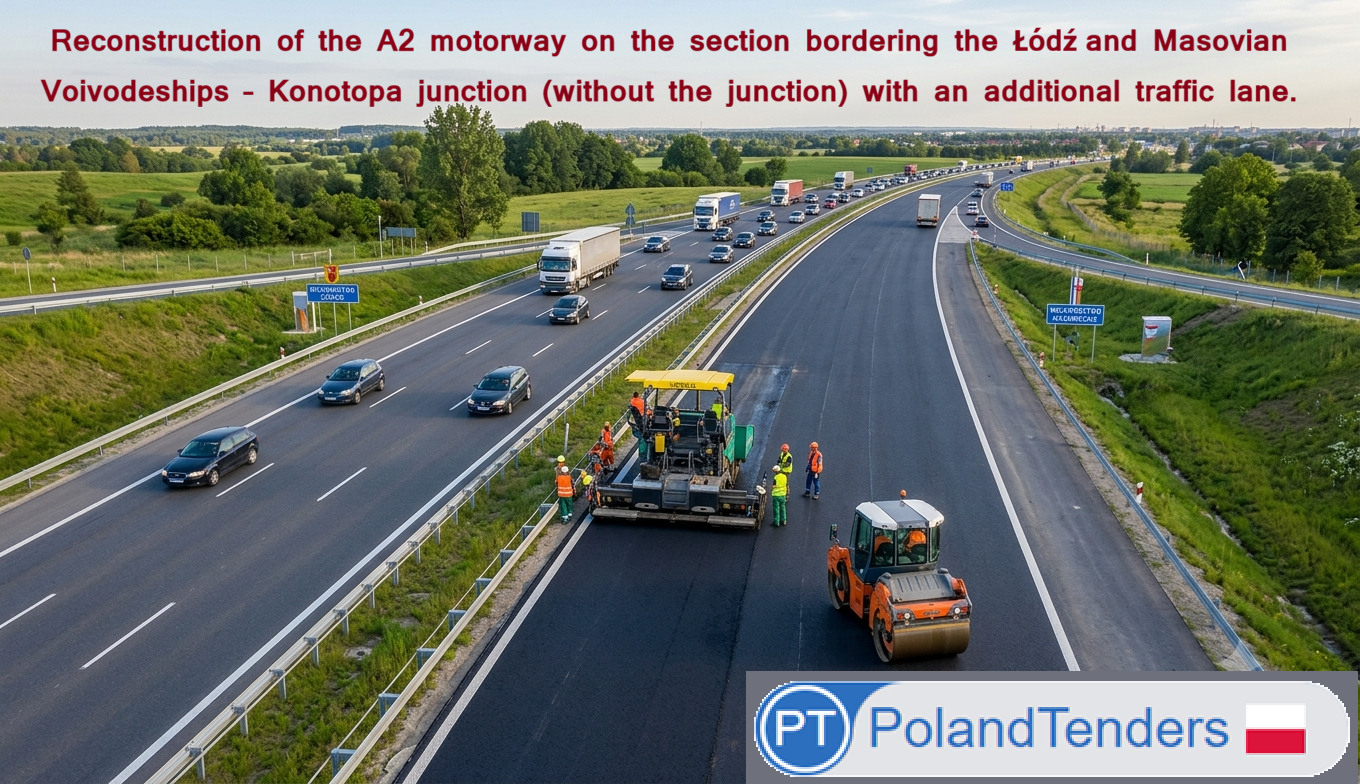
Poland's Most Congested Motorway Finally Gets Its Fix: STRABAG Wins €49 Million Contract to Widen the A2 Between Warsaw and Łódź
17 Jul 2026
StandfirstUp to 100,000 vehicles a day squeeze onto the A2 motorway between Warsaw and Łódź, a route that has outgrown its own capacity within thirteen years of opening. Poland's national roads authority has now awarded the contract for one of four widening segments, a 17.2 kilometre stretch running to the Konotopa junction on Warsaw's doorstep, to Austrian construction group STRABAG, for just over PLN 208.9 million.IntroductionSome roads become victims of their own success and the A2 motorway between Łódź and Warsaw is a textbook case. Opened just over a decade ago as a modern, two lane each way link between Poland's two largest urban centres, it now carries traffic volumes its designers never planned for, nearly 60,000 vehicles a day near Łódź, climbing toward 100,000 as the road approaches Warsaw. What was built to relieve congestion has itself become congested.The Polish General Directorate for National Roads and Motorways (GDDKiA) is now fixing that, segment by segment. The latest contract covers "Segment D", a 17.2 kilometre stretch from the Łódzkie Mazowieckie regional border to the Konotopa interchange on Warsaw's western approach and has been awarded to STRABAG Sp. z o.o., the Polish arm of the Austrian construction group, for a contract value of PLN 208,865,875.37, roughly €49 million.Why This Contract MattersThis is not an isolated road widening job. It is one of four segments in a single, coordinated 92 kilometre widening programme covering the entire A2 corridor between the Łódź Północ interchange and the Mazowieckie regional border, of which Segment D is the piece closest to Warsaw and, not coincidentally, the busiest. Roughly 89 of those 92 kilometres will gain new traffic lanes; the remainder will see pavement and lighting renewal at the complex Łódź Północ interchange, where the A1 and A2 motorways cross.The corridor's importance goes beyond commuter convenience. It is the principal road link between Poland's capital and its third largest city and it also serves growing traffic tied to CPK, Poland's planned Solidarity Transport Hub (branded "Port Polska"), the new central airport and rail hub project southwest of Warsaw. A motorway that cannot handle current traffic volumes is a genuine constraint on regional logistics and passenger travel, not merely a source of driver frustration.Contract Timeline Date Milestone 2018 Preparatory work begins on widening the A2 between Łódź Północ and Konotopa June 2021 Environmental decision issued enabling continued preparation of the Mazowieckie side widening 6 February 2026 Winner selected for Segment D 26 June 2026 Contract concluded with STRABAG Sp. z o.o. Autumn 2026 Main carriageway works expected to begin 16 July 2026 Award notice dispatched to the EU Publications Office 17 July 2026 Notice published in OJ S 136/2026 2027–2029 Construction period across the full four segment programme, according to GDDKiA's public statements Contract OverviewGDDKiA's Łódź branch ran an open procedure to award the reconstruction of the A2 motorway's Segment D, from km 436+917 to km 454+100, covering the stretch from the Łódzkie Mazowieckie border to (but excluding) the Konotopa junction, widening each carriageway by 3.0 to 3.5 metres using the motorway's existing wide central reservation. The widening converts the carriageway configuration from two lanes in each direction to three lanes for most of the segment and to four lanes each way on the final stretch between the Pruszków and Konotopa junctions.Three tenders were received, all from large Polish or Poland based contractors, none from SMEs and none from tenderers based outside Poland. STRABAG's bid of PLN 208,865,875.37 was both the winning tender and the lowest of the three admissible bids submitted, against a highest admissible tender of PLN 294,169,722.33, a spread of more than PLN 85 million between the top and bottom bids.Key Contract Details Field Detail Contracting authority Generalna Dyrekcja Dróg Krajowych i Autostrad (GDDKiA), Łódź Branch Winning contractor STRABAG Sp. z o.o. Title Reconstruction of the A2 motorway, Segment D (km 436+917 to km 454+100), Grodzisk Mazowiecki area to Konotopa junction CPV code 45000000 – Construction work (plus 13 additional CPV classifications covering site preparation, earthmoving, drilling, civil engineering, electrical and building installation work and safety equipment installation) Procedure type Open Legal basis Directive 2014/24/EU Contract value PLN 208,865,875.37 (approximately €49 million) Award criteria Price (80%); non price criterion, effective use of reclaimed asphalt pavement material ("destrukt") from the demolished existing surface (20%) Contract duration 17 months Tenders received 3, all from large contractors; 0 from SMEs; 0 from outside Poland Range of admissible tenders PLN 208,865,875.37 (lowest) to PLN 294,169,722.33 (highest) Subcontracting Yes, value and percentage not disclosed; covers works, services and material supply excluding key tasks reserved for personal execution EU funding Fully or partially financed with EU funds GPA coverage Yes Review body Krajowa Izba Odwoławcza (National Appeals Chamber) Place of performance Łódzkie and Warszawski Wschodni regions, Poland Project ScopeThe core works widen both carriageways of Segment D by adding a lane in each direction, a 3.0 metre widening on the inner side for the stretch from the start of the segment to the Pruszków junction and 3.5 metres from Pruszków onward to Konotopa, using space already reserved within the motorway's existing central median. The result converts the road from a 2/2 lane configuration to 2/3 for most of the segment and to 2/4 for the final stretch nearest Konotopa.Beyond the core widening, the contract carries two significant optional scopes under Poland's "prawo opcji" mechanism. Option 2 covers traffic flow corrections at fifteen named intersections and interchanges scattered across a wide area of Mazowieckie voivodeship, from Brzeziny in the north to Ożarów Mazowiecki in the south, reflecting how a single motorway widening project can ripple out into adjustments across a much broader regional road network. Option 1 requires the contractor to design, install, maintain and eventually dismantle temporary traffic management and detour signage for the entire four segment widening programme, for a minimum of 24 months, with additional monthly compensation payable if that period is extended, a meaningful undertaking given that the winning contractor here effectively becomes responsible for coordinating detour signage across a project spanning multiple separate construction contracts.About the Contracting AuthorityGeneralna Dyrekcja Dróg Krajowych i Autostrad (GDDKiA), Poland's General Directorate for National Roads and Motorways, is the central government authority responsible for planning, procuring and maintaining Poland's national road and motorway network. Its Łódź branch is managing this specific contract, reflecting the corridor's position straddling the Łódzkie and Mazowieckie regions. GDDKiA has publicly stated it is currently delivering more than 1,500 kilometres of new roads nationally and the A2 widening programme sits within that broader modernisation effort, specifically targeting one of the network's most heavily used and increasingly congested corridors.About the Organisations InvolvedSTRABAG Sp. z o.o., Winning TendererSTRABAG is the Polish subsidiary of STRABAG SE, one of Europe's largest construction and infrastructure groups, headquartered in Austria with operations spanning road and rail infrastructure, tunnelling, building construction and real estate development across the continent. Notably, STRABAG's Polish registered address sits in Pruszków, one of the towns the very motorway segment it will now widen runs directly through, giving the contractor an established local and regional presence in exactly the area where this project is based. STRABAG's win, with the lowest of three submitted bids, continues the company's substantial track record delivering major Polish motorway infrastructure for GDDKiA.Krajowa Izba Odwoławcza, Review OrganisationThe National Appeals Chamber, based in Warsaw, is Poland's dedicated tribunal for public procurement disputes, empowered to hear challenges brought by bidders against contracting authority decisions under the Polish Public Procurement Law. Its role in this contract is purely as the designated review body, providing unsuccessful bidders or interested parties a formal route to contest the award, with further appeal possible to the Warsaw Regional Court's dedicated public procurement division.Procurement AnalysisGDDKiA ran a standard open procedure, evaluating bids on an 80% price, 20% non price basis, with the non price criterion tied specifically to how effectively each bidder proposed to reuse reclaimed asphalt pavement material salvaged from demolishing the existing road surface. That is a deliberately circular economy oriented technical criterion: rather than scoring bidders on abstract sustainability commitments, GDDKiA is rewarding contractors for a concrete, measurable practice, recycling the material stripped from the motorway's own current surface back into the reconstruction itself, reducing both waste and the demand for freshly quarried aggregate.The wide spread between the lowest and highest admissible tenders, PLN 208.9 million versus PLN 294.2 million, a difference of more than 40%, is a substantial gap for a well defined civil infrastructure project of this kind and suggests real variation in how the three bidding contractors priced risk, resourcing or their approach to the demanding logistical requirement of building alongside live motorway traffic for the duration of construction. That all three tenderers were large firms with no SME or foreign participation is unsurprising given the scale, technical complexity and financial capacity required for a project of this size and duration.Additional Procurement FactsNone of the three tenders received were disqualified as inadmissible and none were found to involve abnormally low pricing requiring separate verification. Subcontracting is confirmed for the winning bid, covering works, services and material supply, with the notice specifically excluding "key tasks reserved for personal execution" per the contractor's own tender documentation, a standard mechanism in Polish public works contracts that requires the prime contractor to directly perform certain critical elements of the works itself rather than delegating them entirely to subcontractors. The project is confirmed as EU funded and covered by the WTO Government Procurement Agreement.Market & Industry PerspectiveMajor Polish motorway construction and widening work remains dominated by a relatively small group of large international and domestic contractors capable of mobilising the resourcing, bonding capacity and technical expertise required for projects of this scale, firms including STRABAG, Budimex, Mirbud, Ferrovial linked joint ventures and others with established track records delivering GDDKiA contracts. The A2 widening programme as a whole illustrates this concentration clearly: GDDKiA has been awarding its four constituent segments to different large contractors as each competition concludes, with STRABAG's win on Segment D following a separate STRABAG award for another stretch of the same corridor further west, near Łyszkowice.The requirement that whichever contractor wins a given segment also assume responsibility for coordinating temporary traffic management across the entire four segment programme (under Option 1 in this contract) is a further sign of how GDDKiA is managing the practical complexity of running multiple simultaneous, physically adjacent construction contracts along a single, continuously operating motorway corridor.Economic SignificanceAt roughly €49 million for a 17.2 kilometre segment, this is one component of what is, in aggregate, a substantially larger investment across the full 92 kilometre A2 widening programme, one that Polish transport officials have described as among the most significant road infrastructure priorities in central Poland, given the corridor's role connecting the country's two largest urban economies and feeding traffic toward the planned CPK transport hub southwest of Warsaw.For STRABAG, the win extends an already substantial order book of Polish motorway construction work, while for the wider Polish construction sector, a coordinated four segment national motorway widening programme of this scale represents a meaningful, multi year source of civil engineering work for whichever contractors continue to win segments as GDDKiA works through the remaining stretches of the corridor.Future Procurement OpportunitiesWith Segment D now awarded, attention turns to the remaining stretches of the same 92 kilometre widening programme, at least one of which, the section further west toward Łyszkowice, has already been separately awarded, also to STRABAG, according to Polish transport press reporting. Suppliers of road construction materials, lighting and signage systems and traffic management equipment should watch for GDDKiA's continued procurement activity as the remaining segments of this corridor wide programme progress toward contract award and construction.Beyond the immediate widening works, GDDKiA's own public statements indicate the reconstructed corridor will incorporate energy independent, renewable powered road lighting and weather monitoring stations supported by battery storage, a detail that points to complementary procurement opportunities for renewable energy and smart infrastructure suppliers as the wider programme moves from design into delivery.Opportunities for SuppliersCivil engineering contractors, asphalt and paving material suppliers and traffic management system providers should track GDDKiA's continued procurement activity across the remaining segments of the A2 corridor widening programme, given the clear precedent this and prior awards set for contract structure, scale and evaluation criteria. Suppliers with genuine capability in reclaimed asphalt pavement processing and reuse are particularly well positioned given the explicit 20% weighting GDDKiA has attached to this criterion, a detail likely to recur across the programme's remaining segments. Renewable energy and battery storage suppliers should also watch for opportunities tied to the corridor's planned shift toward energy independent lighting and monitoring infrastructure.What Businesses Should WatchThree things are worth tracking as this programme progresses. First, whether the remaining segments of the four part A2 widening programme are awarded on a similar timeline and to a similarly concentrated group of large domestic and international contractors. Second, how effectively the optional temporary traffic management scope (Option 1) is implemented across the whole corridor, given the scale of coordinating detours and signage across multiple concurrent construction sites on a live, heavily trafficked motorway. Third, whether the corridor's stated ambition toward energy independent lighting and weather monitoring infrastructure generates a distinct, separate wave of procurement activity as the wider project moves from road widening into smart infrastructure implementation.PolandTenders.com Procurement IntelligenceThis contract is a clear illustration of how national road authorities across Central Europe are managing infrastructure that has been overtaken by its own success. The A2 between Łódź and Warsaw was a modern, adequately sized motorway when it opened barely over a decade ago; sustained economic growth and rising vehicle ownership have since pushed daily traffic volumes toward the road's structural limits years ahead of what its original design anticipated. GDDKiA's response, a coordinated, corridor wide widening programme split into four segments rather than one enormous single contract, reflects a now common approach to large linear infrastructure projects: breaking the work into manageable, separately tendered segments while still requiring a degree of cross segment coordination, in this case through the shared temporary traffic management obligation attached to whichever contractor wins each individual piece.The explicit, measurable reclaimed asphalt reuse criterion embedded in the award methodology is also worth flagging as a genuine, replicable model for infrastructure procurement more broadly. Rather than scoring bidders on generic environmental commitments, GDDKiA has built a concrete, quantifiable circular economy requirement directly into how contractors are evaluated and paid, a structure that other national road authorities pursuing similar widening or resurfacing programmes could reasonably adopt.Looking ahead, the corridor's stated ambition toward renewable powered lighting and weather monitoring infrastructure suggests this project's economic footprint will extend well beyond the road widening contracts themselves, into a further wave of smart infrastructure and renewable energy procurement as the programme matures from construction into long term, lower carbon operation.Supplier Takeaways GDDKiA is running Poland's A2 corridor widening as four separately tendered segments rather than a single mega contract, expect continued, sequential award activity as remaining segments progress. The 20% weighted reclaimed asphalt pavement reuse criterion rewards concrete, measurable circular economy practice rather than generic sustainability commitments; contractors with strong reclaimed material processing capability have a genuine competitive edge in similar future tenders. Whichever contractor wins any individual segment on this corridor also inherits responsibility for coordinating temporary traffic management across the entire four segment programme, a scope worth pricing carefully given its cross project coordination demands. Renewable energy and smart infrastructure suppliers should watch for a distinct wave of procurement tied to the corridor's stated shift toward energy independent lighting and weather monitoring systems. Large scale Polish motorway widening work remains concentrated among a small group of major domestic and international contractors; smaller firms are more likely to find opportunities as subcontractors on materials, signage and specialist civil works. Key Takeaways GDDKiA awarded the contract to widen Segment D of the A2 motorway, between the Łódzkie Mazowieckie border and the Konotopa junction near Warsaw, to STRABAG Sp. z o.o. for PLN 208,865,875.37 (approximately €49 million). The 17.2 kilometre segment is part of a wider 92 kilometre widening programme addressing chronic congestion on one of Poland's busiest motorway corridors, carrying up to nearly 100,000 vehicles daily near Warsaw. STRABAG submitted the lowest of three tenders received, all from large contractors, in a range spanning PLN 208.9 million to PLN 294.2 million. The award criteria weighted price at 80% and reclaimed asphalt pavement reuse at 20%, reflecting a concrete circular economy requirement. The contract, running 17 months, carries substantial optional scope covering regional traffic flow corrections and corridor wide temporary traffic management and is fully or partially EU funded. ConclusionThirteen years after it opened as a modern relief route between two of Poland's largest cities, the A2 motorway has become a case study in how quickly infrastructure can be overtaken by the growth it was built to serve. STRABAG's award to widen the segment nearest Warsaw is one piece of a larger, coordinated national response, proof that fixing a congested motorway corridor increasingly means treating it as a single, connected engineering problem, broken into manageable contracts, rather than a series of unrelated local repairs.Frequently Asked QuestionsWho won this contract? STRABAG Sp. z o.o., the Polish subsidiary of the Austrian construction group STRABAG SE.Who is the buyer? Generalna Dyrekcja Dróg Krajowych i Autostrad (GDDKiA), acting through its Łódź branch.What is the contract worth? PLN 208,865,875.37, approximately €49 million.What does the project cover? Widening a 17.2 kilometre segment of the A2 motorway from the Łódzkie Mazowieckie border to the Konotopa junction, adding an extra lane in each direction, plus optional traffic flow corrections at fifteen regional intersections and corridor wide temporary traffic management.How long will construction take? 17 months for the base contract scope.How many companies bid for the contract? Three, all large contractors; none from SMEs and none based outside Poland.Is this contract part of a larger project? Yes. It is one of four segments in a 92 kilometre widening programme covering the entire A2 corridor between the Łódź Północ interchange and the Mazowieckie regional border.Was any EU funding involved? Yes. The notice confirms the project is fully or partially financed with EU funds.How was the winner decided? On an 80% price and 20% non price basis, with the non price criterion assessing each bidder's proposed reuse of reclaimed asphalt pavement material from the existing road surface. Source: EU Official Journal, Contract Award Notice 497575-2026, OJ S 136/2026, published 17/07/2026. Contracting authority: Generalna Dyrekcja Dróg Krajowych i Autostrad.
View Details